

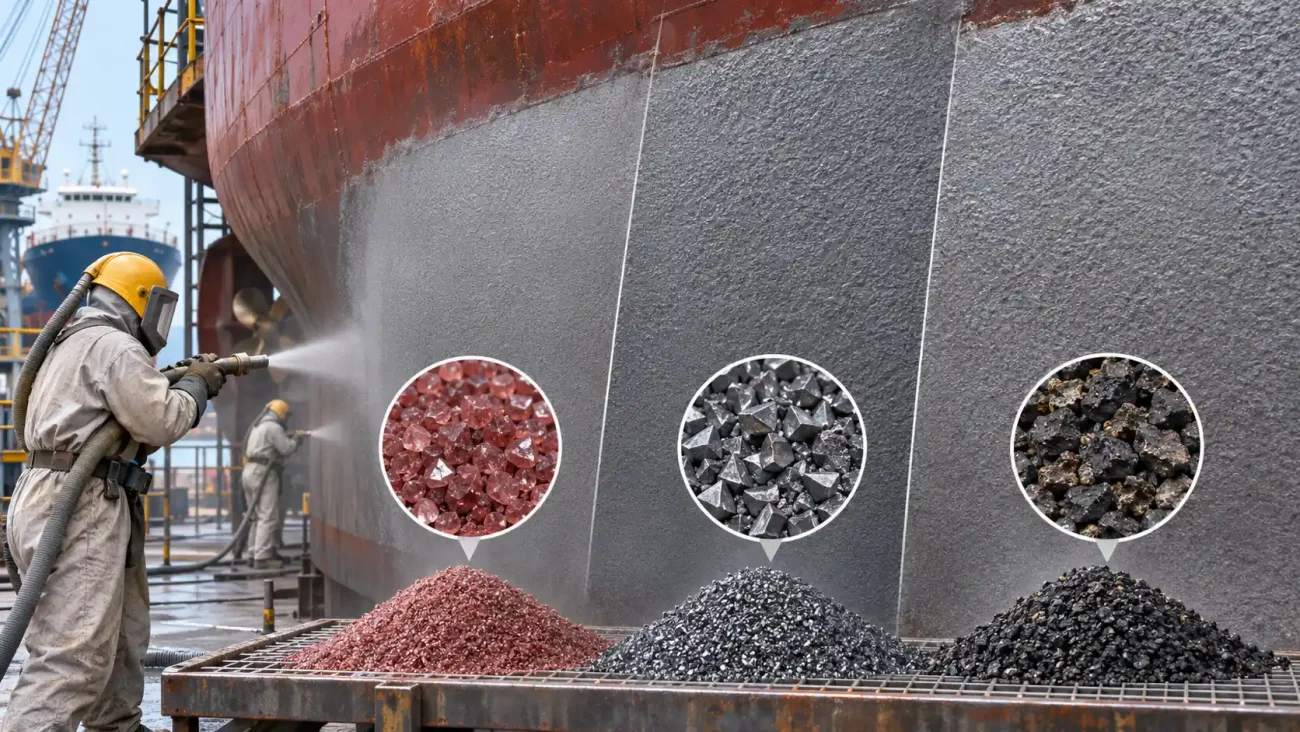
Blasting abrasives for ships decide more than how fast the rust comes off. The abrasive sets the surface profile, the cleanliness and the contamination left on the steel. Those three things decide whether the primer holds.
This guide is for shipyard planners, coating buyers and superintendents in the UAE and Oman. It compares garnet, steel grit and copper slag, then shows how to choose for a hull, a tank or a deck.
Why blasting abrasives for ships control coating life
A coating does not stick to rust or to a smooth, shiny surface. It needs clean steel with a rough, even profile it can grip. The blast media creates both.
Three results come from the abrasive you pick:
- Cleanliness. The standard target for most marine primers is Sa 2.5 under ISO 8501-1: almost all mill scale, rust and old paint removed.
- Profile. Angular grains cut a sharp profile. Round grains peen the surface. The size of the grain sets the depth.
- Contamination. Dust, oil, salt and embedded grains can stay on the steel and break the coating later.
Teams that compare blasting abrasives for ships often look only at the price per tonne. That misses the cost of rework when a coating fails over a contaminated or badly profiled surface. Cheap media that causes a repaint is not cheap.
This is why our guide to marine coating surface preparation treats the abrasive as part of the coating system, not as a separate chore. For the wider method choice, see hydroblasting vs abrasive blasting for ship hulls. This article covers only the dry abrasive side.
Garnet: clean, low-dust blasting media
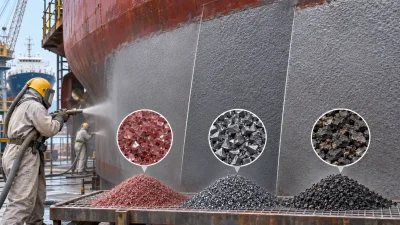
Among blasting abrasives for ships, garnet is the clean, low-dust option: a hard mineral grain, usually sold as a sharp, heavy media. Yards choose it when they want clean steel with less dust.
- Cutting speed: good on rust and old paint, usually a little slower than steel grit on thick scale.
- Profile: an even, moderate profile. Fine grades give a shallower profile than coarse ones.
- Reuse: can be recycled a few times in a suitable system, then it breaks down.
- Dust: lower than most expendable media, which helps visibility and nearby work.
- Disposal: usually the spent grain is mostly the old coating and rust, but test it first.
- Best use: enclosed tanks, areas near other trades, and jobs where low embedded contamination matters.
Garnet is also used in wet abrasive systems. That is a different method, so check it against the coating spec first.
Steel grit and steel shot: the recyclable option
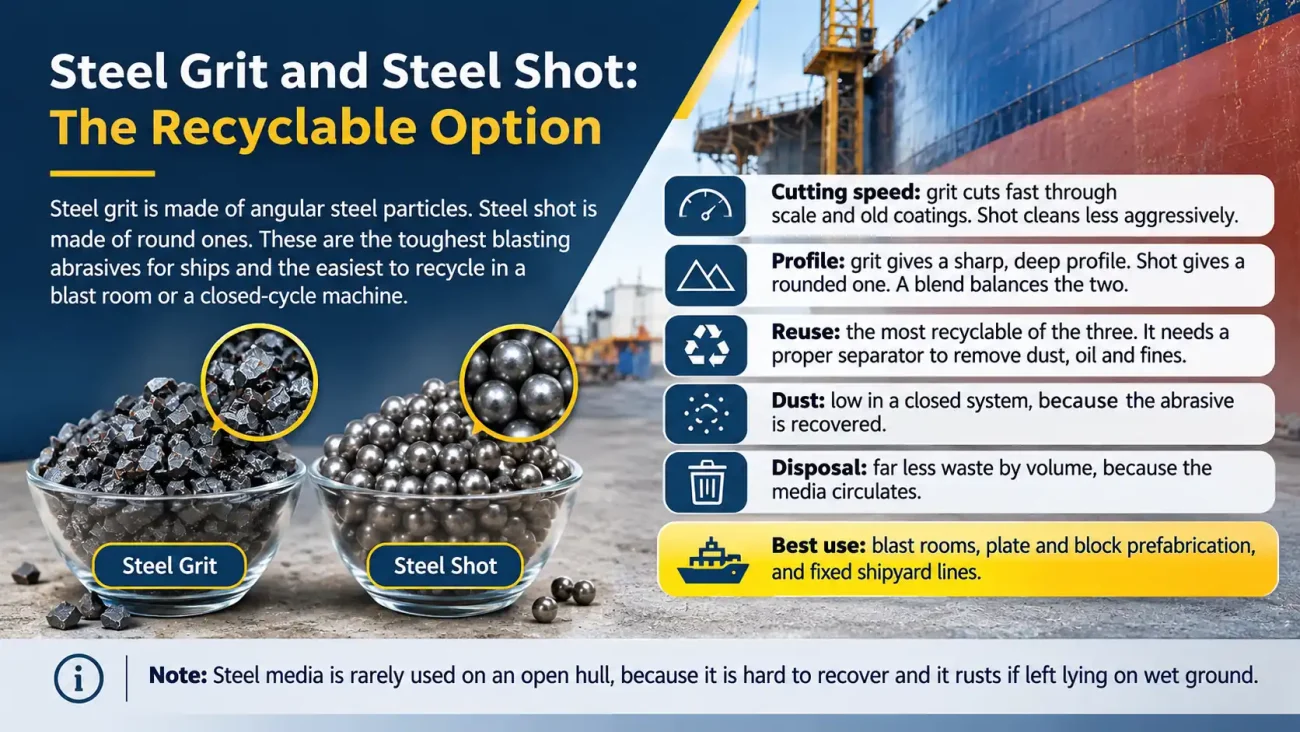
Steel grit is made of angular steel particles. Steel shot is made of round ones. Of all blasting abrasives for ships, these are the toughest and the easiest to recycle in a blast room or a closed-cycle machine.
- Cutting speed: grit cuts fast through scale and old coatings. Shot cleans less aggressively.
- Profile: grit gives a sharp, deep profile. Shot gives a rounded one. A blend balances the two.
- Reuse: the most recyclable of the three. It needs a proper separator to remove dust, oil and fines.
- Dust: low in a closed system, because the abrasive is recovered.
- Disposal: far less waste by volume, because the media circulates.
- Best use: blast rooms, plate and block prefabrication, and fixed shipyard lines.
Steel media is rarely used on an open hull, because it is hard to recover and it rusts if left lying on wet ground.
Copper slag: fast and low-cost for open yards
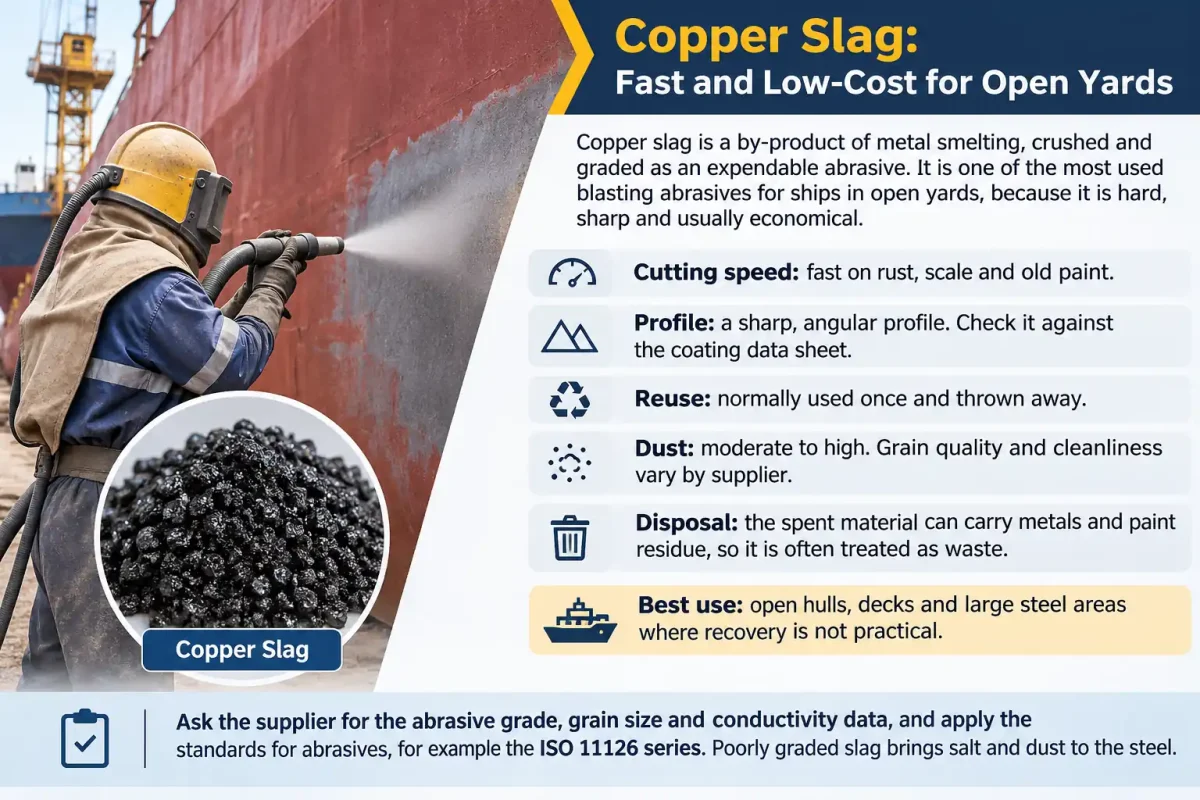
Copper slag is a by-product of metal smelting, crushed and graded as an expendable abrasive. It is one of the most used blasting abrasives for ships in open yards, because it is hard, sharp and usually economical.
- Cutting speed: fast on rust, scale and old paint.
- Profile: a sharp, angular profile. Check it against the coating data sheet.
- Reuse: normally used once and thrown away.
- Dust: moderate to high. Grain quality and cleanliness vary by supplier.
- Disposal: the spent material can carry metals and paint residue, so it is often treated as waste.
- Best use: open hulls, decks and large steel areas where recovery is not practical.
Ask the supplier for the abrasive grade, grain size and conductivity data, and apply the standards for abrasives, for example the ISO 11126 series. Poorly graded slag brings salt and dust to the steel.
Garnet vs steel grit vs copper slag: side-by-side
This table compares the three blasting abrasives for ships in general terms. Real results depend on grade, grain size, equipment and operator.
| Point | Garnet | Steel grit | Copper slag |
|---|---|---|---|
| Cutting speed | Good | Fast | Fast |
| Profile | Even, moderate | Sharp, deep | Sharp, angular |
| Reuse | Limited | High | Single use |
| Dust | Low | Low (closed system) | Moderate to high |
| Cost pattern | Higher per tonne | High start, low per job | Low per tonne |
| Disposal | Test first | Small volume | Test first, often waste |
| Best use | Enclosed tank | Blast room | Open hull, deck |
Blasting abrasives for ships by area: hull, tank and deck
The same abrasive does not suit every area of the vessel. Think about access, ventilation and recovery.
- Open hull in dry dock: copper slag and garnet are common. Wind spreads dust and grains, so use screens and plan clean-up.
- Enclosed tanks: low-dust media such as garnet helps visibility and safety. Ventilation and dust extraction are essential, and you must keep the humidity under control.
- Deck and superstructure: expendable media is practical, but watch what falls into the water and onto neighbouring work.
- New-build blocks and plates: steel grit and shot in a blast room give a fast, repeatable profile before the shop primer.
The right choice for blasting abrasives for ships can differ between the hull, the tank and the deck of the same vessel. Write the choice for each area into the blasting spec, together with the profile and cleanliness targets.
How to choose: a 6-step check
Use this short sequence when you compare blasting abrasives for ships:
- Read the coating spec. Check the required cleanliness and profile on the data sheet.
- Pick the work area. Open, enclosed or fixed blast room.
- Check recovery. Can the yard collect and clean the spent media?
- Check contamination. Ask for conductivity and grading data from the supplier.
- Check disposal. Confirm who takes the spent abrasive and under which rule.
- Run a trial panel. Measure the profile and test salts before the full job.
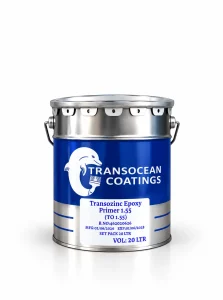
After blasting, test the steel with a Bresle test for soluble salts. Then coat quickly, because bare steel in humid air develops flash rust on blasted steel within hours. A zinc-rich or epoxy primer such as Transozinc Epoxy Primer 159 should go on while the surface is still clean and dry.
Gulf conditions, dust and disposal rules
Shipyards in the UAE and Oman work in heat, high humidity and salty air. These conditions make the choice of blasting abrasives for ships more important, because the clean window between blasting and priming is short.
- Humidity: steel can turn rusty fast after blasting. Plan to prime the same day, and check the dew point.
- Salt: sea spray and dust settle on steel and on stored abrasive. Keep media dry and covered.
- Wind: open-yard dust travels. Use screens and follow the port and yard rules.
- Waste: rules for spent slag and abrasive differ by emirate, port and country. Ask the local environmental authority and keep the disposal records.
For a neutral explanation of the method, see this overview of abrasive blasting.
Frequently asked questions
Which is the best blasting abrasive for a ship hull?
There is no single best choice. Garnet gives clean steel with low dust and suits tight, enclosed work. Steel grit suits recycling blast rooms and gives a strong profile. Copper slag is a fast, low-cost expendable choice for open yards. Match the abrasive to the coating spec and the site.
What is the difference between steel grit and steel shot?
Steel grit is angular and cuts into the surface, so it creates a sharp anchor profile. Steel shot is round and peens the surface, so it gives a rounded, less aggressive finish. Many blast rooms mix the two in a working blend to get both cleaning speed and the profile the coating needs.
Can I reuse garnet or copper slag?
Garnet can often be recycled a limited number of times in a suitable system, but it breaks down and picks up contamination. Copper slag is normally used once and discarded. Steel grit and shot are the most recyclable. Always check the recycled abrasive for oil, salt and dust before reuse.
Does the abrasive affect soluble salt on blasted steel?
Yes. Contaminated or poorly stored abrasive can leave chlorides on the surface, and a deep sharp profile can trap salt in the pits. Check the abrasive for conductivity and test the blasted steel with a Bresle test before coating. Clean steel with the wrong salt level still fails early.
What surface profile does a ship coating need?
The profile depends on the coating system, so read the product data sheet. Primers need a profile that suits their film thickness. The abrasive type and size, nozzle pressure and operator technique all control it. Measure the profile on the blasted steel instead of assuming it from the abrasive.
How should spent abrasive be disposed of in the UAE and Oman?
Treat spent abrasive as waste until tested. It may hold paint residue, salts and metals from the old coating or from the slag itself. Rules differ by emirate, port and country, so ask the local environmental authority and the yard before you start. Never discharge it to sea or open ground.
Prime the blasted steel the right way
Choosing from the blasting abrasives for ships is only half the job. The blasted steel needs a primer that suits the profile. Request a quote for Transozinc Epoxy Primer 159 and tell us the area, the abrasive and the steel condition. Our team will send the data sheet and match the primer to your blasting spec.