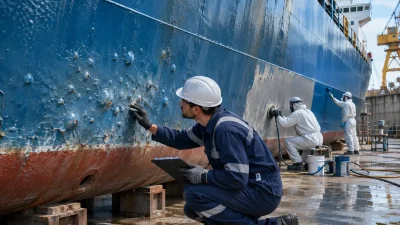


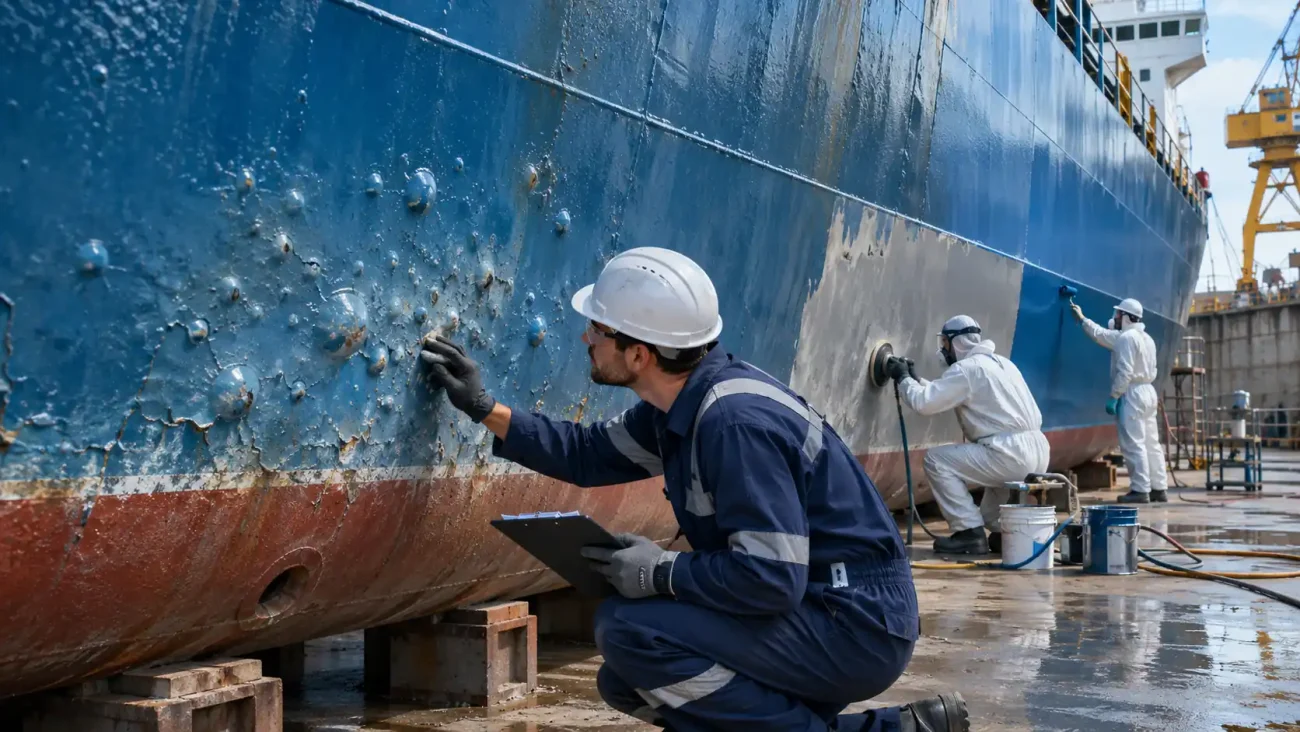
You lift a vessel out of the water and the hull is covered in small domes of paint, some filled with liquid. This is osmotic blistering, and it can ruin a new coating within months of launch.
This guide is for ship owners, technical superintendents and yard managers in the UAE and Oman. You will learn how osmotic blistering works, what causes paint blisters on a ship hull, how to carry out a blister repair, and how to stop it coming back.
What is osmotic blistering in marine paint?
Osmotic blistering is the growth of liquid-filled blisters under a paint film that is sitting in water. The film itself may look sound and well adhered around each blister. The damage comes from underneath.
A paint film is not a perfect barrier. It is a membrane that lets very small amounts of water vapour pass. Normally that is harmless. Trouble starts when something under the paint can dissolve in that water.
The usual culprit is soluble salt on the steel, left from sea air, seawater, handling or contaminated abrasive. This is why blistering marine coatings are so often linked to poor surface preparation. Our guide to marine coating surface preparation explains the standards behind this.
How osmotic blistering forms: the salt and water cycle
Osmotic blistering follows the same steps every time:
- Salt is trapped. Soluble salts stay on the steel or in the pits after blasting, and the paint is applied over them.
- Water enters. The hull goes into service, and water vapour slowly passes through the film.
- A salt solution forms. The water dissolves the salt under the paint and makes a strong solution.
- Osmosis pulls in more water. The film acts as a membrane, so water keeps moving toward the stronger solution. For the science behind this, see the explanation of osmosis.
- Pressure builds. The liquid cannot escape, so it pushes the film up and a blister grows.
Once a blister forms, the liquid under it is often acidic or very salty. It can corrode the steel below, so the problem gets worse over time.
Main causes of paint blisters on a ship hull
Soluble salt is the main driver of osmotic blistering, but it is rarely the only factor. Most hull failures come from a mix of the following:
- Soluble salts under the paint. Chlorides and sulphates left in pits and on the surface after blasting.
- Long immersion. A film that is fine in the atmosphere may fail in permanent water. Immersion needs a system rated for it.
- Under-cured film. Paint put into water before it has cured stays soft and lets water through faster.
- Wrong film thickness. A film that is too thin passes water easily. One that is too thick can trap solvent.
- Trapped solvent. Heavy coats in strong sun can skin over and hold solvent below the surface.
- Surface contamination. Oil, dust, grease and flash rust weaken adhesion and give water a place to collect.
- Water-soluble materials in the paint. Poor mixing, wrong thinner or contamination can leave weak spots in the film.
Warm Gulf water speeds up the process. A hull in Dubai or Duqm sees high temperatures, and warmer water moves through a film faster. That is one reason to take surface cleanliness very seriously in this region. See also our overview of marine coating failures.
Flash rust is another warning sign. Rust that forms on blasted steel before coating carries salts with it. Read our guide to flash rust to see how to control it.
How to tell osmotic blistering from other defects
Not every blister is an osmotic blister. Before you plan any repair, find out what you are dealing with. Pinholes and delamination have different causes and different fixes.
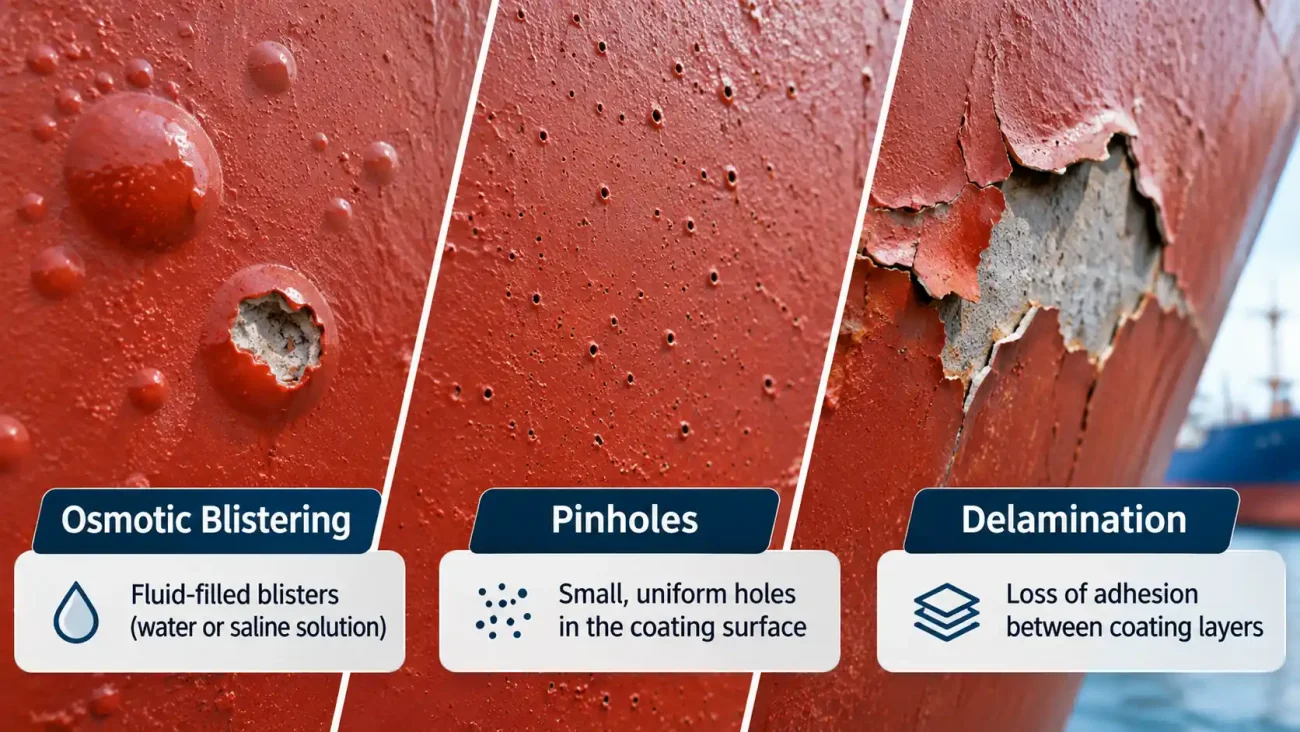
Use this quick check:
- Size and spread. Osmotic blisters range from tiny dots to coin-size domes, often in clusters below the waterline.
- Contents. Pierce a blister. A clear or cloudy liquid, often with a salty taste or sharp smell, points to osmosis.
- Steel below. Rust, salt crystals or pitting under the blister support a salt problem.
- Location. Blisters on horizontal areas, tank bottoms and the underwater hull are typical for immersion service.
- Dry blisters. If the blister is empty, suspect solvent, heat or adhesion failure instead.
Record the position, size and number of blisters, and take photos. A surveyor or the paint maker will need this record.
Blister repair: a 6-step method
The right blister repair depends on how far the blistering has spread. The steps below suit most cases:
- Map the damage. Mark all affected areas and check how deep the blisters go, through one coat or to bare steel.
- Open the blisters. Scrape or grind off the loose film around each blister until you reach sound paint that is well adhered.
- Wash with fresh water. Use high-pressure fresh water to flush out the liquid and salt. Do not skip this step, because it is the key to a lasting blister repair.
- Prepare the steel. Blast or power-tool the bare steel to the specified grade and give a feathered edge to the surrounding paint.
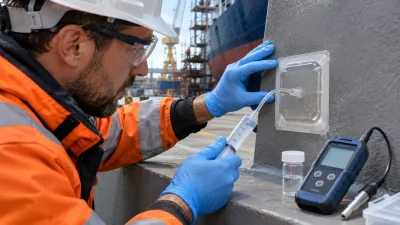
- Test for salts. Run a Bresle test on the cleaned surface and compare it with the data sheet limit.
- Recoat. Apply the repair system to the stated film thickness, with the right overcoating and cure times, before the steel flashes.
When blisters cover large areas, spot repair is a short-term fix. Salt left in pits will start the cycle again. In that case, remove the affected coats completely, wash and re-blast the steel.
Always follow the paint maker’s instructions for the repair system. If you are unsure, ask the supplier before you start, or request a quote for TransOcean repair and immersion coatings.
How to prevent osmotic blistering: 7 key controls
The cheapest blister repair is the one you never need. Preventing osmotic blistering is mostly a matter of discipline during surface preparation and application:
- Remove salts first. Wash the steel with fresh water before and after blasting, especially in pitted areas.
- Measure salt on the steel. The Bresle test measures soluble salt and is the standard way to prove the steel is clean enough to paint.
- Use clean abrasive. Contaminated abrasive puts salt back on the surface.
- Coat before flash rust. Keep the time between blasting and priming short and watch the dew point.
- Choose an immersion-rated system. Use products approved for underwater service, and follow the system build on the data sheet.
- Control film thickness. Measure DFT after each coat and keep within the specified range.
- Respect cure times. Do not launch before the film has cured for the stated period.
Many teams also write a hold point into the job plan. No coating goes on until the salt reading is inside the limit. That single rule prevents most cases of osmotic blistering.
Osmotic blistering risks in Dubai and Duqm conditions
Shipyards and dry docks in the UAE and Oman face high heat, strong sun and salty air. These conditions raise the risk of osmotic blistering if the work is rushed.
- Salt-laden air. Sea spray and dust settle on steel overnight, so wash and re-test before coating.
- Hot steel. Coating hot surfaces can trap solvent. Check surface temperature, not only air temperature.
- Condensation. Night humidity leaves moisture and salt on steel, so check the dew point.
- Tight schedules. Short dock periods tempt crews to skip cure times. Plan realistic intervals.
Good record keeping helps. Log the salt readings, climate data and film thickness for each coat, and keep the records for the next dry-docking.
Frequently asked questions
What is osmotic blistering?
Osmotic blistering is the formation of water-filled blisters under a paint film. Soluble salts trapped under the coating draw water through the film by osmosis. The liquid collects in pockets and lifts the paint. It is most common on hulls and tanks that stay in water.
What causes paint blisters on a ship hull?
The main cause is soluble salt left on the steel before painting. Other causes are an under-cured or contaminated film, trapped solvent, a coating not suited to immersion, and film that is too thin or too thick. Damaged areas let water reach the steel and make blisters worse.
Can blisters be repaired without blasting the whole hull?
Sometimes. If the blisters are local, you can open them, wash the steel with fresh water, remove all salt, prepare to the specified grade and recoat. If blisters cover large areas, spot repair rarely lasts, and a full removal of the affected coats is the safer plan.
How do I prevent blistering on a new paint job?
Remove soluble salts before painting, then prove it with a Bresle test. Blast to the specified grade, coat before flash rust forms, apply the stated film thickness, respect the overcoating and cure times, and use a system approved for the service. Inspect after the first immersion.
Is a blister always an osmotic blister?
No. Blisters can also come from trapped solvent, heat, moisture in the film, or poor adhesion over oil or dust. Open a few blisters. A clear, often salty liquid and rust or salt crystals underneath point to osmotic blistering. A dry blister points to another cause.
When should I wash the steel to remove salts?
Wash after blasting and before the first coat, and again if the steel has been exposed to spray, rain or condensation. Use clean fresh water, dry the steel and measure the salt level with a Bresle test. Repeat until the reading is inside the limit on the paint data sheet.
Get a coating plan for your hull
Planning a repaint or a blister repair on a vessel in the UAE or Oman? Request a quote for TransOcean marine paints and tell us the area, the service and the condition of the steel. Our team will send the data sheets so you can match an immersion-rated system to your hull.