

A new coating system is expensive. When it fails early, the cost of blasting, repainting and lost time can be larger than the first job. Most marine coating failures are not caused by the paint itself. They come from how the surface was prepared and how the coat was applied.
This guide is for technical managers and dry-dock contractors in the UAE and Oman. It lists 7 causes of marine coating failures, shows how each one looks, and explains how to prevent it.
Contents
- What marine coating failures look like
- 1. Poor surface preparation
- 2. Soluble salts left on the steel
- 3. Moisture and a low dew point margin
- 4. Wrong film thickness (DFT)
- 5. Missed overcoating interval
- 6. Incompatible coats
- 7. Application and mixing errors
- A simple prevention checklist
- Frequently asked questions
What marine coating failures look like
Learn the signs first. The pattern on the hull often points to the cause.
- Blistering: raised domes in the film. Coating blistering on a ship hull is common below the waterline.
- Peeling and flaking: paint peeling from steel in sheets or flakes. This shows weak adhesion.
- Cracking: splits across the film, often where it is too thick.
- Rust spotting: small rust points through the paint, often at edges and welds.
- Chalking and fading: a powdery surface on exposed topcoat.
Premature coating breakdown means a coating fails well before its expected life. Check the pattern, then look for the cause in the list below.
Do not guess from one patch. Photograph the damage, note the location on the hull, and record the age of the coat. Blisters only on the flat bottom point to a different cause than peeling at edges. Good records help you separate real marine coating failures from simple mechanical damage, such as scrapes from docking blocks or fenders.
1. Poor surface preparation
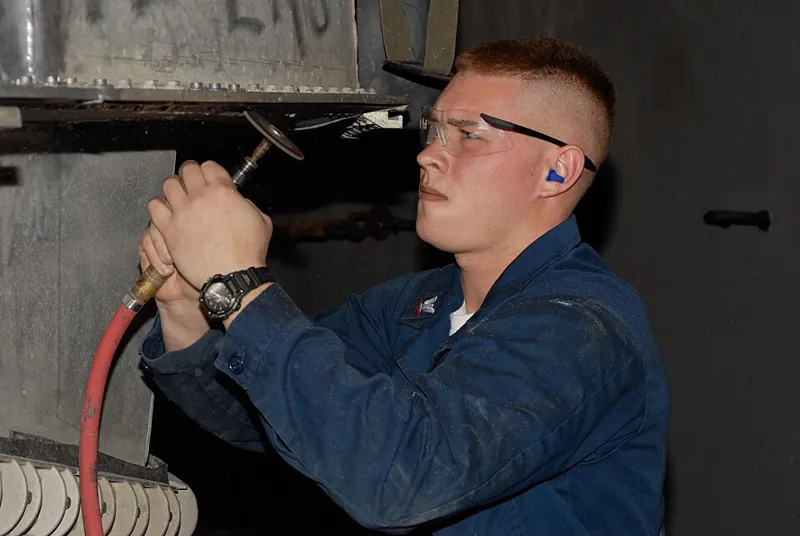
This is the main cause of marine coating failures. Paint can only hold as well as the surface it sits on. Rust, mill scale, oil, grease and old loose paint all weaken the bond.
What goes wrong:
- Rust and scale left under the primer.
- Oil or grease not removed before blasting.
- A surface profile that is too smooth, or too rough for the film thickness.
- Dust left on the steel after blasting.
How to prevent it: set the cleanliness grade and the profile in the specification. Blast to that grade, remove dust, and coat before the steel flashes with rust. Read our guide to surface preparation in coating projects for the full method.
2. Soluble salts left on the steel
Soluble salts are invisible. They stay on steel that looks clean after blasting, especially on hulls, tanks and decks that worked in seawater. Salt under the film attracts water. This is the root of osmosis through the paint, and it is a leading cause of osmotic blistering.
How to prevent it:
- Test the steel for soluble salts after blasting. Conductivity methods such as ISO 8502-9 are common.
- Use the limit set in the project specification.
- Wash with fresh water and re-test if the result is above the limit.
- Re-check after any delay, because the Gulf air carries salt.
3. Moisture and a low dew point margin
Steel surfaces cool faster than the air at night. When the steel temperature falls close to the dew point, a thin film of water forms. You may not see it. Paint applied over it bonds poorly.
Moisture is a frequent source of marine coating failures in humid Gulf ports. It can cause blisters, pinholes and early rust.
How to prevent it:
- Measure steel temperature, air temperature and humidity before and during work.
- Keep the steel at least 3 °C above the dew point, or follow the data sheet.
- Stop work when conditions drift outside the limit.
- Use dehumidification in tanks and enclosed spaces.
- Keep a log for each shift.
4. Wrong film thickness (DFT)
Every coat has a film thickness range. Going below it gives less protection. Going above it can crack the film or trap solvent, which later forms blisters.
Typical errors are thin edges and welds, uneven spraying, and over-thick patches where the painter overlaps passes.
How to prevent it:
- Check wet film thickness during application.
- Measure dry film thickness after curing, with a calibrated gauge.
- Apply a stripe coat on edges, welds and corners before the full coat.
- Record results against the specified minimum and maximum.
See our guide to marine coating DFT for the measuring method and the common mistakes.
5. Missed overcoating interval
Each paint has a minimum and a maximum time before the next coat. Epoxies in particular harden with time. If you recoat too late, the surface may be too hard for a good bond, and the layers can separate. If you recoat too early, solvent is trapped.
How to prevent it:
- Read the overcoating interval on the marine coating technical data sheet, at the steel temperature on site.
- Plan the coats so the next layer goes on inside the window.
- If the window is missed, follow the data sheet for surface treatment before recoating.
6. Incompatible coats
Not every paint works over every other paint. A topcoat with strong solvents can lift an older coat. A new coat can fail to bond over an old one that is glossy or aged. Mixing brands without checking can also cause trouble.
How to prevent it:
- Use a complete system from one supplier, from primer to topcoat.
- Check the data sheet for approved primers and topcoats.
- Test patch adhesion before recoating an old system.
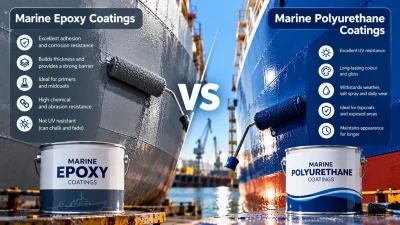
Understand how the layers work together in our guide to the marine coating system. If you are choosing between resin types, see epoxy vs polyurethane.
7. Application and mixing errors
Even a good surface and a good paint can fail if the paint is handled wrongly. Common errors on site include:
- Wrong mixing ratio of base and hardener.
- Using paint after its pot life has ended.
- Adding too much thinner.
- Skipping the induction time when the data sheet asks for it.
- Poor spray technique or a worn nozzle.
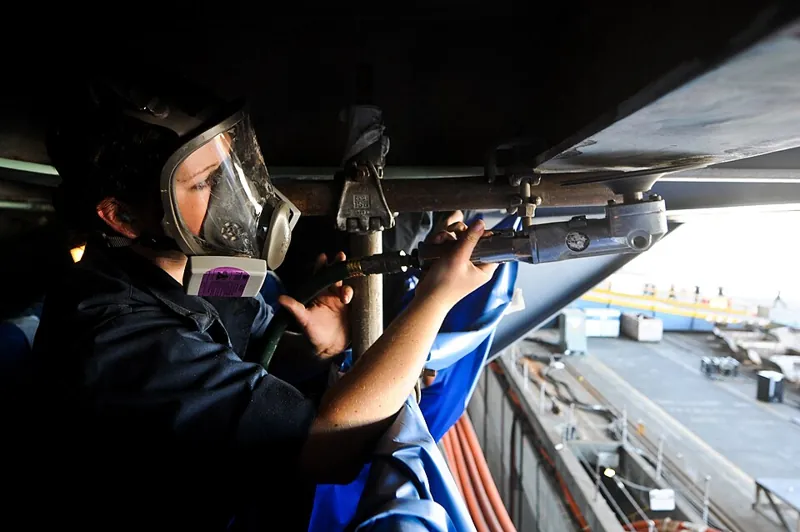
How to prevent it: train the applicators, mix whole kits where possible, and have an inspector witness the mixing and the first coat. Control of each step matters most in dry-dock work, where the schedule is tight. Our page on ship repair coatings in Duqm covers planning for this work.
A simple prevention checklist for marine coating failures
Use this list before every coat. It covers all 7 causes of marine coating failures:
- Surface cleaned to the specified grade, with the correct profile.
- Soluble salt test passed.
- Steel temperature at least 3 °C above dew point.
- Paint mixed and applied as the data sheet states.
- Wet and dry film thickness measured and recorded.
- Overcoating interval respected.
- All products compatible and from one approved system.
Most marine coating failures are visible only months later, when the vessel is back in service. By then the dry-dock slot is gone. That is why the checks above must be done and recorded during the job, not after it. A short inspection report for each coat gives the owner proof of quality and gives the contractor a clear defence if a dispute starts.
Write these checks into your marine coating specification so every party works to the same rules. Choose the right system for the area first. Our guide to ballast tank coatings is a good example of a high-risk area.
Frequently asked questions about marine coating failures
What are the most common marine coating failures?
The most common marine coating failures are blistering, peeling, cracking, rust breakthrough and loss of adhesion between coats. Most trace back to poor surface preparation, soluble salts, moisture during application, wrong film thickness or an ignored overcoating interval.
What causes paint blistering on a ship hull?
Blisters form when water or solvent collects under the film. Common causes are soluble salts left on the steel, moisture at application, trapped solvent and long immersion. Osmotic blistering draws water through the film towards contaminants beneath it.
What is osmotic blistering?
Osmotic blistering happens when water passes through the paint film towards soluble salts or other contaminants trapped under it. The water builds pressure and lifts the film into liquid-filled blisters. Clean, salt-free steel and the correct film thickness reduce the risk.
Why is paint peeling from steel after a few months?
Early peeling usually points to weak adhesion. The steel may have been rusty, oily, salty or too smooth, or the coats may not be compatible. Applying the next coat outside the overcoating interval can also leave a weak bond between layers.
How does dew point affect marine coating failures?
If the steel is near or below the dew point, a thin film of moisture forms on it. Paint applied over that film bonds poorly and may blister later. Keep the steel at least 3 °C above the dew point and record readings every shift.
How can I prevent premature coating breakdown?
Follow the specification step by step. Blast clean to the required grade, test for soluble salts, check dew point, mix and apply as the data sheet says, measure film thickness and respect the overcoating intervals. Record every check and fix defects before the next coat.
Can a failed marine coating be repaired without full removal?
Sometimes. Small areas can be spot repaired if the surrounding coating is sound and well bonded. Widespread blistering, peeling or contamination usually needs removal back to sound steel or coating. An inspector should assess the area before you choose the repair.
Need help to prevent marine coating failures?
Planning a dry-dock job and want to avoid costly rework? Contact our team with your vessel details and project dates. We will help you choose a compatible coating system and prepare a quote. You can also download product data sheets for TransOcean marine paints.