

A marine coating system is not one paint. It is a stack of layers, each with its own job, and the stack fails at its weakest layer. Buy the right primer but the wrong topcoat, or skip the midcoat to save time, and corrosion arrives years earlier than planned.
This guide is for purchasing managers, superintendents and contractors in the UAE and Oman. It explains each layer of a marine coating system, how schemes differ between hull, deck and tanks, and where TransOcean products fit.
Contents
- What is a marine coating system?
- The three layers: primer, midcoat and topcoat
- Primer: the foundation of the coating scheme
- Midcoat: building the barrier
- Topcoat: the layer everyone sees
- Marine paint system by area: hull, deck and tanks
- Which TransOcean product goes in which layer
- Common mistakes that break a marine coating system
- Checklist before you order
- Frequently asked questions
What is a marine coating system?
A marine coating system is the complete set of coats applied to a steel surface, from the first primer to the final topcoat. The layers are designed to work together. Each one bonds to the layer below and to the layer above.
The aim is simple: keep water, salt and oxygen away from the steel. Steel in the Gulf faces hot sun, humid air and salt-laden spray every day. Without a well-built marine coating system, rust starts at the first damaged spot and spreads under the film.
Many buyers search for a “marine paint system” or “coating scheme”. These terms mean the same thing: the specified list of coats, products and thicknesses for one area of the vessel or structure.
The three layers: primer, midcoat and topcoat
Most atmospheric schemes follow the same logic. The table below shows what each layer does.
| Layer | Main job | Typical binder |
|---|---|---|
| Primer | Bonds to steel and fights corrosion | Zinc-rich epoxy or anti-corrosive epoxy |
| Midcoat | Builds film thickness and a water barrier | High-build epoxy |
| Topcoat | Resists UV, weather and wear; gives colour and gloss | Polyurethane or similar finish |
A stripe coat is often added on edges, welds and corners. These areas hold less paint, so they fail first. Check the specification for stripe coat requirements.
Primer: the foundation of the coating scheme
The primer is the first coat on prepared steel. If it fails, everything above it fails. It must grip the surface and slow corrosion at the metal itself.
Zinc-rich primers
Zinc-rich primers give active corrosion protection. The zinc corrodes in preference to the steel, which protects small damaged spots. They are common on blasted steel in aggressive exposure.
Anti-corrosive epoxy primers
Epoxy primers form a tough barrier and bond well to properly prepared steel. They are used on hulls, decks and structures where a barrier film is the main need.
Whatever you choose, the primer is only as good as the steel under it. Read our guide to marine coating surface preparation before you fix the specification. You can also review our range of marine primers and anti-corrosive coatings.
Midcoat: building the barrier
The midcoat, also called the intermediate or build coat, adds thickness. A thicker film means a longer path for water and salts to reach the steel. In a marine coating system, this layer is the main barrier.
High-build epoxies are the usual choice. They apply at a high film thickness per coat, which saves time compared with many thin coats. They also give a smooth, strong base for the topcoat.
Midcoats have overcoating windows. If the epoxy cures too long before the next coat, the topcoat may not bond well. Always check the data sheet for minimum and maximum overcoating times at your site temperature. For more on this layer, see our page on marine epoxy coatings.
Topcoat: the layer everyone sees
The topcoat is the final layer. It faces sun, salt spray, rain and daily wear. It also gives the ship its colour and gloss.
Epoxy binders chalk and fade in strong sunlight, so they are poor topcoats on exposed steel. Polyurethane finishes are designed to resist UV and keep gloss and colour much longer. That is why a typical marine paint system pairs epoxy below with polyurethane on top.
Our guide to marine topcoats and finishes compares alkyd, acrylic and polyurethane options in detail. For product options, see our polyurethane marine coatings page.
Marine paint system by area: hull, deck and tanks
One vessel carries several schemes. Each area has different exposure.
Hull and topsides
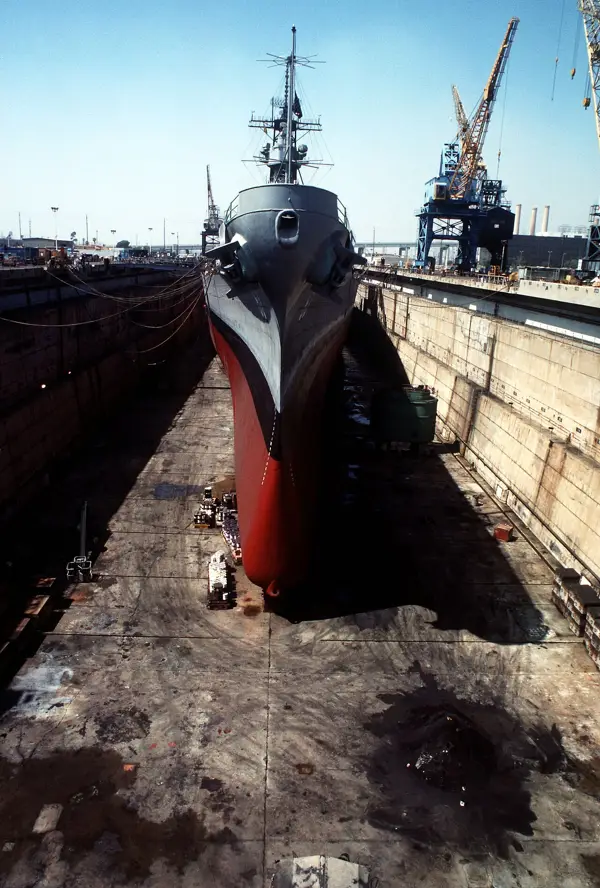
The underwater hull needs an anti-corrosive system plus antifouling to stop marine growth. Topsides above the waterline need a barrier plus a UV-stable topcoat. Berthing contact adds mechanical wear.
Decks and superstructure
Decks need hardness and abrasion resistance for foot traffic and cargo gear. Some need non-slip finishes. The topcoat here is chosen for UV stability and toughness.
Tanks and holds
Ballast tanks, cargo tanks and holds are immersion or chemical-exposure areas. They normally use epoxy coats in light colours so inspectors can spot defects. Read our ballast tank coatings guide for details. These areas rarely take a polyurethane topcoat, since no sunlight reaches the inside of a tank.
For hull paint layers below the waterline, plan antifouling with your dry-dock schedule and check the consumption figures first. Our article on marine paint consumption shows how to estimate quantities.
Which TransOcean product goes in which layer
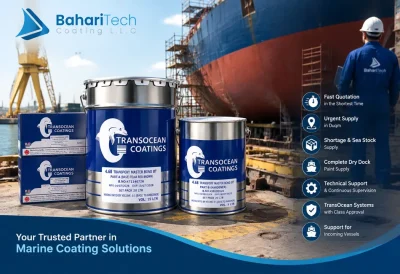
Bahari Tech supplies the TransOcean range in the UAE and Oman. The examples below show how products fit the layers of a marine coating system. They are examples, not a specification. Always check the data sheet and the project specification before ordering.
| Layer | TransOcean product | Type |
|---|---|---|
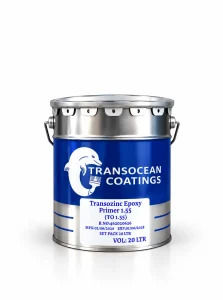
| Primer | Transozinc Epoxy Primer 155 (TO 1.55) | Two-component zinc-rich epoxy primer |
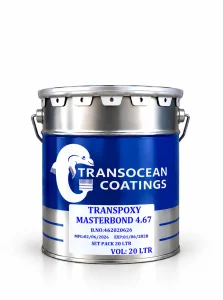
| Primer / build coat | Transpoxy Masterbond 467 (TO 4.67) | High-solids epoxy primer and coating |
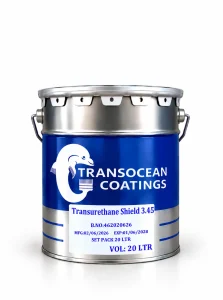
| Topcoat | Transurethane Finish (TO 3.43) | Acrylic polyurethane finish |
The Transozinc primer is two-component, quick drying and can be used as a holding primer. The Masterbond 467 product is described as suitable for St3 prepared steel and compatible with most aged coatings and approved zinc silicate shop-primers. The Transurethane Finish uses acrylic resins with isocyanate curing agents for protection against atmospheric exposure.
A common scheme on atmospheric steel is a zinc-rich or epoxy primer, an epoxy midcoat and a polyurethane topcoat. Ask our team to confirm the right combination, film thickness and overcoating times for your project.
Common mistakes that break a marine coating system
- Skipping surface preparation. Paint cannot hold on salt, oil or rust.
- Missing the overcoating window. The next coat then fails to bond.
- Wrong film thickness. Too thin gives poor protection. Too thick can crack or trap solvent.
- Forgetting stripe coats. Edges and welds fail first.
- Mixing incompatible products. Layers must be tested to work together.
- Painting in poor weather. Surface temperature and dew point matter for every coat.
Checklist before you order
- List each area: hull, deck, superstructure, tanks.
- Note the steel condition and the preparation standard.
- Pick a primer, midcoat and topcoat from one compatible range.
- Check data sheets for film thickness and overcoating times.
- Calculate quantities, including losses and stripe coats.
- Plan delivery to match your dry-dock or shutdown dates.
For background on how corrosion protection works, see this overview of corrosion on Wikipedia.
Frequently asked questions
What is a marine coating system?
A marine coating system is the full set of paint layers applied to a steel surface, usually a primer, one or more intermediate coats and a topcoat. Each layer has a separate job, and the layers are chosen to work together. Together they protect the steel from corrosion, water and sunlight.
How many coats does a marine paint system need?
Most atmospheric systems use three layers: primer, midcoat and topcoat, sometimes with a stripe coat on edges and welds. Tank and immersion systems may use two or more full coats of epoxy. The exact number depends on the area, the required film thickness and the project specification.
What is the difference between primer, midcoat and topcoat?
The primer bonds to the prepared steel and fights corrosion. The midcoat builds film thickness and adds a barrier against water and salts. The topcoat faces sun, weather and wear, and gives colour and gloss. Remove one layer and the others cannot do the job alone.
Can I mix paints from different manufacturers in one coating scheme?
It is risky. Layers must be compatible and cure properly together, and manufacturers only guarantee the systems they have tested. If you must mix brands, ask for written confirmation of compatibility from both suppliers and test a small patch before starting the full application.
Is the coating scheme the same for hull, deck and tanks?
No. Each area has its own exposure, so each has its own scheme. The hull needs anti-corrosive and antifouling layers. The deck needs hard, UV-stable layers. Tanks need immersion-grade epoxy. Always follow the data sheet and the owner’s specification for each area.
Does surface preparation matter more than the paint?
It matters as much as the paint. Even the best marine coating system fails early on steel with salt, oil, rust or poor roughness. Prepare the surface to the specified standard, check it before painting, and apply the first coat within the time the data sheet allows.
How do I choose products for my coating scheme?
Start with the area, the steel condition and the exposure. Then pick a compatible primer, midcoat and topcoat from one product range, and read each data sheet for film thickness and overcoating times. Our team can help you match products to your project and send the documents.
Build the right coating scheme for your project
The right marine coating system saves repaint cost, downtime and risk. Tell us about your vessel or structure, and our team will suggest compatible products, confirm availability and send the data sheets. Contact Bahari Tech for a quote or browse the TransOcean paint range.