

Marine coating surface preparation is the single biggest factor in how long a paint system lasts on a ship, an offshore structure or a port facility. The best epoxy or polyurethane in the world can only grip the steel it is applied to. If that steel still carries mill scale, rust, salt, oil or dust, the coating will blister, peel and corrode from underneath long before its design life ends.
This guide explains what surface preparation means in practice, which standards control it (Sa 2.5 and ISO 8501 above all), how surface profile, soluble salts and dust are tested, and how to match the preparation to the primer you plan to apply.
Contents
- What is surface preparation?
- Why marine coating surface preparation decides coating life
- Sa 2.5 and ISO 8501 cleanliness grades
- Surface profile and anchor pattern
- Soluble salt and dust tests
- Marine coating surface preparation methods compared
- Weather, dew point and flash rust
- Matching preparation to the primer
- Safety and cost benefits
- A practical marine coating surface preparation checklist
- Frequently asked questions
What Is Surface Preparation?
Surface preparation is every operation carried out on a substrate before the first coat goes on. It covers the removal of old paint, rust, mill scale, oil, grease, salts and dust, and the creation of a surface texture that the primer can key into.
On marine and industrial steel the work usually has three parts:
- Cleaning: degreasing and fresh-water washing to remove oil, grease and soluble contaminants.
- Removal of corrosion and old coatings: abrasive blasting, water jetting or mechanical tools.
- Profiling and final cleaning: creating a roughness pattern, then removing blasting dust before priming.
In marine coating surface preparation, welds, edges, pits and cut surfaces need special attention, because they are the first places where a coating fails.
Why Marine Coating Surface Preparation Decides Coating Life
Paint does not seal steel by magic. It adheres mechanically to a roughened surface and chemically to a clean one. When either condition is missing, adhesion is weak and moisture finds its way under the film.
Poorly prepared steel typically leads to:
- early peeling, flaking or delamination of the coating,
- blistering caused by salts that draw water through the film (osmotic blistering),
- rust creeping out from scratches and weld seams,
- premature repainting and extra dry-docking time.
Coating manufacturers and inspectors have long reported that inadequate preparation is one of the most common causes of coating failure on steel structures. That is why marine specifications spend as many pages on preparation as on the paint itself.
For a wider view of how corrosion starts and spreads on vessels, read our guides on ship corrosion and prevention methods and what rusting is and how to prevent it.
Sa 2.5 and ISO 8501 Cleanliness Grades
ISO 8501-1 is the international standard used in marine coating surface preparation to describe how clean a steel surface is. It combines written definitions with photographs of steel in four initial rust grades (A to D) and several preparation grades.
Blast-cleaning grades
- Sa 1 – light blast cleaning: loose scale, rust and old paint are removed, but much remains tightly attached.
- Sa 2 – thorough blast cleaning: most mill scale, rust and coating are removed; only slight residues remain.
- Sa 2.5 – very thorough blast cleaning: mill scale, rust and old coating are removed so that only slight staining shows as spots or stripes. This is the grade most marine primers require.
- Sa 3 – blast cleaning to visually clean steel: a uniform metallic colour with no residue, used for the most demanding immersion duties.
Sa 2.5 is broadly equivalent to SSPC-SP 10 / NACE No. 2 (near-white metal blast cleaning), so many project specifications quote both.
Other parts of the ISO 8501 family
- St 2 and St 3: hand and power-tool cleaning grades, used where blasting is not possible.
- ISO 8501-3: preparation grades for welds, edges and other imperfections (P1 to P3).
- ISO 8501-4: initial surface conditions and flash rust grades for high-pressure water jetting.
Always read the primer’s technical data sheet. It states the minimum grade, and applying paint over a lower grade usually voids the system warranty.
Surface Profile and Anchor Pattern
A clean surface is not enough. Blasting must also leave a controlled roughness, called the surface profile or anchor pattern, which gives the primer a larger area to bond to. ISO 8503 describes how this roughness is characterised and measured.
In marine coating surface preparation, profile height matters in both directions:
- Too smooth: the primer has little to grip and adhesion drops.
- Too rough: peaks stand proud of the film, leaving rust-prone spots with thin coverage.
The required range is set by the paint manufacturer for each product, so it should be taken from the data sheet rather than assumed. Common ways to check it include comparator discs, replica tape and digital depth gauges, taken at agreed intervals across the structure.
The abrasive chosen largely determines the profile. Angular steel grit gives a sharper, deeper profile than round steel shot, and mineral abrasives vary again. For background on the process itself, see this overview of abrasive blasting.
Soluble Salt and Dust Tests
Steel can look perfectly clean and still carry invisible contamination. In a marine climate, chlorides and sulphates left on the surface pull moisture through the coating and start blisters. Two checks should be done before priming:
Soluble salt test
ISO 8502-6 (the Bresle method) extracts salts from a defined patch of steel, and ISO 8502-9 explains how to interpret the conductivity reading. The result is given in mg/m² and compared with the limit in the specification. For example, the IMO performance standard for ballast tank coatings sets a maximum of 50 mg/m² of sodium chloride equivalent, which is why ballast tank coating projects are so strict about washing and re-testing.
Dust test
Blasting leaves fine dust that sits in the profile. ISO 8502-3 uses pressure-sensitive tape pressed on the surface, then compares the dust collected with reference images for quantity and particle size. Vacuum cleaning or dry, oil-free air blow-down removes the dust before the primer is applied.
Record the readings with date, location and instrument in the inspection report. Where salts exceed the limit, wash with fresh water, let the steel dry and test again; blasting alone does not remove them.
Marine Coating Surface Preparation Methods Compared
The right method depends on the substrate, the coating being removed, the site and local rules on dust and waste.
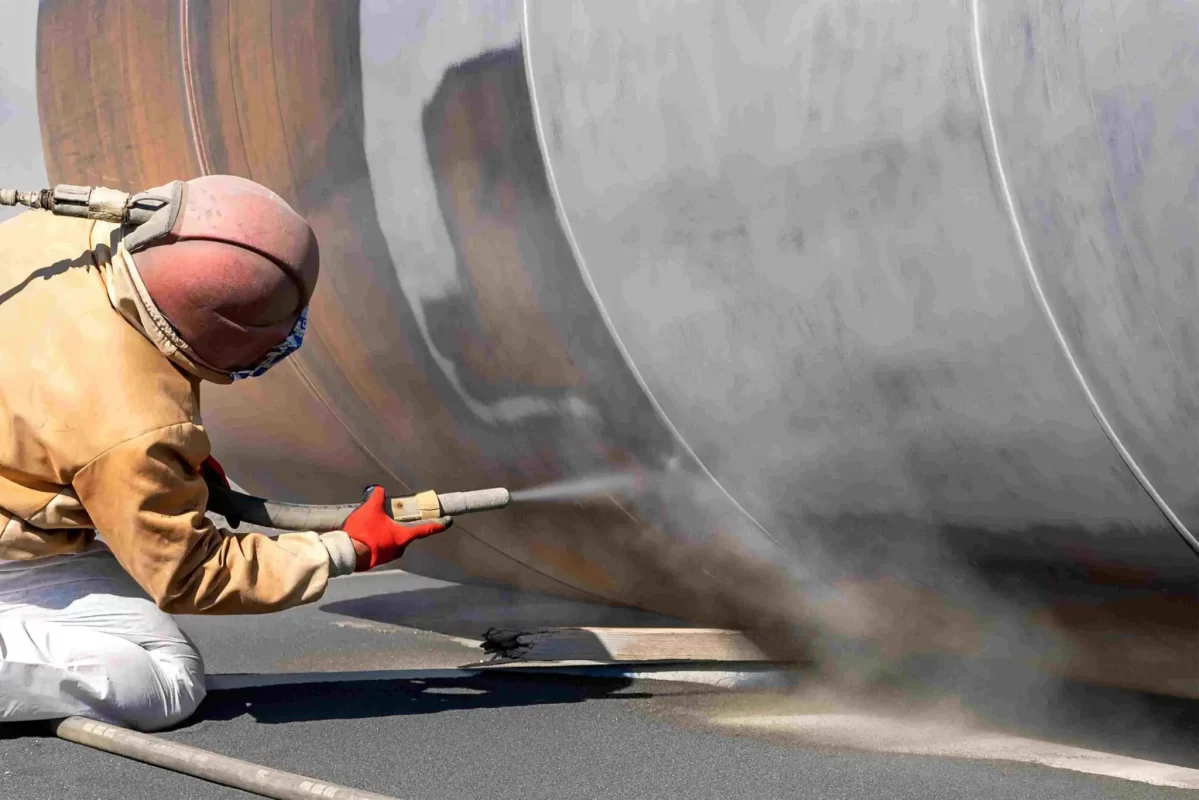
- Dry abrasive blasting: the standard route to Sa 2.5 and a controlled profile on new-build and maintenance steel. It needs containment and dust control.
- Ultra-high-pressure water jetting: removes coatings, rust and soluble salts without dust and leaves no embedded abrasive, but flash rust must be managed. It is graded under ISO 8501-4.
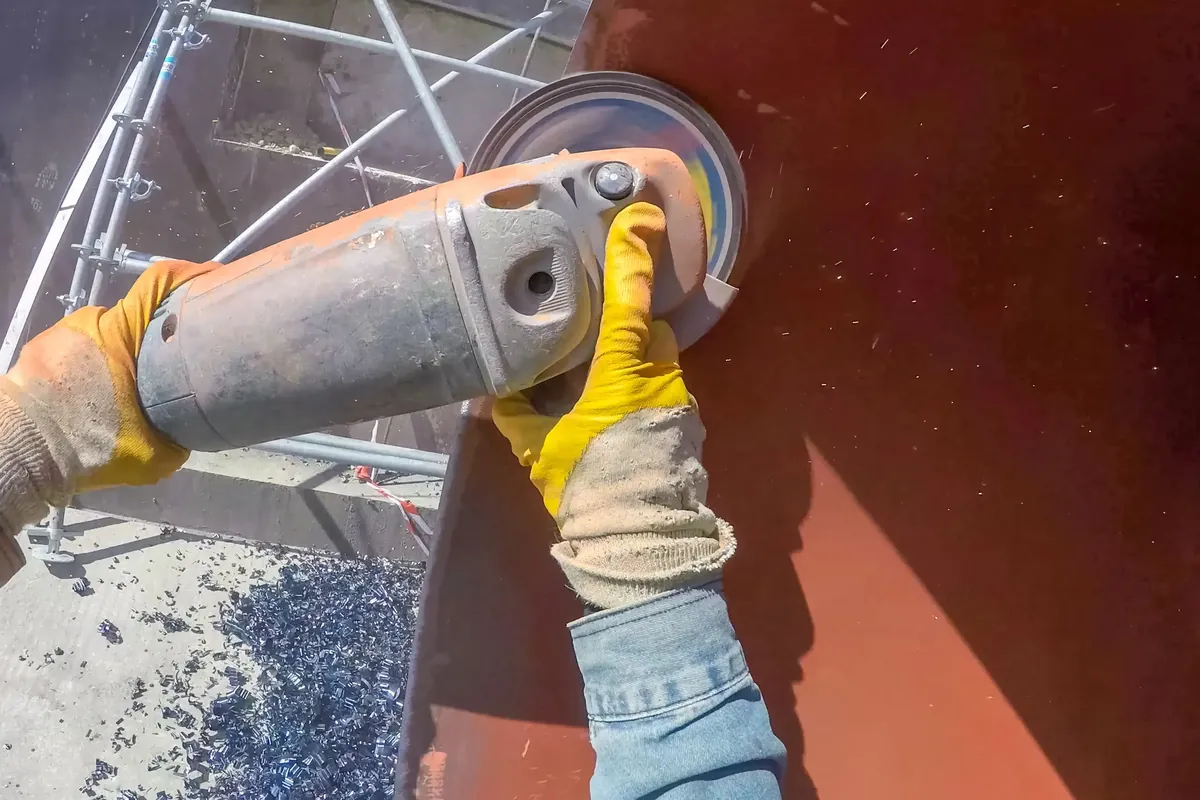
- Power-tool cleaning (St 2 / St 3): useful for spot repairs, small areas and places that cannot be blasted, although it gives little profile.
- Hand tools: wire brushes and scrapers for minor touch-ups only.
- Solvent and detergent cleaning: removes oil, grease and dirt before any other work. Blasting over oil only drives it into the surface.
Whichever method of marine coating surface preparation is used, inspect the result against the specified grade before moving on, and keep the steel protected until it is primed.
Weather, Dew Point and Flash Rust
Marine coating surface preparation and priming are weather-dependent, particularly in humid coastal regions such as the Gulf and the Sea of Oman.
- Dew point: a common requirement is that the steel temperature stays at least 3 °C above the dew point while blasting, priming and curing. Confirm the exact limit on the data sheet.
- Relative humidity: high humidity speeds up flash rust on freshly blasted steel.
- Time to prime: blasted steel should be coated within the same shift where possible, and always before visible rust returns.
- Re-blasting: if flash rust or contamination appears before priming, the surface must be brought back to the specified grade.
Measure and log air temperature, steel temperature, humidity and dew point at each stage. Those records protect the contractor and the owner if a dispute arises later.
Matching Preparation to the Primer
The primer is the first coat that touches the prepared steel, so its data sheet drives the whole preparation plan. Different primers tolerate different conditions, which is why marine coating surface preparation and product choice should be decided together. Our guide to marine primers and anti-corrosive coatings explains how primer types differ.
Examples from the Bahari-Tech range of TransOcean coatings include:
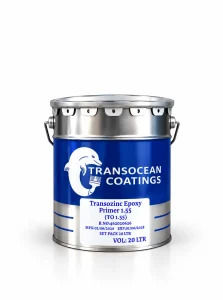
- Transozinc Epoxy Primer 155 (TO 1.55), a two-component zinc-rich epoxy primer for steel in industrial and marine environments, normally applied over blast-cleaned steel.
- Transpoxy Primer (TO 1.16), a polyamide cured epoxy primer that can also be used as a holding primer on hulls, cargo holds and decks.
- Transogard Redoxide (TO 1.12), a quick-drying alkyd primer for steel protection.
The required cleanliness grade, profile range and overcoating interval for each product are listed in its technical data sheet. You can download the sheets and application guidance from our documents and downloads page.
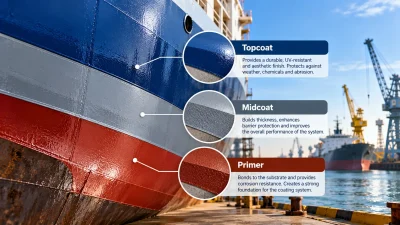
A primer is only as good as the steel under it, and a topcoat is only as good as the primer. Treat the three layers, preparation, primer and finish, as one system.
Safety and Cost Benefits
Safer work areas
Oil, grease, loose scale and slippery rust create hazards for crews working on decks, tank floors and scaffolding. Removing them makes the work area safer and the coating process easier to control. Blasting itself brings dust, noise and confined-space risks that need ventilation, containment and proper protective equipment.
Lower lifetime cost
Marine coating surface preparation is often one of the largest cost items in a repaint, yet it is far cheaper than redoing a failed coating. Coatings applied to well-prepared steel need fewer repairs, shorter dry-dock stays and fewer repaint cycles, which reduces labour, material and downtime costs.
Marine and industrial environments
Hulls, decks, offshore platforms, tanks and port steelwork face salt, moisture and constant movement. In these conditions, careful marine coating surface preparation is not an optional extra; it is what lets the coating system reach its intended service life.
A Practical Marine Coating Surface Preparation Checklist
- Read the primer’s technical data sheet and the project specification to confirm grade, profile and conditions.
- Degrease the surface and wash it with fresh water to remove oil, grease and visible salts.
- Grind welds, round sharp edges and repair defects to the specified ISO 8501-3 grade.
- Blast clean to Sa 2.5 (or the grade specified) with a suitable abrasive.
- Remove dust by vacuuming or blowing down with dry, oil-free air.
- Check the profile, the dust level and the soluble salt level, and record the results.
- Check steel temperature, humidity and dew point.
- Apply the primer promptly, before flash rust forms.
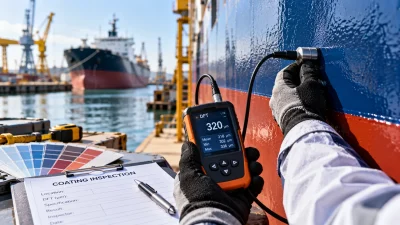
- Inspect wet and dry film thickness at each coat.
Planning a coating project in the UAE or Oman? Contact the Bahari-Tech team to discuss the right primer, topcoat and surface preparation for your steel.
Conclusion
Marine coating surface preparation is the foundation of every durable coating system. Reaching the right ISO 8501 grade, achieving the specified profile, and confirming that salts and dust are below the limits are what separate coatings that last for years from those that fail early. Choose the primer and the preparation method together, document each step, and the paint can do the job it was designed for.
Frequently Asked Questions
What is marine coating surface preparation?
Marine coating surface preparation is the cleaning, rust removal and profiling of steel before painting. It includes degreasing, abrasive blasting or water jetting, dust removal and testing, so that the primer bonds firmly and protects the steel against seawater, salt and humidity for years.
What does Sa 2.5 mean in ISO 8501?
Sa 2.5 is a very thorough blast-cleaning grade. Mill scale, rust and old coatings are removed so that only slight staining remains as spots or stripes. Most marine primers and immersion coating systems specify it as the minimum for surface preparation, so check the data sheet before work starts.
Why is surface profile important?
Surface profile is the roughness left by blasting. It gives the primer a larger area to grip and improves mechanical adhesion. If it is too smooth the coating can peel, and if it is too rough thin spots may rust. The exact range is always stated on the product data sheet, so measure it before priming.
How do you test for salt and dust before painting?
Soluble salts are measured with the Bresle method (ISO 8502-6 and 8502-9) and reported in mg/m². Dust is assessed with pressure-sensitive tape under ISO 8502-3. Both results are compared with the limits in the project specification before priming begins, and any failed area is cleaned and tested again.
How soon after blasting should the primer be applied?
As soon as possible, ideally within the same shift and before visible flash rust appears. In humid conditions rust can form within hours, and if it does, the surface must be re-cleaned to the specified grade before any primer is applied.
Can I paint over old coatings without removing them?
Only if the old coating is sound, well adhered, clean and compatible with the new system. Failed, loose or rusted areas must be prepared to the specified grade, and compatibility should be confirmed with the paint manufacturer before any topcoat is applied.