

Marine epoxy vs polyurethane is one of the first questions in any coating specification. Both are two-pack paints. Both protect steel. But they do different jobs, and the wrong choice shows up as chalking, peeling or early rust.
This guide is for superintendents, purchasing managers and contractors in the UAE and Oman. It gives a fair comparison, so you can decide where each coating belongs in your system.
Contents
- Marine epoxy vs polyurethane: the short answer
- What marine epoxy does best
- What marine polyurethane does best
- 7 key differences in marine epoxy vs polyurethane
- UV resistance: why the topcoat matters
- Recoat interval and the epoxy primer polyurethane topcoat system
- Where to use each coating
- Common mistakes in marine epoxy vs polyurethane choices
- Frequently asked questions
Marine epoxy vs polyurethane: the short answer
Use epoxy to protect the steel. Use polyurethane to protect the epoxy.
Epoxy gives strong adhesion, a tough film and good chemical resistance. Polyurethane gives UV stability, gloss and colour retention. In most marine epoxy vs polyurethane decisions, the answer is not one or the other. It is both, in the right order.
What marine epoxy does best
Epoxy is the workhorse of protective coating. It cures by a chemical reaction between a resin and a hardener, and forms a hard, dense film. Our page on marine epoxy coatings covers the range in detail.
- Adhesion: bonds well to properly prepared steel.
- Barrier strength: slows water, salt and oxygen from reaching the metal.
- Chemical and abrasion resistance: suits tanks, decks and splash areas.
- High build: thick coats cut the number of layers.
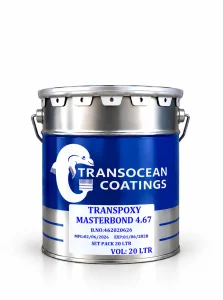
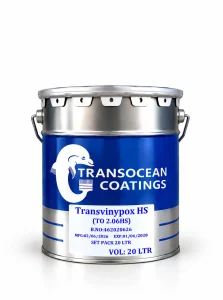
In any marine epoxy vs polyurethane comparison, epoxy is the stronger protector. The weak point is sunlight. Left exposed, epoxy chalks and fades. It still protects, but it no longer looks good. Heavy-duty grades such as an epoxy mastic are used where surface preparation is hard. Products like Transpoxy Masterbond 467 are typical for the epoxy layers.
What marine polyurethane does best
Polyurethane is the finish. A two-pack aliphatic polyurethane forms a smooth, glossy film that resists UV light. You can read more on our polyurethane marine coatings page.
- UV stability: keeps gloss and colour in strong sun.
- Weathering: holds up to salt spray and temperature swings.
- Flexibility: follows small movements of the steel.
- Finish: easy to clean, with a wide colour range.
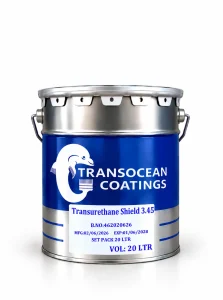
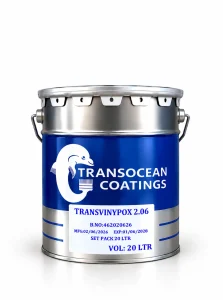
In the same marine epoxy vs polyurethane choice, polyurethane is the better finish. It is usually not the best choice as a primer. It is a topcoat. A product such as Transurethane Shield 3.45 is designed for that role. For a deeper look at finish options, read our guide to marine topcoats and finishes.
7 key differences in marine epoxy vs polyurethane
Here is the marine epoxy vs polyurethane comparison in one view. It is a general guide. The data sheet of the actual product always wins.
| Point | Marine epoxy | Marine polyurethane |
|---|---|---|
| Main role | Primer and build coat | Finish topcoat |
| UV resistance | Low: chalks and fades | High: keeps gloss and colour |
| Chemical resistance | Very good | Good, product dependent |
| Adhesion to steel | Excellent | Needs a primed surface |
| Flexibility | Harder, less flexible | More flexible |
| Cure sensitivity | Slows in cold weather | Sensitive to moisture |
| Typical area | Tanks, hull, underwater | Topsides, decks, superstructure |
1. The job in the system
Epoxy builds protection. Polyurethane finishes it. That single difference explains most of the others.
2. UV and weather
Polyurethane wins above the waterline. Epoxy wins where sunlight does not reach.
3. Chemical resistance
Epoxy is the stronger option against many chemicals, fuels and cleaning agents. Check the chemical list in the data sheet for your service.
4. Flexibility
Polyurethane is more flexible. This helps on surfaces that move with heat and loads.
5. Cure and moisture
Polyurethane reacts with moisture, so humid air and damp surfaces can cause bubbles or pinholes. Epoxy cures slowly in cold weather. In the Gulf, heat and humidity both matter.
6. Safety
Safety also differs in marine epoxy vs polyurethane work. Polyurethane hardeners contain isocyanates, so ventilation and respiratory protection are vital. Epoxy hardeners can irritate skin. Use the correct PPE for both.
7. Cost
A fair marine epoxy vs polyurethane cost check uses cost per square metre at the specified film thickness. Do not compare price per litre only.
UV resistance: why the topcoat matters
The UAE and Oman have strong sun for much of the year. UV resistance is therefore a major part of marine epoxy vs polyurethane selection, and it often decides the topcoat. Epoxy resins break down at the surface under UV light. The surface turns chalky and loses colour.
Chalking is mostly cosmetic at first. But a chalky surface can also hold dirt and make repainting harder. A polyurethane topcoat shields the epoxy underneath. That is the main reason it is specified for decks, topsides and superstructure.
Recoat interval and the epoxy primer polyurethane topcoat system
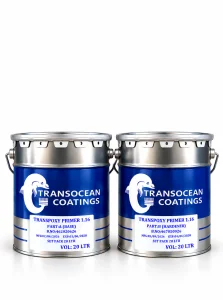
Timing is where marine epoxy vs polyurethane systems most often go wrong. A classic system uses an epoxy primer, an epoxy build coat and a polyurethane topcoat. The recoat interval links the layers. It is the time between one coat and the next.
- Minimum interval: the earliest you can recoat without trapping solvent.
- Maximum interval: the latest you can recoat without special surface treatment.
If the epoxy cures too long, the surface becomes hard and smooth. The topcoat may not bond well. In that case the surface must be abraded or treated, as the data sheet says. If you recoat too soon, solvents get trapped and the film can blister.
Heat changes the recoat interval. A hot steel surface in Dubai or Duqm cures the paint faster, so the window is shorter. Measure surface temperature and check the data sheet. Our guide to the marine coating system shows how each layer works with the next. Film thickness is checked in the way we describe in marine coating DFT inspection.
Where to use each coating
The marine epoxy vs polyurethane decision comes down to where the surface is and what it faces.
Choose epoxy for
- Primers on blasted steel
- Ballast tanks and cargo tanks
- Underwater hull areas, under antifouling
- Industrial floors and structures not exposed to sun
Choose polyurethane for
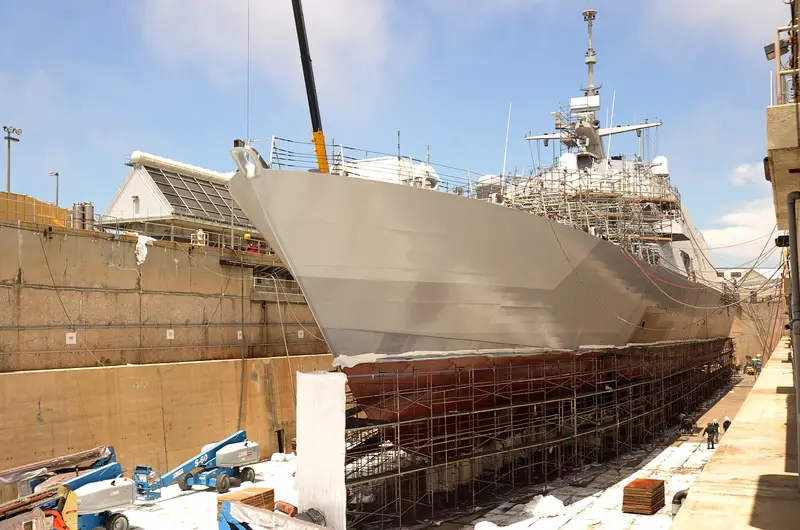
- Topsides and boot-top areas above the waterline
- Decks and superstructure
- Offshore and port structures that need colour retention
- Any area where appearance matters
Surface preparation comes first for both. Read our guide on surface preparation in coating projects before you buy paint.
Common mistakes in marine epoxy vs polyurethane choices
- Leaving epoxy as the final coat outside. It will chalk and fade.
- Using polyurethane as a primer. It does not replace an epoxy primer on steel.
- Missing the recoat window. This causes poor bonding or blisters.
- Painting in damp air. Moisture harms polyurethane in particular.
- Mixing brands without advice. Check compatibility with the supplier first.
- Skipping the data sheet. Every product has its own limits.
Every marine epoxy vs polyurethane mistake above is avoidable with a clear specification. For background on the chemistry, see the Wikipedia pages on epoxy and polyurethane.
Frequently asked questions
What is the main difference between marine epoxy and polyurethane?
Marine epoxy is a tough, protective coat for primers and build coats. It sticks well and resists chemicals and abrasion. Polyurethane is a finishing coat. It keeps gloss and colour in strong sunlight. Most ship systems use both: epoxy underneath and polyurethane on top.
Can you apply polyurethane directly over marine epoxy?
Yes, this is the standard way to build a system. Polyurethane goes over a cured epoxy primer or build coat. The key is the recoat window. Apply the topcoat inside the minimum and maximum interval on the data sheet, and keep the epoxy surface clean and dry.
Which lasts longer in sunlight, epoxy or polyurethane?
Polyurethane lasts longer in sunlight. Aliphatic polyurethane keeps its gloss and colour under strong UV. Epoxy usually chalks and fades when left exposed. This is why epoxy is covered with a polyurethane topcoat on decks, topsides and superstructure.
Is epoxy or polyurethane better for ballast and cargo tanks?
Epoxy is the normal choice for ballast and cargo tanks. Its barrier strength and chemical resistance suit immersion and tank service. Polyurethane is mostly used above the waterline. Always check the tank spec, the cargo list and the paint data sheet before choosing.
What is the recoat interval for epoxy and polyurethane?
It depends on the product, the film thickness and the temperature. Each data sheet gives a minimum and a maximum recoat time. Heat in the UAE and Oman shortens both. Follow the sheet for your product and measure the surface temperature on site.
Is polyurethane paint more expensive than epoxy?
Price depends on the product grade, not only on the resin type. Polyurethane topcoats often cost more per litre than basic epoxy, but you apply a thinner film. Compare the cost per square metre at the specified dry film thickness, not the price per litre.
Is marine polyurethane paint safe to spray?
Polyurethane paint needs care because the hardener contains isocyanates. Use good ventilation, the right respirator and protective clothing. Follow the safety data sheet. Epoxy also needs protection, because the hardeners can irritate the skin. Train the crew before any spray work.
Need help choosing a coating system?
Not sure about your marine epoxy vs polyurethane choice? Our team can match epoxy primers and polyurethane topcoats to your vessel, yard or industrial project, and send you the data sheets. Contact Bahari Tech for a quote and get support in the UAE and Oman.