

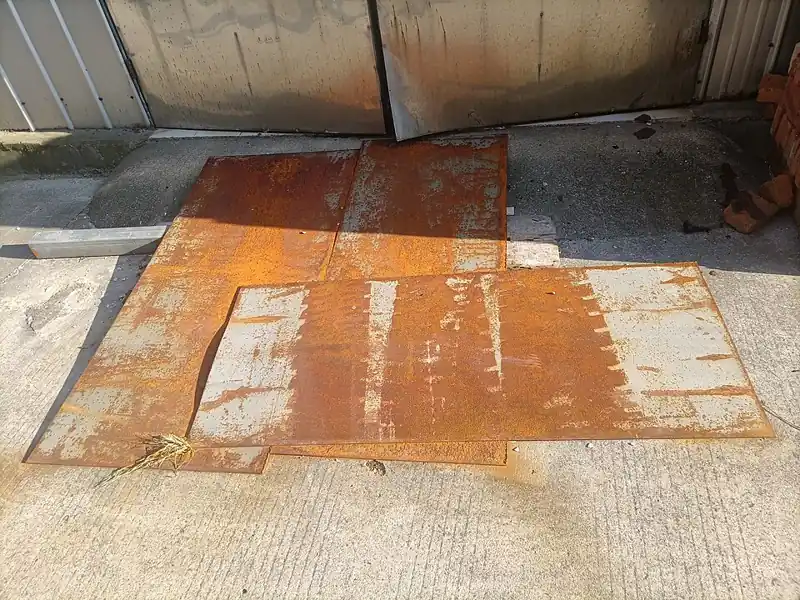
The hull looks perfect when the blasters finish. A few hours later, a light orange haze spreads over the steel. That haze is flash rust, and it is the reason many dry-dock crews stop and ask whether they can still paint.
This guide explains what causes flash rust on blasted steel, how the flash rust grades are judged, and when you can coat over it. It is written for shipyard, dry-dock and maintenance teams and paint buyers working in the humid UAE and Oman climate.
What is flash rust on blasted steel?
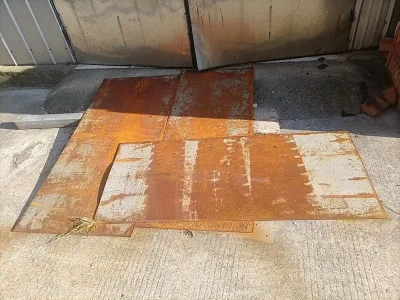
Flash rust is a thin film of iron oxide that forms quickly on freshly cleaned steel. Bare steel is chemically active. When it meets moisture and oxygen, it starts to corrode at once. You can read the basic chemistry in this overview of rust.
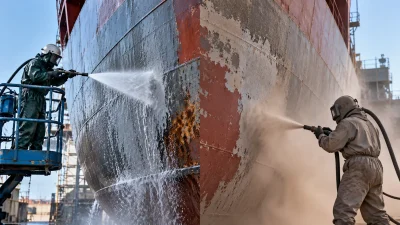
The film is usually light orange or yellow-brown. It often appears after water jetting, because the steel is wet and very clean. It can also appear after dry blasting in damp air.
Three points to keep in mind:
- It forms in minutes or hours, not weeks.
- It sits on the surface and is much thinner than normal rust scale.
- It still matters, because paint needs a sound surface to hold on.
What causes flash rust after blasting?
Four things drive flash rust on blasted steel. Most jobs have more than one of them at the same time.
High humidity and condensation
Moisture is the fuel. Many specifications limit relative humidity during blasting and coating, and they also ask that the steel stay at least 3 °C above the dew point. When the steel is colder than the dew point, water condenses on it and rust follows. Our guide to painting in hot and humid weather in the UAE covers dew point checks in more detail.
Soluble salts on the steel
Chloride and other salts left in pits and on the surface pull water from the air. Rust then forms under the salt, even when the air feels dry. Ships and coastal structures are at high risk, because salt spray and sea water are part of daily life. This is why the wash and the salt test matter as much as the blast.
A long gap between blasting and coating
Time is the third cause. The longer bare steel waits, the more rust forms. A night of dew can turn a clean surface into a moderate rust problem by morning. Dry-dock schedules that leave blasted areas open for a full shift are the usual cause.
Wet blasting and water jetting
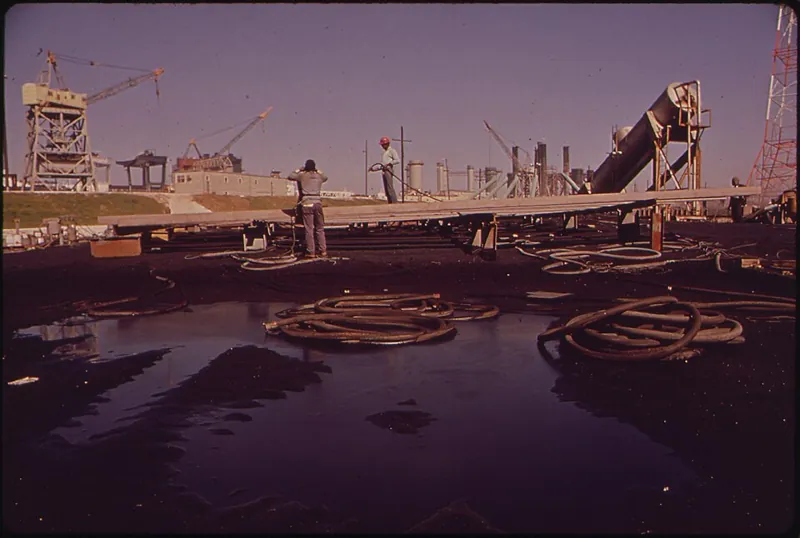
Water-based methods leave a wet, clean surface that rusts fast. That is a trade-off for removing salts better than dry blasting. Read the comparison in our article on hydroblasting vs abrasive blasting for ship hulls.
Flash rust grades: light, moderate and heavy
Grades give the team a shared language. Instead of arguing about how bad the surface looks, you compare it with a reference. The common reference is ISO 8501-4, which covers surfaces prepared by high-pressure water jetting. SSPC-SP 12 / NACE No. 5 describes similar levels in its own wording.
Both describe three grades. The words below are a plain-language summary, not the standard text. Always use the official standard for acceptance.
Light grade
A light grade is a thin haze. You can still see the grey steel through it. The rust is tight and does not leave much on a clean cloth when you wipe it.
Moderate grade
A moderate grade is a visible yellow-brown layer that hides the steel in places. It is more loosely held. A cloth wiped across it picks up marks, although the film is still thin.
Heavy grade
A heavy grade is a thick red-brown or dark layer that hides the steel. It is loose, rubs off on the hand or a cloth, and often covers pits. This grade is a sign that the surface has been left too long or that salts are present.
How to judge the grade on site
- Check the surface in good light, from close up, in several places.
- Wipe the surface with a clean, dry cloth and look at what comes off.
- Compare with the visual reference photographs in the standard.
- Test for soluble salts if the steel was exposed to sea water or spray.
- Record the grade with the time, the humidity and the surface temperature.
An inspector can add these steps to the marine coating inspection checklist, so the grade is logged before every primer coat.
Can you paint over flash rust or must you re-blast?
This is the question that costs the most time on a dry-dock job. The honest answer is that it depends on the grade, the coating and the specification. The table below is a general guide only.
| Grade | Usual action | What to check first |
|---|---|---|
| Light | Often acceptable to coat over, if the paint maker allows it | Data sheet, specification, salt test |
| Moderate | Clean back to a light level, or use a tolerant primer if the maker approves | Data sheet, owner approval |
| Heavy | Remove it, usually by re-blasting to the specified standard | Salt level, pit depth, specification |
Three rules help you decide:
- Follow the data sheet. Each primer has its own limit for rust tolerance. Never assume.
- Follow the specification. The owner or class may be stricter than the paint maker.
- Check salts. Light rust over salt can cause blisters later, even if it looks fine today.
A weak surface is one of the main reasons coatings fail early. Our article on marine coating failures shows how often poor surface preparation is behind blisters and peeling.
How to remove flash rust before painting
Once you know the grade, pick the method that fits it. The aim is simple: reach a sound, clean surface that meets the specification before the primer goes on.
- Light grade: brush off loose rust with a clean, non-metallic or steel brush, then blow or wipe the dust away. Some specifications also allow a fresh-water rinse.
- Moderate grade: use a fresh-water rinse with scrubbing, or a light sweep blast. Let the steel dry and inspect again.
- Heavy grade: re-blast to the specified cleanliness grade. Washing alone rarely removes salt trapped under heavy rust.
After cleaning, check the surface again. Treat it as a new surface: confirm the profile, the dust level, the salt level and the dew point. Our guide to marine coating surface preparation lists these checks.
How to prevent flash rust after blasting
The cheapest way to handle flash rust is to stop it forming. These steps work on most yards.
- Blast in small sections. Only open the area that the crew can coat the same shift.
- Control the air. Use dehumidification in tanks and enclosed spaces. Keep the steel above the dew point.
- Wash off salts first. Use clean fresh water before blasting and after any water jetting.
- Use a rust inhibitor after blasting where it is approved. Check compatibility with the primer.
- Prime quickly. A single-pack shop primer can protect bare steel until the main system goes on.
- Plan the coats. Book blasting and painting crews together, not on separate days.
- Log conditions. Record humidity, steel temperature and dew point for each block.
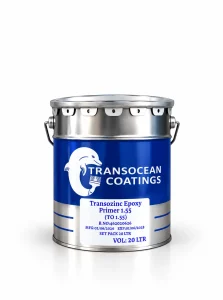
A shop primer such as Transozinc Epoxy Primer 159 is one way to protect blasted steel while the work moves on. A high-build epoxy primer such as Transpoxy Primer A&B (TO 1.16) may suit the next stage. Check the data sheets for limits and compatibility.
Flash rust in the UAE and Oman climate
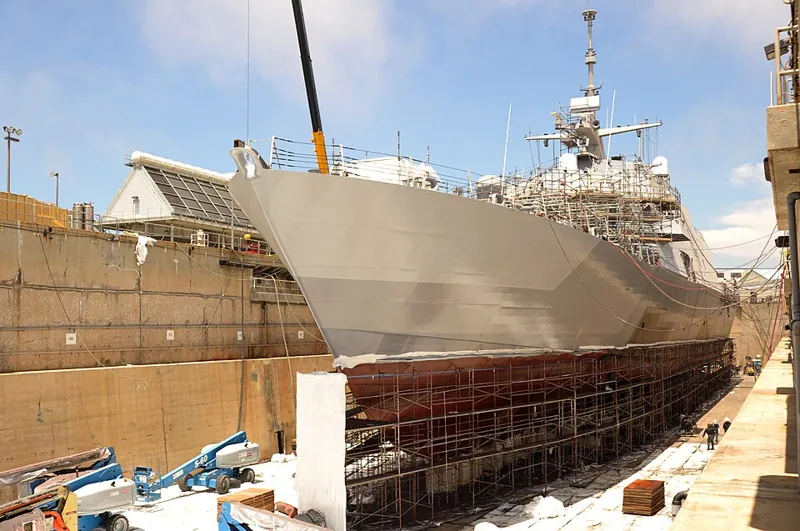
In the UAE and Oman, flash rust is a daily risk. Sea air carries salt. Night humidity is high, and steel cools after sunset, so dew forms on surfaces that were dry at noon. Dry-dock schedules in Dubai, Abu Dhabi and Duqm often run on tight windows, which makes a long gap between blasting and coating likely.
Practical steps for Gulf sites:
- Plan blasting early in the day, so coating can start before the evening.
- Check the dew point at the start of work and again before you leave.
- Cover or enclose blasted areas overnight, with airflow and not sealed still air.
- Keep an inspector on the dock to grade the steel before each coat.
- Set a maximum time between blasting and priming in the job plan.
Put these rules into the paint specification and the work plan. Then buyers and contractors share the same limits, and arguments at the dock are shorter.
Frequently asked questions
What is flash rust?
Flash rust is a thin layer of light orange or brown rust that forms within minutes or hours on freshly cleaned bare steel. It appears when clean steel meets moisture and oxygen, often after water jetting or in humid air. It is a surface film, not deep corrosion.
How many flash rust grades are there?
Standards such as ISO 8501-4 and SSPC-SP 12 / NACE No. 5 describe three grades: light, moderate and heavy. The grade depends on how much rust is visible and how loosely it holds. Light rust is thin and tight. Heavy rust hides the steel and rubs off easily.
Can I paint over flash rust?
Sometimes. A light grade is often acceptable if the coating data sheet and project specification allow it. A moderate grade may need a tolerant primer or cleaning first. A heavy grade should be removed before coating. Always check the data sheet and ask the paint maker when in doubt.
How do you remove flash rust before painting?
Remove loose rust by light brushing, a water rinse with fresh water or a light sweep blast, depending on the grade and the specification. Then let the surface dry and check it again. Heavy rust may need re-blasting to the specified standard before any coat goes on.
How fast does flash rust form after blasting?
There is no fixed time. In humid Gulf air or with salt on the steel, a visible film can form within an hour or two. In dry, warm, clean conditions steel can stay bright much longer. Surface temperature, dew point and salt level decide the speed, so inspect and do not guess.
Does a rust inhibitor after blasting help?
It can. A rust inhibitor after blasting, used in the water or as a rinse, can delay rust on wet-blasted steel. Check that the inhibitor is compatible with your primer, and that the paint maker accepts it. Some residues can harm adhesion, so test and follow the data sheet.
Protect blasted steel from flash rust
Need a primer to protect blasted steel from flash rust on your next dry-dock or maintenance job? Request a quote for Transozinc Epoxy Primer 159. Our team will help you match the product, the data sheet limits and the recoat interval to your site.