

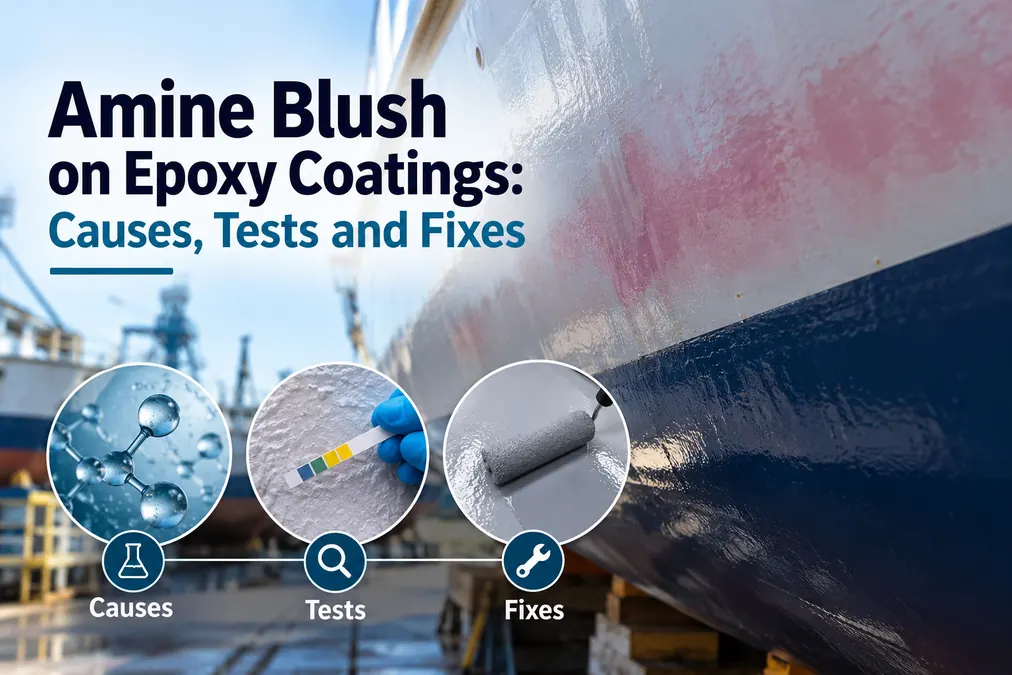
You come back to a freshly cured epoxy coat and the surface feels waxy or looks cloudy. Water beads on it, and the next coat will not wet out. This is the classic sign of amine blush epoxy trouble, and it is common on humid coastal jobs.
This guide explains how amine blush epoxy films form, how to confirm them with a quick amine blush test, and how to wash them off before recoating. It is written for marine and industrial applicators and ship superintendents working in the humid Gulf.
What is amine blush on epoxy?
Two-pack epoxy cures when the resin (Part A) reacts with the hardener (Part B). Many hardeners are amines. If some amine moves to the surface and meets moisture and carbon dioxide from the air, it forms a carbamate salt. That salt is the film you can feel.
The result is a thin, waxy, sometimes white or sticky layer on top of the cured coat. You can read the wider chemistry in this overview of epoxy resins.
Key points about amine blush epoxy films:
- Amine blush epoxy films sit on the surface, not through the whole coat.
- It is water soluble, so fresh water can remove it.
- It weakens intercoat adhesion if you paint over it.
- It can show as gloss loss, haze, stickiness or spots.
Amine blush epoxy films are not always visible. A clean-looking surface can still carry a thin film, so a test matters more than a glance.
What causes amine blush epoxy films in humid weather?
Amine blush epoxy forms when the cure is slow and the air is damp. Several conditions stack up on a typical Gulf job. In our guide to painting in hot and humid weather in the UAE we cover the climate side in more detail.
- High relative humidity. More moisture reaches the curing film.
- Surface close to the dew point. Condensation can form on cold steel. Many data sheets ask for the steel to be at least 3 °C above the dew point, so check yours.
- Low surface temperature. A slow cure gives the amine more time to migrate and react.
- Poor ventilation. In closed tanks and holds, carbon dioxide and moisture build up.
- Wrong mixing or thinning. Too much hardener, or an uneven mix, leaves free amine behind.
- Overnight condensation. A coat that is still tacky at dusk can take on moisture before it has cured enough.
The hardener type also matters for amine blush epoxy risk. Some systems are more prone to blush than others, and some are formulated to resist it. This is why the same weather can ruin one job and leave another untouched.
How to recognise an amine blush epoxy film
You can often spot the problem before you test. Look and feel for these signs of amine blush epoxy on the cured coat:
- A waxy, greasy or soapy feel under a gloved finger.
- A white or cloudy haze, mostly on darker colours.
- Low gloss in patches that should be even.
- Water that beads up rather than wetting the surface.
- Dust or dirt that sticks to the film.
None of these proves blush on its own. Salt, oil and other contamination can look similar. That is why you confirm with a test.
How to run an amine blush test
An amine blush test is quick and low cost. Do it on a clean, dry area of the cured coat, and repeat it in several places, especially low spots, corners and shaded areas.
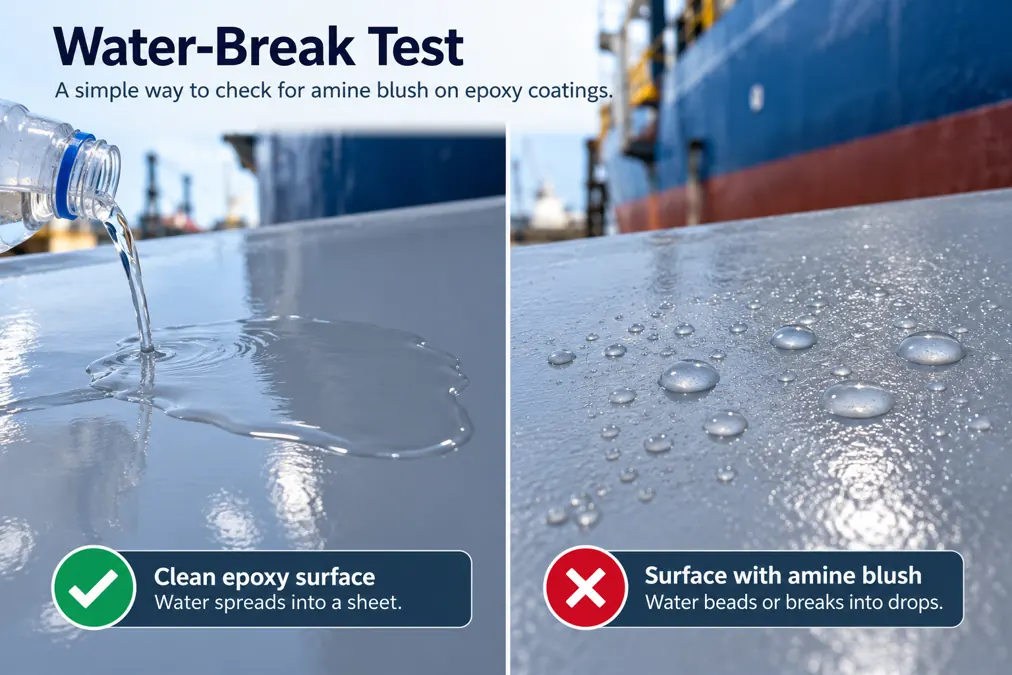
Water-break test
Spray or pour a little clean water on the surface and watch it. A clean epoxy film lets the water spread into a sheet. Where blush is present, the water often beads or breaks into drops. Treat this as a first check, not as a final answer.
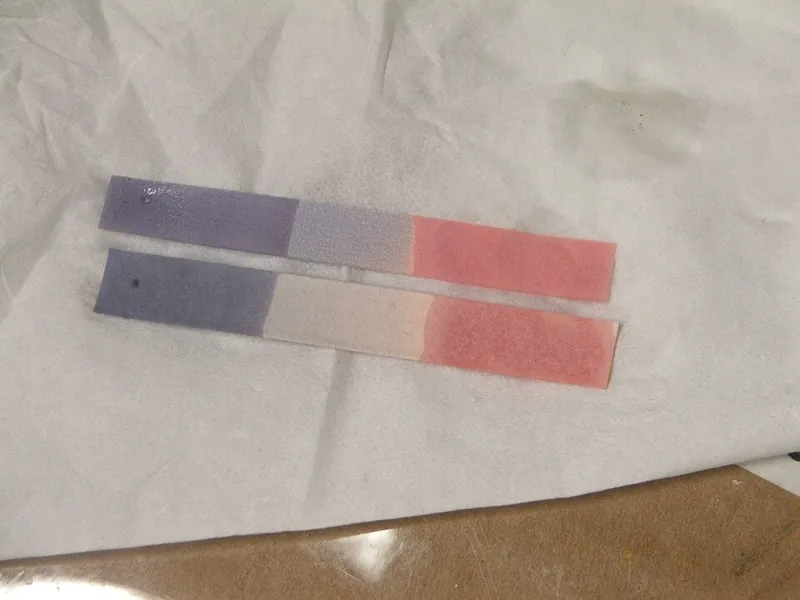
pH test
The pH check is the one most data sheets prefer. Wet the surface with a few drops of distilled water, then press indicator paper into the droplet. Compare the colour with the chart. The blush film is alkaline, so a clearly higher reading than a blank test on distilled water points to blush.
Other checks
Some paint makers publish their own amine blush test steps, and commercial test kits exist. Whatever you use, write the result in your daily report. Our marine coating inspection checklist shows where this check fits in a wider inspection plan.
How to remove amine blush before recoating
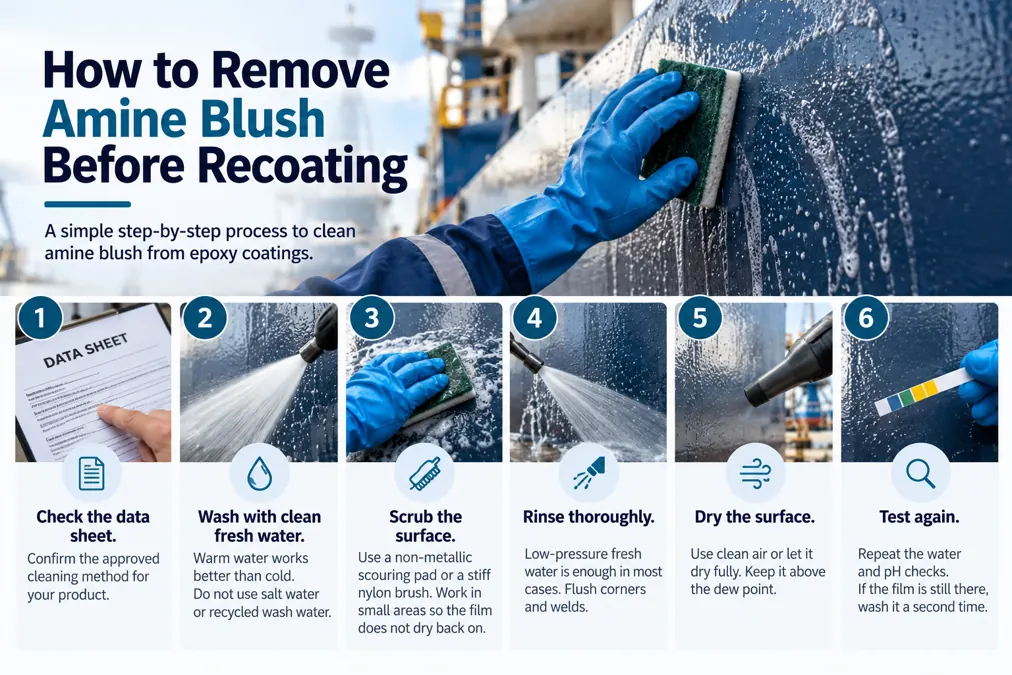
The good news is that amine blush epoxy is usually easy to remove. The method is simple: wash, scrub, rinse, dry and test again.
- Check the data sheet. Confirm the approved cleaning method for your product.
- Wash with clean fresh water. Warm water works better than cold. Do not use salt water or recycled wash water.
- Scrub the surface. Use a non-metallic scouring pad or a stiff nylon brush. Work in small areas so the film does not dry back on.
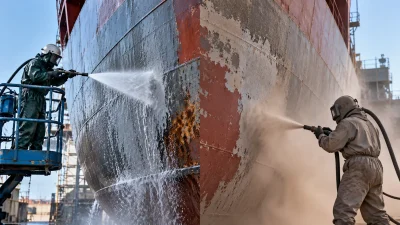
- Rinse thoroughly. Low-pressure fresh water is enough in most cases. Flush corners and welds.
- Dry the surface. Use clean air or let it dry fully. Keep it above the dew point.
- Test again. Repeat the water and pH checks. If the film is still there, wash it a second time.
Do not wipe the film with solvent unless the data sheet says so. Solvent can spread the film over a larger area and leave it behind. Detergent can leave a residue of its own, so rinse it off completely if you use it.
If the coat has passed its maximum recoat interval, the washed surface may also need light abrasion to give the next coat a key. Follow the manufacturer’s advice for your system.
Epoxy recoat adhesion: what to check first
Epoxy recoat adhesion depends on a clean, sound, dry surface inside the allowed interval. Amine blush epoxy breaks that chain. The next coat sticks to the soft film, not to the epoxy below, and the whole system can peel in sheets later.
Before you recoat, confirm these points:
- The latest amine blush test is clear.
- The surface is dry, dust free and above the dew point.
- The recoat interval from the data sheet has not been exceeded, or the surface has been abraded as advised.
- Humidity and temperature are inside the product limits for the next coat.
The choice of topcoat matters too. A polyurethane finish is more sensitive to moisture and surface film than many people expect. Our comparison of marine epoxy vs polyurethane coatings explains how the two behave on the same system.
How to prevent amine blush epoxy defects
Preventing amine blush epoxy costs less than washing it off. Plan the job around the weather and control what you can.
- Read the weather and the steel temperature. Measure surface temperature and dew point before you mix, not after.
- Choose the right product. Pick an epoxy suited to humid and cool cure. Check the data sheet for blush resistance and recoat limits. Learn more in our guide to marine epoxy coatings.
- Mix correctly. Use the full pack or the stated ratio, and mix for the stated time. Respect any induction time.
- Apply at the right thickness. Thick films cure slowly and hold more free amine.
- Ventilate enclosed spaces. Moving air removes moisture and carbon dioxide. Keep heaters free from exhaust gas that adds carbon dioxide.
- Time the coats. Recoat as soon as the previous coat is hard enough and inside the interval.
- Protect the film overnight. Avoid leaving a tacky coat to take on dew in the evening.
Treat the epoxy as one layer in a full system. The primer, intermediate and topcoat have to work together, as our page on the marine coating system shows.
Amine blush epoxy risks in the Gulf climate
With amine blush epoxy in the Gulf, the problem is often the night, not the day. Steel cools after sunset, humidity climbs and dew forms on surfaces. A coat that went on in the afternoon can sit tacky as the air turns damp.
Practical steps for UAE and Oman sites:
- Start the epoxy application early so it hardens before dusk.
- Check the dew point at the start and again before you leave.
- Use shading or enclosures with airflow rather than sealed, still air.
- Log humidity, air and steel temperature for every coat.
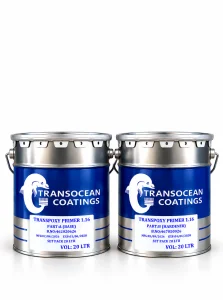
For a steel primer on hulls, decks and industrial structures, a two-pack polyamide cured epoxy such as Transpoxy Primer A&B (TO 1.16) is one option to consider. Always check the data sheet for the allowed conditions and the recoat interval.
Frequently asked questions
What is amine blush on epoxy?
Amine blush is a thin, waxy or greasy film that can form on the surface of a curing two-pack epoxy. It comes from the amine hardener reacting with moisture and carbon dioxide in the air. The film is water soluble and can stop the next coat from bonding.
What causes amine blush epoxy problems in humid weather?
High humidity, low surface temperature and a surface close to the dew point all raise the risk. Moisture reaches the film while it cures, and the amine reacts with it. Poor airflow and late recoating make the film worse. Gulf coastal air and night condensation are common triggers.
How do I test for amine blush?
Run a simple amine blush test on the cured surface. Check for a waxy feel, then do a water-break test and a pH test with wet indicator paper. Water that beads up or paper that reads clearly alkaline points to blush. Follow the paint maker’s test method.
How do you remove amine blush from epoxy?
Wash the surface with clean fresh water and scrub it with a non-metallic pad or nylon brush. Rinse well and let it dry fully. Repeat the test. Avoid wiping with solvent, because it can smear the film instead of removing it. Check the data sheet for the approved method.
Can I recoat epoxy that has amine blush?
Not before you remove it. Paint over blush can cause poor intercoat adhesion and peeling. Wash the film off, confirm the surface is clean with a second test, and then recoat inside the allowed interval. If the interval has passed, the data sheet may call for light abrasion.
Do all epoxy coatings form amine blush?
No. The risk depends on the hardener type, the product and the conditions. Some systems are formulated to resist blush, and others are more prone to it. Always read the data sheet for your product, and do not assume that a fast cure in warm air removes the risk.
Need an epoxy primer for humid-weather work?
Planning epoxy work in humid conditions and want a product that suits your system? Request a quote for Transpoxy Primer A&B (TO 1.16). Our team will help you match the product, data sheet limits and recoat interval to your site. For a high-build option, see Transpoxy Masterbond 467.