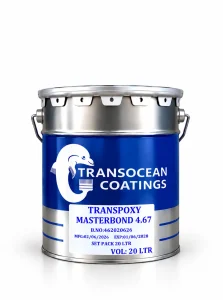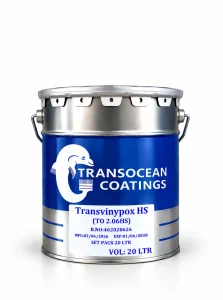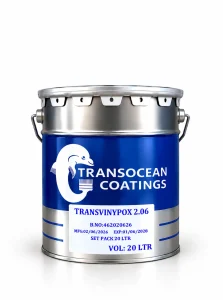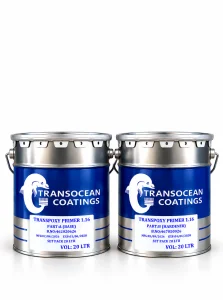


Buyers often ask for “epoxy” and get a product that is not what they meant. Epoxy resin, epoxy coating and epoxy paint sound alike, but they are not the same item. On steel, the wrong choice can mean early rust and a repaint you did not plan for.
This guide explains epoxy resin vs epoxy paint in plain words. It is written for buyers, yard managers and coating inspectors in the UAE and Oman. You will see how the chemistry works, why solids and film build matter, and which product belongs on steel in marine and industrial service.
Epoxy resin vs epoxy paint: what each one is
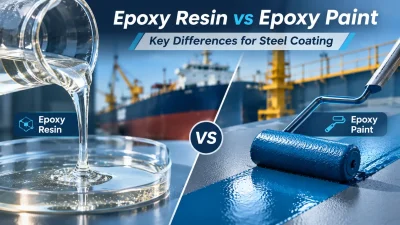
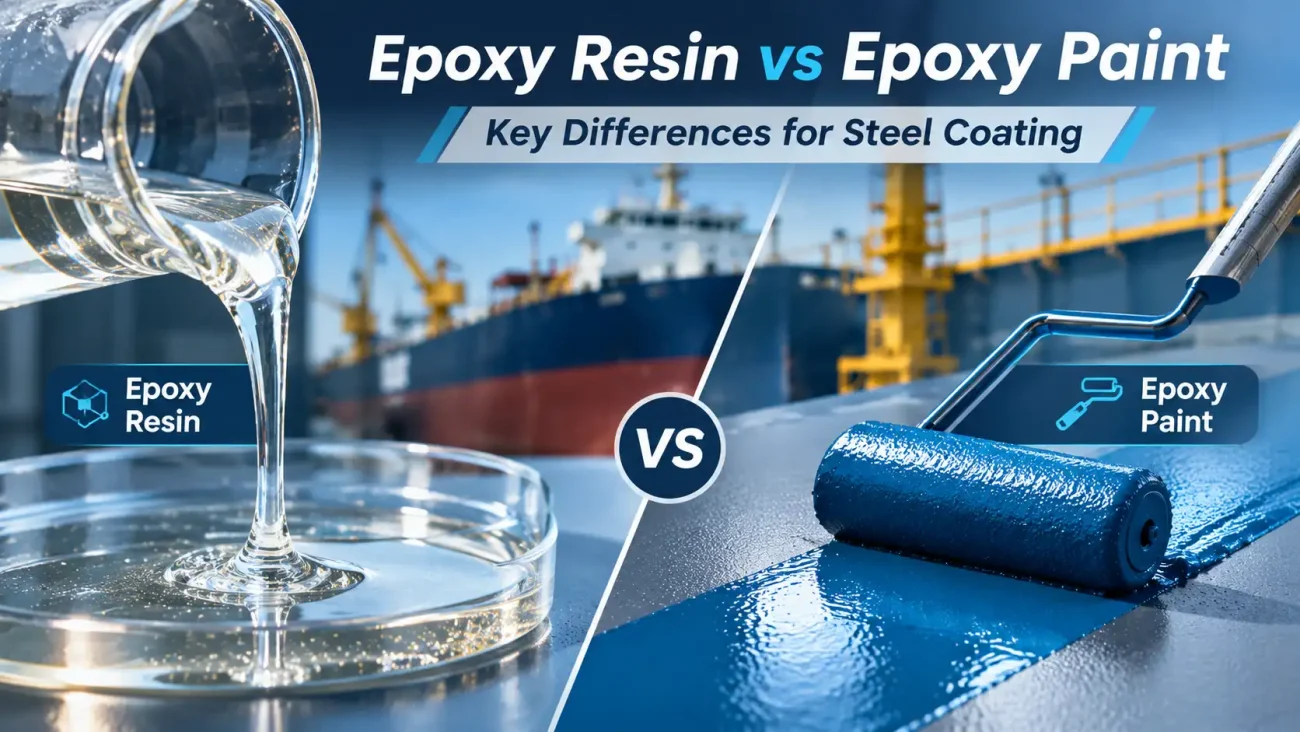
Epoxy resin is the base ingredient. It is a reactive liquid that cures into a hard, tough solid when it meets a hardener. You can read the chemistry background in this overview of epoxy.
Epoxy paint is a finished coating built on that resin. The maker adds pigments, fillers, additives and solvents so the product can be sprayed or rolled, and so it protects steel. Industrial buyers often call it an epoxy coating. In this guide, epoxy coating vs epoxy paint is treated as the same family of products.
Put simply:
- Epoxy resin is the binder, one part of the chemistry.
- Hardener is the second part. It reacts with the resin.
- Epoxy paint is the full product: resin, hardener, pigments and fillers, made for a job.
Resin and hardener: how two-pack epoxy works
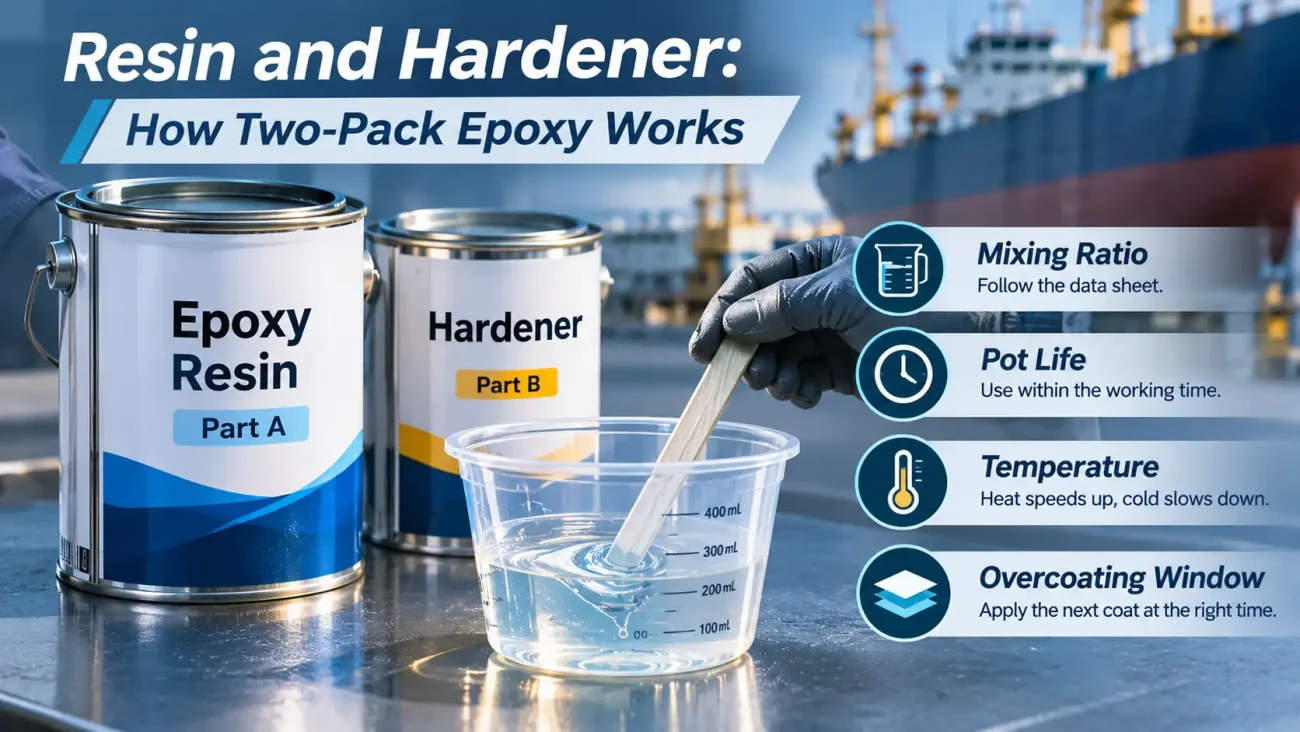
Most industrial epoxy is a two-pack epoxy. One can holds the resin and the other holds the hardener. Each is stable on its own. Mixed together, they start a chemical reaction called curing. The film hardens because of that reaction, not because the solvent dries.
This matters on site for four reasons:
- Mixing ratio. Follow the data sheet. A wrong ratio leaves a soft or brittle film.
- Pot life. Once mixed, the paint has limited working time. Mix only what you can apply.
- Temperature. Heat speeds the cure and cold slows it. Gulf summers shorten pot life.
- Overcoating window. Too long between coats can hurt adhesion.
The same rules apply when you buy resin and hardener for other jobs. For stock and availability, see our page to buy epoxy resin in Dubai.
Epoxy resin vs epoxy paint: 7 key differences
Here is the core of epoxy resin vs epoxy paint. These seven differences decide what you buy for steel.
- Form. Resin is a base component. Paint is a finished, ready-to-mix product.
- Pigments. Paint carries pigments and anticorrosive additives. Plain resin does not.
- Application. Paint is made for spray, roller or brush at a set film thickness. Resin is not.
- Solids and film build. Paint is designed to build a controlled dry film. Resin alone is not.
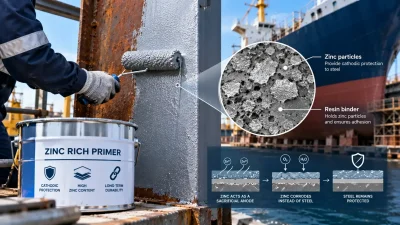
- Steel protection. Paint is tested as a barrier or primer system. Resin is not a steel coating.
- Data sheet. A paint has surface preparation, DFT and overcoating instructions. A resin usually does not.
- Use. Resin suits casting, bonding, repair and fabrication. Paint suits coating steel.
So the answer to epoxy resin vs epoxy paint depends on the job. Casting, bonding and laminating need resin. A coating on a steel hull, deck or tank needs paint made for steel.
Solids content and film build: why they matter on steel
Two terms explain much of the difference between epoxy resin vs epoxy paint: solids content and film build.
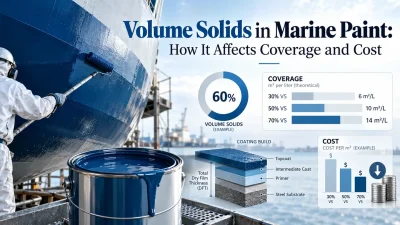
Solids content is the part of the paint that stays on the surface after the solvent leaves. Volume solids tells you how much dry film you get from the wet paint. A higher figure usually means more dry film per coat. For the full story, read our guide to volume solids in marine paint.
Film build is the thickness of the dry film. On steel, thickness is the main barrier against water and salt. Paint is made to reach a target dry film thickness (DFT) in each coat. Plain resin is not.
Why this matters for you:
- It sets how many coats the job needs.
- It sets how much paint you must order.
- It decides whether the film can resist the exposure.
Use the data sheet figures from the product you buy, not general numbers. If you need help reading one, see how to read a marine coating technical data sheet.
Which epoxy belongs on steel in marine and industrial service?
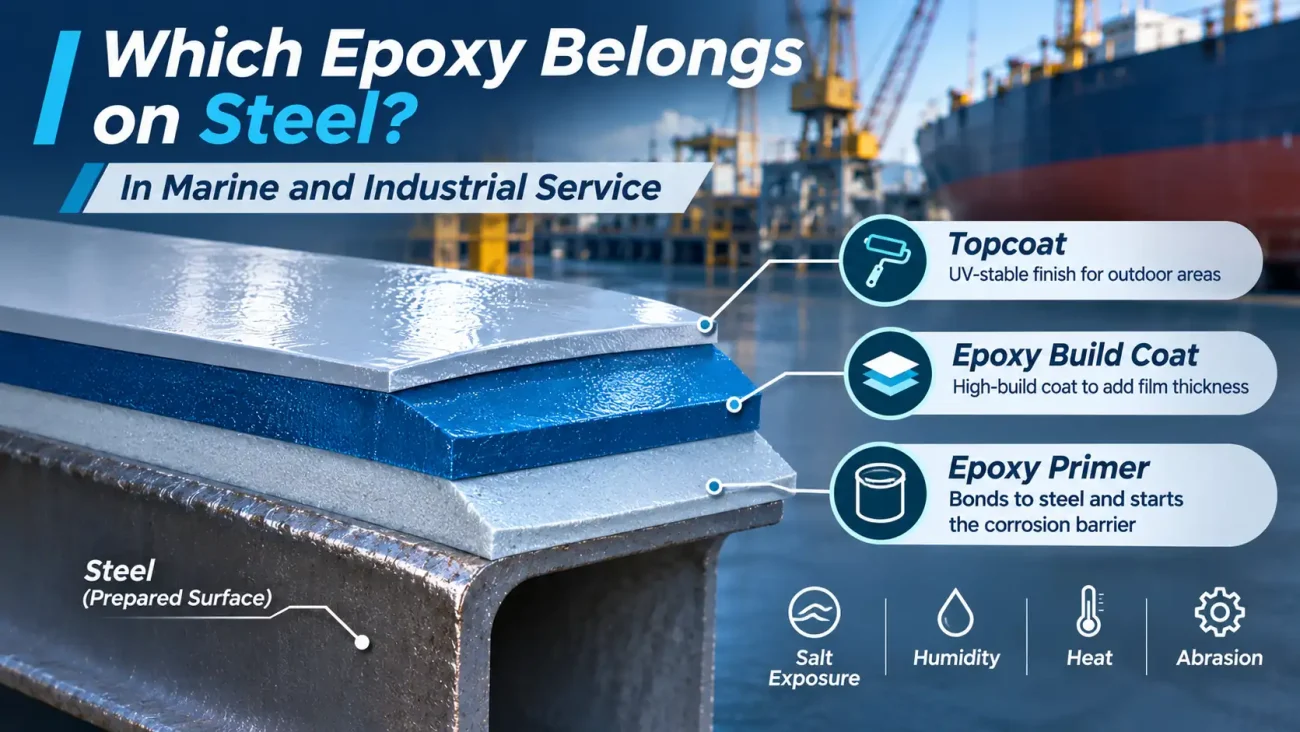
Steel in marine and industrial service faces salt, humidity, heat and abrasion. Industrial epoxy is popular because it bonds well to prepared steel and forms a strong barrier. That is why epoxy resin vs epoxy paint is a real purchasing question for yards and plants.
A typical epoxy system for steel has layers:
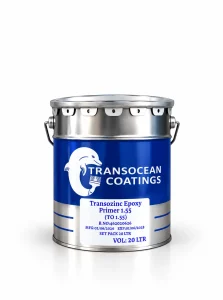
- Epoxy primer. It bonds to the blasted steel and starts the corrosion barrier.
- Epoxy build coat. A high-build coat adds film thickness.
- Topcoat. In sun-exposed areas, epoxy is often followed by a UV-stable finish, because epoxy can chalk outdoors.
To compare epoxy with a polyurethane finish, read marine epoxy vs polyurethane coatings. If you are choosing a first coat, see red oxide primer vs epoxy primer. For thick, tolerant repair coats, the epoxy mastic guide is the place to start.
Cure, mixing and application: what can go wrong
Whether you choose resin or paint, cure decides the result. Epoxy cures by chemical reaction, so site conditions matter more than the clock.
- Steel temperature. Keep the steel above the dew point, or moisture is trapped under the film.
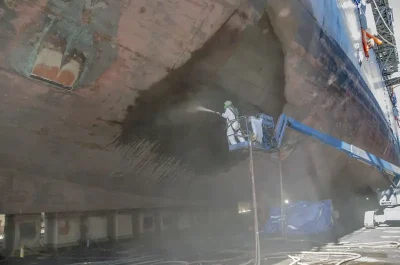
- Surface preparation. Blasted, clean, dry steel gives the best bond. Follow the data sheet grade.
- Mixing. Stir the base, add the hardener in the right ratio, then mix well.
- Recoat time. Confirm the overcoating interval at your local temperature.
In humid conditions, a waxy surface haze can form on curing epoxy. Our guide to amine blush on epoxy coatings shows how to spot and fix it. For hot-weather work, see painting in hot and humid weather in the UAE.
How to choose: a 7-point checklist
Use this short checklist before you order. It helps you settle epoxy resin vs epoxy paint for your own job.
- Define the job: coating steel, or casting, bonding and repair?
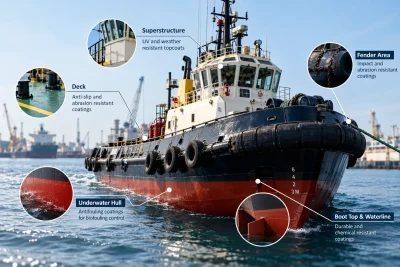
- Name the exposure: immersion, splash zone, deck, tank or structure.
- Ask for the data sheet, with volume solids and target DFT.
- Confirm the surface preparation grade.
- Check mixing ratio, pot life and overcoating interval at your temperature.
- Ask whether a topcoat is needed for sun exposure.
- Confirm delivery time to your yard or site.
If the answer to step one is “coat steel”, you need epoxy paint made for steel, not raw resin. If the job is casting or bonding, resin is the right item.
Common mistakes when buying epoxy for steel
Most problems with epoxy resin vs epoxy paint come from a few repeated mistakes. Watch for these:
- Buying by the word “epoxy”. Always read the product name and data sheet. Epoxy resin vs epoxy paint is a different purchase, even when the label says “epoxy”.
- Skipping surface preparation. Even the best paint fails on rusty or oily steel.
- Mixing by eye. Measure the resin and hardener as the data sheet states.
- Thinning too much. Extra thinner lowers the solids and the film build.
- Ignoring the topcoat. Epoxy alone can chalk in strong sun.
A short pre-job meeting with the applicator and the inspector avoids most of these. Agree the system, the DFT and the inspection points before the first can is opened.
Frequently asked questions
Epoxy resin vs epoxy paint: what is the difference?
Epoxy resin is the base binder, one part of a two-pack system. Epoxy paint is a finished coating built on that resin, with a hardener, pigments, fillers and solvents added. The resin alone is not a steel coating. The paint is a complete product made to protect steel.
Can I use epoxy resin as paint on steel?
Pure epoxy resin is not formulated as a steel paint. It lacks the pigments and anticorrosive additives, and it is not made for spray or roller application at a controlled film thickness. For steel in marine or industrial service, use a purpose-made epoxy primer or coating and follow its data sheet.
What does two-pack epoxy mean?
Two-pack epoxy is supplied in two containers: the resin (base) and the hardener (curing agent). They stay stable until mixed. Once combined in the correct ratio, a chemical reaction starts and the film cures. This is why mixing ratio, pot life and temperature matter on every epoxy job.
Is epoxy coating the same as epoxy paint?
In practice the two terms usually mean the same thing: a two-pack epoxy product applied as a protective film. Suppliers use “epoxy coating” for industrial and marine systems and “epoxy paint” in everyday talk. Always check the product name and data sheet rather than relying on the label alone.
Why does solids content matter for epoxy on steel?
Solids are the part of the paint that stays on the steel after the solvent leaves. A higher solids content usually gives a thicker dry film per coat, so you may need fewer coats. Ask the supplier for the volume solids on the data sheet and use it to plan quantities.
Which epoxy is best for steel in the Gulf climate?
Choose a two-pack epoxy primer or high-build epoxy made for steel, matched to the exposure: splash zone, deck, tank or structure. Hot and humid Gulf conditions affect cure and overcoating times. Share the steel grade, surface preparation and exposure with your supplier before you order.
Get the right epoxy for your steel
Need an epoxy for steel in the UAE or Oman? Request a quote on TransOcean epoxy paints. Tell us the exposure, the area and the target DFT, and our team will send the data sheets so you can pick the right product. For other questions, contact us.