

Blasted steel starts to rust within hours in a hot, humid yard. The first coat decides how long the rest of the system will last. That is why many specifications call for a zinc rich primer on steel for ships, tanks and offshore structures.
This guide is for ship superintendents, yard planners and maintenance engineers in the UAE and Oman who specify or buy primers. You will learn what zinc content means, how zinc protects steel, how zinc epoxy and zinc silicate differ, and what to check on the data sheet before you order.
What is a zinc rich primer?
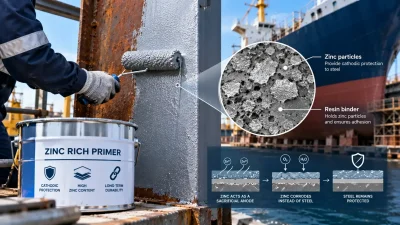
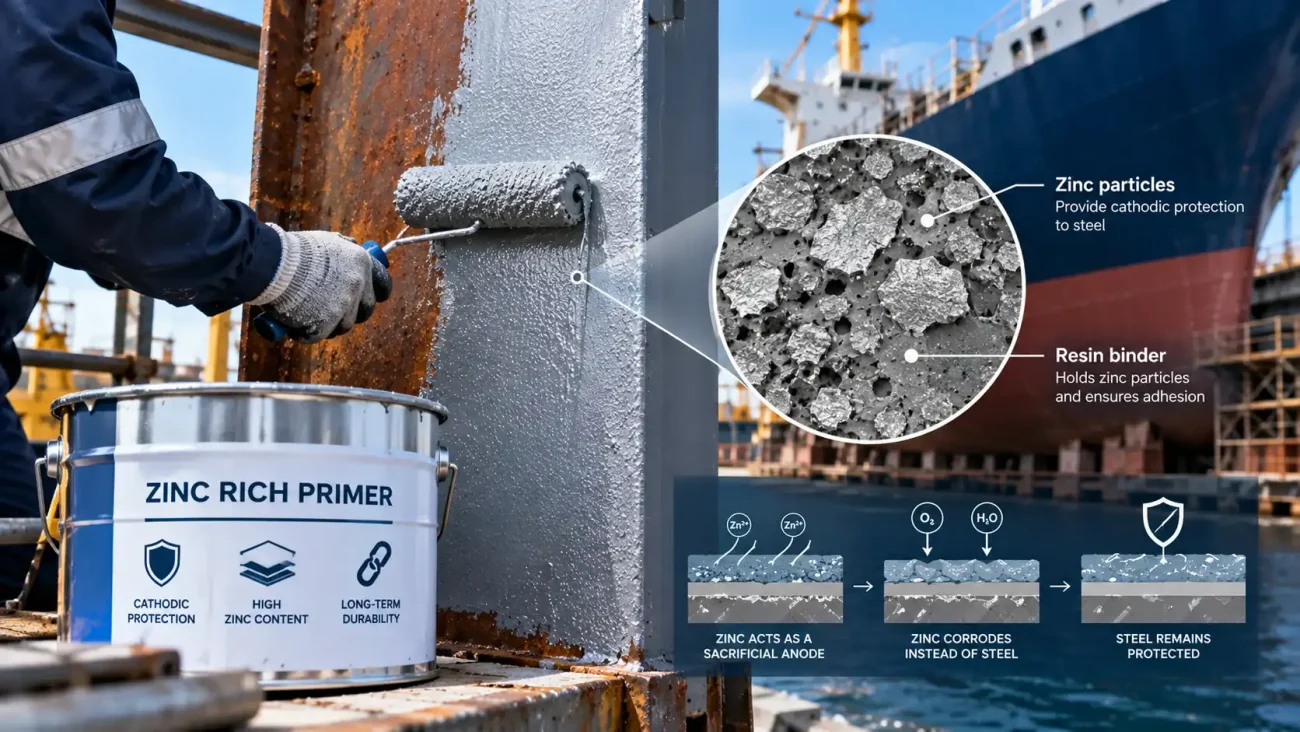
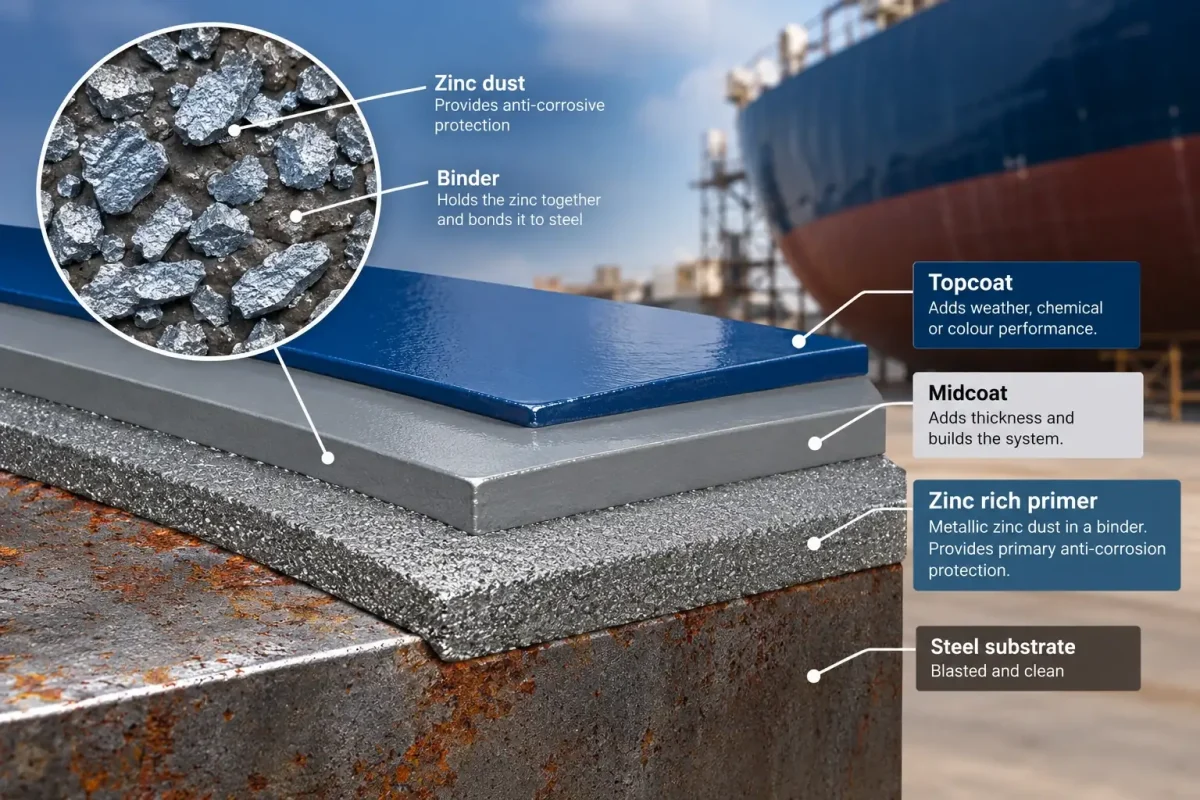
A zinc rich primer is an anti-corrosive primer filled with metallic zinc dust. The binder holds the zinc together and bonds it to the blasted steel. The zinc, not the binder, does the main protective work.
It sits at the bottom of the system. A midcoat adds thickness and a topcoat adds weather, chemical or colour performance. For the full picture, read our guide to the marine coating system: primer, midcoat and topcoat.
Zinc content in the dry film: what makes a primer zinc rich
Zinc content is the share of zinc dust in the dry paint film, not in the wet paint in the can. The two numbers are different because solvents leave the film as it dries. A can can look rich in zinc and still give a lean dry film.
ISO 12944 treats a primer as zinc rich when the dry film holds more than 80% zinc dust by mass. Other standards, such as BS 5493 and BS 4652, use different bases and limits. Because of this, figures from different standards are not directly comparable.
- Why the number matters: zinc particles must touch each other and the steel. Too little zinc and the contact chain breaks.
- Where to read it: the compositional statement on the technical data sheet, for example the standard the product complies with.
- What to compare: the same standard and the same basis. Do not compare a dry film figure with a wet paint figure.
To learn how to read these statements fast, see our guide to the marine coating technical data sheet.
How a zinc rich primer protects steel
Zinc is more active than iron, so it corrodes first. This is the idea behind sacrificial protection. When water and salts reach the primer, the zinc becomes the anode and the steel stays the cathode. The steel is protected while zinc remains in contact with it.
A good zinc rich primer protects in three ways:
- Galvanic action. The zinc particles give up electrons and protect the steel at the contact points. This is the same principle as in a galvanic anode.
- Barrier from zinc salts. As the zinc corrodes, zinc salts form and fill the pores of the film. This slows the passage of water and oxygen.
- Covering small scratches. At a small damage point the surrounding zinc keeps protecting the bare steel for a time, so the damage does not rust at once.
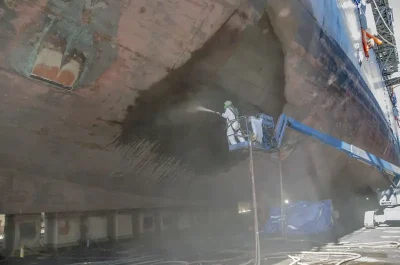
This explains why the primer needs a clean blasted surface. Zinc cannot protect steel it does not touch. Read more about this in our guide to marine coating surface preparation.
Why reduced zinc primers give mainly barrier protection
Some primers use less zinc to reduce cost or improve flexibility. These are often called reduced zinc or low zinc primers. They may include other pigments and fillers.
With fewer zinc particles the contact chain is weaker. Such a film gives mainly barrier protection, with only limited galvanic action. That can be enough in a mild environment. It is a weaker choice for blasted steel in a marine or hot, salty atmosphere.
- Zinc rich primer: sacrificial protection plus a barrier of zinc salts.
- Reduced zinc primer: mainly barrier protection, with less galvanic effect.
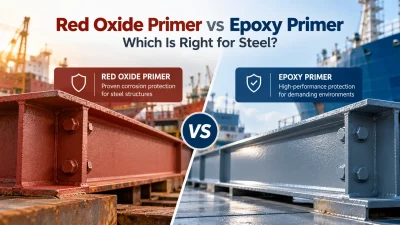
- Red oxide or plain epoxy primer: barrier only. See our comparison of red oxide primer vs epoxy primer.
Zinc epoxy vs zinc silicate: the binder decides
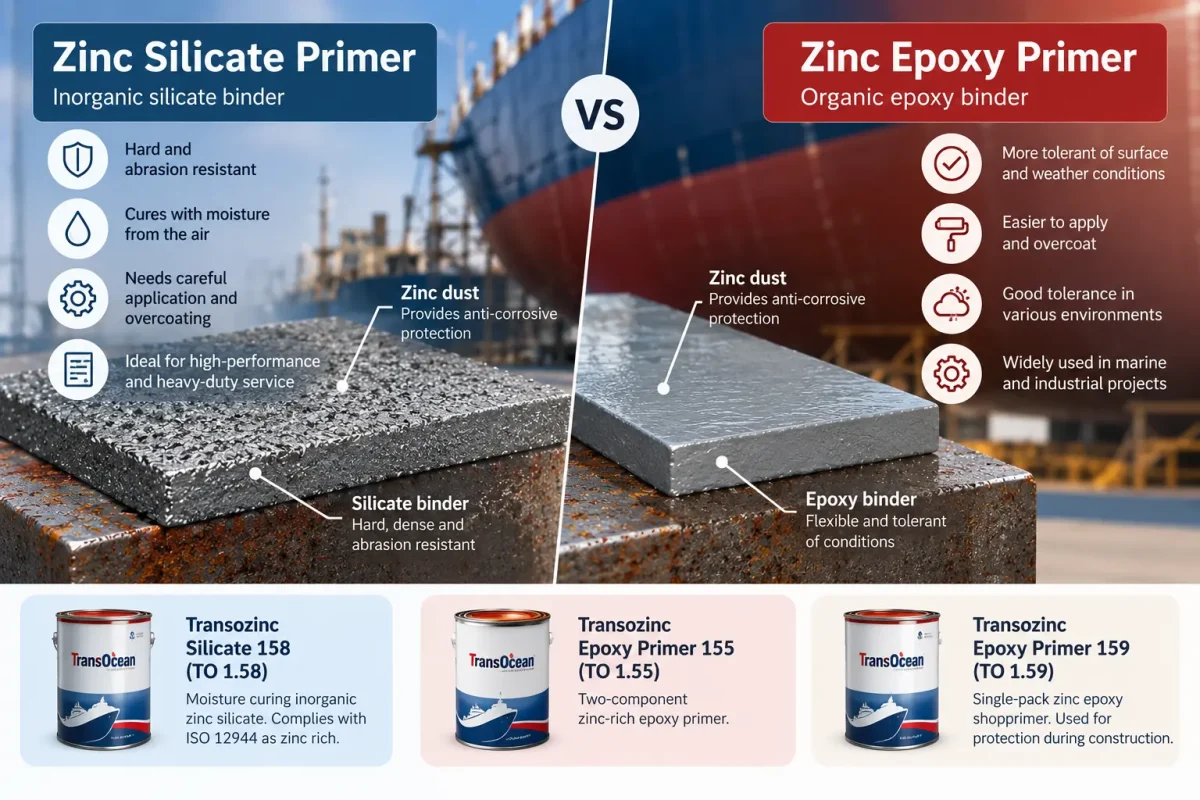
The binder decides how the primer is applied, cured and overcoated. The two main families are zinc epoxy and zinc silicate. A zinc epoxy vs zinc silicate choice is mostly a choice of binder.
- Zinc silicate: inorganic silicate binder, hard and abrasion resistant, cures with moisture from the air. It needs careful application and overcoating. Our Transozinc Silicate 158 (TO 1.58) is a moisture curing inorganic zinc silicate that complies with ISO 12944 as zinc rich.
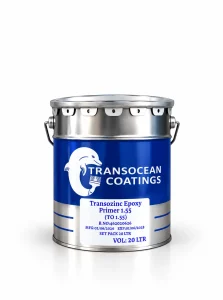
- Zinc epoxy: organic epoxy binder, more tolerant of surface and weather conditions, and easier to overcoat. Our Transozinc Epoxy Primer 155 (TO 1.55) is a two-component zinc-rich epoxy primer.
- Single-pack zinc epoxy shopprimer: used for protection during construction. See Transozinc Epoxy Primer 159 (TO 1.59).
For the detailed binder comparison and the film cracking problem, see our article on epoxy vs zinc silicate in cargo tanks. The short rule is simple: silicate gives hardness, epoxy gives tolerance.
Where each type is used: hull, ballast tank, deck and offshore
Match the primer to the area, the system and the work conditions. The list below is a general guide, not a replacement for the project specification.
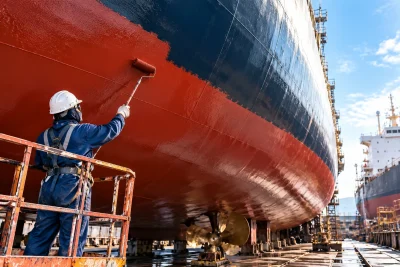
- Hull and deck: zinc epoxy is common where the primer is overcoated with an epoxy system. Zinc silicate is used where the specification asks for it.
- Ballast tanks: zinc rich primers appear in some ballast tank systems, for example as a base under epoxy. Check the class and PSPC requirement for your vessel.
- Offshore structures: zinc rich primers are often part of systems that follow ISO 12944 and Norsok M-501 requirements. Our Transozinc Epoxy Primer 155 data states this.
- Industrial steel: tanks, pipe racks and structural steel in the UAE and Oman, where heat, salt and humidity attack bare steel. Check the corrosivity category in ISO 12944 corrosivity categories C1 to CX.
- Shop and holding primer: a quick drying zinc epoxy protects plates and sections during fabrication, then the main system follows.
Our range of marine primers and anti-corrosive coatings shows how these products fit in a full system.
What to check on the data sheet
Before you buy a zinc rich primer, read the technical data sheet with a checklist. Five items matter most.
- Zinc content and standard. What does the product claim, and under which standard: ISO 12944, SSPC Paint 20, or another?
- Dry film thickness (DFT). The specified range and the maximum. Too thick a film is a problem for many zinc primers.
- Overcoat interval. The minimum and maximum time before the next coat, and which topcoat families are allowed.
- Surface standard. Usually Sa 2.5 abrasive blasting, with the profile range stated.
- Application conditions. Steel temperature, relative humidity, dew point margin and pot life.
Do not trust figures quoted by a seller or a forum. Use the current data sheet for the product and batch. Contact us if you need help to read it.
Common problems with zinc rich primers
Most failures of a zinc rich primer come from application, not from the product. Watch for these points.
- Poor surface: oil, dust, salts or less than Sa 2.5 break zinc to steel contact and cause early rust.
- Film too thick: thick silicate films can crack. For this topic see our tank coating article.
- Settled zinc: zinc is heavy and sinks. Stir the paint all the time during application.
- Zinc salts on the surface: white deposits left from weathering must be removed before overcoating or the next coat will lose adhesion.
- Pinholes and bubbles in the topcoat: a porous primer can release air into the topcoat. Follow the maker advice on mist coats and overcoat timing.
- Wrong overcoat window: missing the minimum or maximum interval reduces adhesion.
A little planning prevents most of these. Test the surface, record the readings, and keep the application log with the batch numbers.
Frequently asked questions
What is a zinc rich primer?
A zinc rich primer is an anti-corrosive primer that carries a high share of metallic zinc dust in the dry film. The zinc protects blasted steel by sacrificial action and by forming zinc salts in the film. It is applied directly to steel and then overcoated with an epoxy or polyurethane system.
How much zinc makes a primer zinc rich?
ISO 12944 treats a primer as zinc rich when the dry film contains more than 80% zinc dust by mass. Other standards such as BS 5493 and BS 4652 use different bases and limits, so their figures cannot be compared directly. Always confirm the compositional claim on the technical data sheet.
What is the difference between zinc epoxy and zinc silicate primer?
Zinc silicate uses an inorganic silicate binder, is hard and abrasion resistant, and cures with moisture from the air. Zinc epoxy uses an organic epoxy binder, is more tolerant of surface and weather conditions, and is easier to overcoat. The right choice depends on the area, the system and the application conditions.
Does a zinc rich primer need a topcoat?
In most marine and industrial systems yes. The primer gives the corrosion protection, while the midcoat and topcoat add barrier thickness, chemical resistance and colour. Some zinc silicates are approved to be left uncoated in specific uses, so check the data sheet for the product and the service before you decide.
What surface preparation does a zinc rich primer need?
Zinc rich primers are normally applied to abrasive blasted steel at Sa 2.5 with a suitable blast profile, free of dust, oil and salts. A poor surface breaks the contact between zinc and steel that sacrificial protection depends on. Follow the surface standard and profile range stated on the data sheet.
Can zinc rich primer be applied over old paint or rust?
Usually not. The zinc particles must touch the steel and each other, so the primer needs a clean blasted surface. Some epoxy types are listed for maintenance work on prepared surfaces or spot repair, but only within the limits of the data sheet. When in doubt, ask the paint maker before you apply.
Get the right zinc rich primer for your steel
Specifying a zinc rich primer for blasted steel in the UAE or Oman? Request a quote for Transozinc Epoxy Primer 159 (TO 1.59) and tell us the steel area, the system and the application conditions. Our team will help you match the product, the quantity and the data sheet limits. For other questions, contact us.