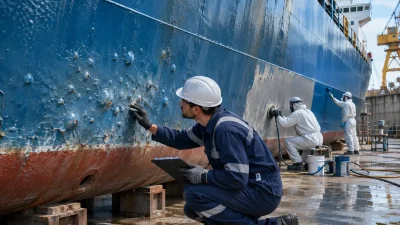


Steel can look perfect after blasting and still fail within months. The reason is often salt you cannot see. A Bresle test is the standard field check that finds it before the paint goes on.
This guide is for painting supervisors, coating inspectors and buyers in the UAE and Oman. You will learn how a Bresle test works, when to run it, how to read the result, and why the limit comes from the paint maker and the specification and not from one fixed number.
What is the Bresle test?
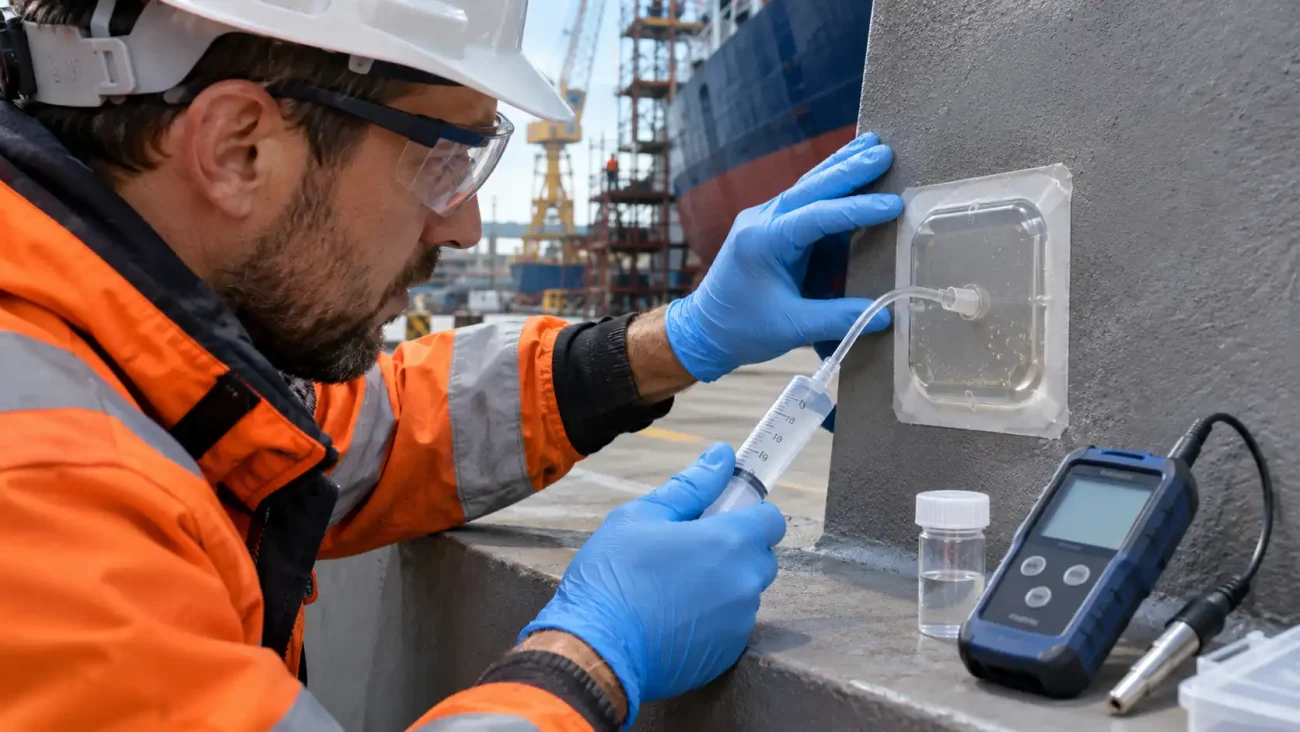
A Bresle test (also called the Bresle patch test) measures water-soluble salts on a steel surface. It is the usual method used to check soluble salt contamination on blasted steel before painting.
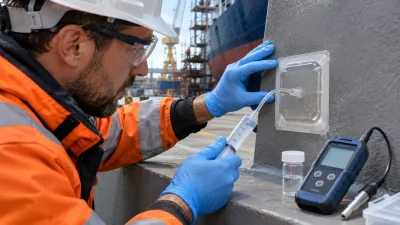
The idea is simple. A small patch is stuck to the steel. Deionised water is injected inside the patch and left to dissolve any salts on the surface. The water is then drawn out and its conductivity is measured. More dissolved salt means higher conductivity.
Two standards cover the method:
- ISO 8502-6 describes how to extract the soluble contaminants with the Bresle method. You can read its scope on the ISO 8502-6 standard page.
- ISO 8502-9 describes how to analyse the extract by conductivity and how to turn the reading into a surface salt value.
Why soluble salts on steel cause blisters
Salt is the enemy under any coating. Paint film is not fully waterproof. Water vapour passes through it slowly. If dissolved salt sits on the steel under the film, it pulls moisture through the coating by osmosis. A liquid pocket forms and grows into a blister.
Once the blisters break, the steel rusts underneath. The usual results are:
- Blisters in the primer or the full system.
- Loss of adhesion and peeling in patches.
- Early failure inside tanks, where the film is under constant water or condensation load.
Our guide on marine coating failures shows how often contamination sits behind these defects. A Bresle test costs very little compared with the cost of removing a failed coat.
Salt risk on UAE and Oman steel
Salt risk is high on steel in the UAE and Oman. Dubai and Duqm both sit on warm, humid coasts. Sea spray and salt-laden air settle on steel that waits outdoors in the yard, on the quay or in the dry dock.
Several local conditions make a Bresle test more important:
- Coastal air. Salt deposits build up on bare steel, plates and pipes in storage.
- Heat and humidity. Night dew wets the surface and dissolves the salt, which then moves into pits and weld areas.
- Fast flash rust. Salt speeds up rust on cleaned steel. Our guide to flash rust on blasted steel explains how this happens.
- Old salt in pitted steel. Ship hulls and tanks that have been in service hold salt in the pits, where blasting alone may not remove it.
For a wider view of how heat affects the job, see our article on painting in hot and humid weather in the UAE.
Bresle test equipment you need
A basic Bresle test kit is small enough to carry in an inspector’s bag. It normally includes:
- Bresle patches (self-adhesive cells with a defined test area).
- A syringe and needle for injecting and drawing off the water.
- Deionised water, kept clean and sealed.
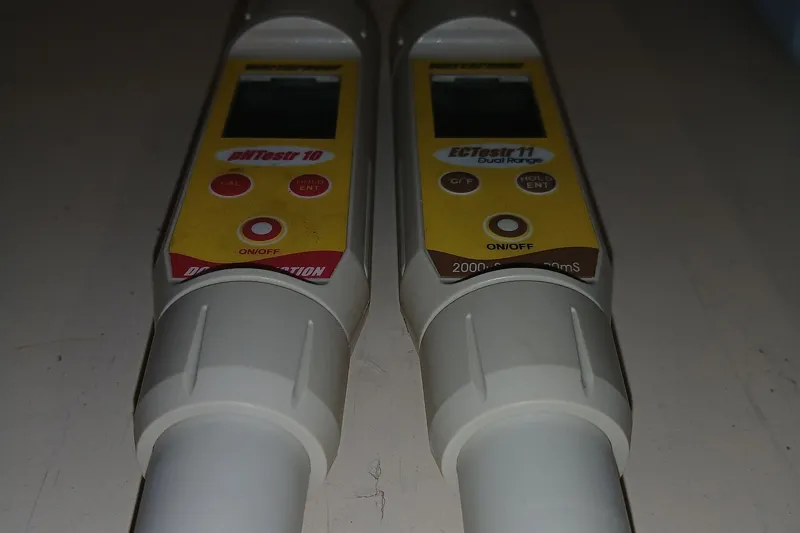
- A conductivity meter with a small sample cell, calibrated and temperature compensated.
Keep a fresh bottle of deionised water for the job and take a blank reading of it. The blank tells you the starting conductivity of the water, so the result is not distorted by dirty water.
How to run a Bresle test: 8 steps
Follow the method in the standard and the instructions of the kit maker. A typical field routine looks like this:
- Choose the test point. Pick a clean, dry area on the prepared steel, as set by the inspection plan.
- Remove dust. Blow or brush off loose blasting dust. Do not touch the test area with bare fingers.
- Take the blank. Read the conductivity of the deionised water you will use.
- Fix the patch. Press the Bresle patch firmly onto the steel so the edges seal.
- Inject the water. Add the known volume of deionised water through the foam with the syringe.
- Extract the salts. Draw the water out and inject it again several times, for the period stated in the method, so it dissolves the surface salt.
- Collect the sample. Draw the liquid into the syringe and place it in the conductivity meter.
- Read and record. Note the reading, the temperature, the location and the time.
Repeat at each location required by the specification.
How to read a Bresle test result
The meter shows conductivity. ISO 8502-9 explains how to convert the reading, after taking away the blank, into a salt value per unit of surface area. Many kits and meters do this calculation for you using the patch area and water volume.
Remember what the number means:
- It is a measure of total dissolved ionic salts. It does not say which salt it is.
- It shows what the water extracted. Salt held deep in pits or under rust may not come out in one test.
- A low result does not replace the visual check for oil, dust and rust grade.
If the specification needs a chloride-specific reading, ask the engineer which method is accepted before you start the job.
Why there is no universal Bresle test limit
This is the point that most people ask about, and the honest answer is simple: there is no single number for every job. The allowed salt level depends on the coating system, the service area and the document that governs the work.
Look for the limit in these places, in this order:
- The project specification or class rules. Some ballast tank and tank lining specifications set a limit. Our article on IMO PSPC for ballast tanks shows how such a rule is stated.
- The paint maker’s technical data sheet. It gives the surface condition the product needs. Read how to read a marine coating technical data sheet before you start.
- The owner or inspector’s own requirement. Immersion service often needs a lower level than a dry atmospheric exposure.
The technical report ISO/TR 15235 discusses salt contamination limits and why they differ between systems. It does not replace the paint maker or the contract.
Never copy a limit from a different job, a forum post or an old project. Write the limit from the current documents on the inspection form before the first test. If two documents disagree, the stricter one usually wins, but ask the owner in writing.
When to run the Bresle test and where
A Bresle test belongs at a fixed point in the job. Use this simple schedule:
- After the final surface preparation. Test the cleaned and dusted steel, before any coat.
- After any wash or delay. If rain, fog or a long wait follows the test, test again.
- Before the stripe coat and the full coat. Check weld seams, edges and pitted spots.
- At selected locations. Include low points, horizontal surfaces, welds, corners and bottom plates, where salt collects.
Combine this test with the other checks in the marine coating inspection checklist and the surface preparation steps in our guide to marine coating surface preparation.
What to do when the Bresle test fails
If a Bresle test shows too much salt, the answer is not to paint quickly and hope. Follow a clear recovery routine:
- Stop the coating work in that area.
- Wash the steel with clean fresh water. Wet methods such as hydroblasting remove salt better than dry blasting. Our comparison of hydroblasting vs abrasive blasting for ship hulls explains why.
- Let the steel dry and check for flash rust.
- Re-blast if the rust grade or the pitting needs it.
- Run the Bresle test again at the same place, and record both results.
In tanks, give extra time to the bottom plates and the corners. Water and salt settle there first. The article on ballast tank coatings shows why these areas carry the highest risk.
Common Bresle test mistakes
Most wrong results come from small mistakes in the routine. Watch for these:
- Dirty syringes, or water that was not deionised.
- Touching the test area or the patch edge with fingers.
- Testing only flat, easy areas and ignoring pits and welds.
Frequently asked questions
What is a Bresle test?
A Bresle test is a field method for finding soluble salts on a steel surface. A self-adhesive patch holds a small volume of deionised water against the steel. The water dissolves surface salts, and a conductivity meter reads the extract. The method is described in ISO 8502-6, and the reading is converted to a salt density.
What is the acceptable salt level for the Bresle test?
There is no single universal value. The limit comes from the paint maker’s technical data sheet, the project specification or the class rules, and it often differs between coating systems and service areas. Always read the data sheet and the specification for your job, and write the limit on the inspection record before you test.
Does the Bresle test measure chloride only?
No. A conductivity reading responds to all dissolved ionic salts, not to chloride alone. Chlorides, sulphates and other ions all add to the result. If the specification asks for a chloride-specific value, use a method that measures chloride directly, and agree the method with the owner before work starts.
When should the Bresle test be done?
Run the test after the final surface preparation and before the first coat, once the steel is clean and dust has been removed. Test again after any wash, rain or long delay. Check the specification, because it sets the number and location of test points for each area.
Can salt be on steel that looks clean after blasting?
Yes. Soluble salts cannot be seen. Steel can look perfectly blasted to the required cleanliness grade and still carry salts, especially inside pits and on surfaces left outdoors near the sea. This is why a visual check is never enough and a salt test is added to the inspection plan.
What should I do if the Bresle test result is too high?
Do not paint. Wash the area with clean fresh water, using high-pressure or hydroblasting if the specification allows, then dry it and test again. Deep pitting may need further blasting. Record every result and repeat the test until the area meets the limit in the specification.
Check your steel before you paint
Planning a blast and paint job in the UAE or Oman? Request a quote for TransOcean marine paints and tell us the steel condition, the area and the service. We will send the data sheets so you can check each product’s surface requirement against your Bresle test limit before work starts.