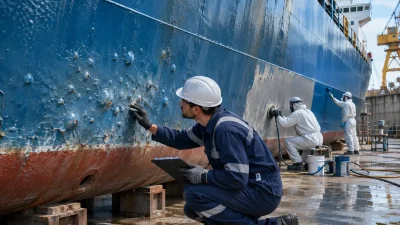


A surveyor points at a steel plate and says “it is a C.” Half the team nods and the other half is not sure what that means for the blasting plan. Understanding rust grades is what turns that remark into a clear specification.
This guide is for coating inspectors, superintendents and procurement staff in the UAE and Oman. It explains what rust grades A, B, C and D mean, how to read a label such as “C Sa 2.5”, how to grade steel on site, and how the starting grade affects blasting and paint.
What are rust grades in ISO 8501-1?
ISO 8501-1 is the international standard for the visual assessment of steel before painting. It uses two scales. One describes the condition of the steel as it arrives. The other describes how clean the steel is after preparation. You can see the scope on the ISO catalogue page for ISO 8501-1:2007.
The first scale is the set of rust grades. There are four, labelled A, B, C and D. They are based on how much mill scale is left on the steel and how much rust and pitting has formed. The standard uses reference photographs so that different people reach the same result.
Mill scale is the thin, hard, blue-grey layer that forms on steel when it is hot rolled. See this overview of mill scale for the background. While it stays tight, it protects the steel to a degree. Once it cracks and rust creeps beneath it, the steel moves up through the rust grades.
Rust grades A, B, C and D explained in plain words
Each of the rust grades describes one stage in the life of unprotected steel. Here is how to recognise them:
- Grade A. Mill scale is largely intact and tightly bonded. There is little or no rust. This is the best starting condition for new plate and sections.
- Grade B. The steel has started to rust, and the mill scale has begun to flake or lift. Some scale is still attached. This is typical of plate that has been stored outdoors for a short time.
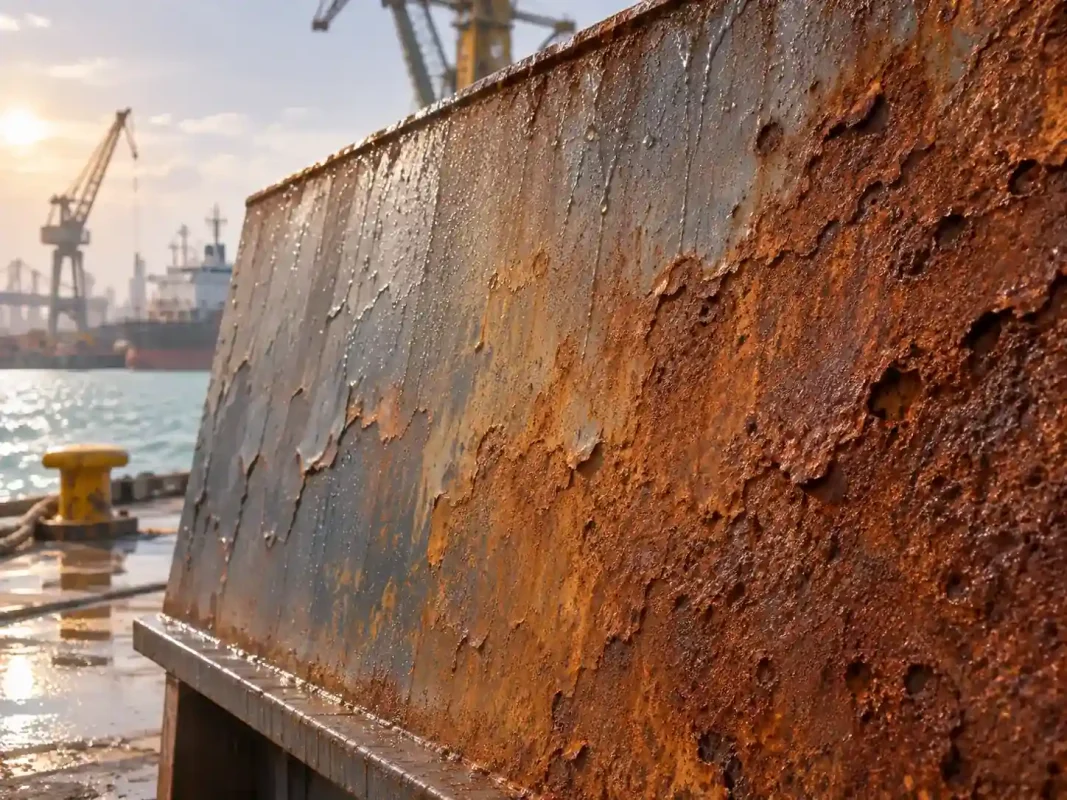
- Grade C. The mill scale has rusted away, or can be scraped off, and slight pitting is visible to the normal eye. The surface is rough and fully rusty.
- Grade D. The mill scale has rusted away and general pitting is visible over the surface. This is steel that has corroded for a long period.
The key words are “visible to normal vision”. Grading is a visual comparison, not a measurement. You look at the steel, decide which description fits best and note the result.
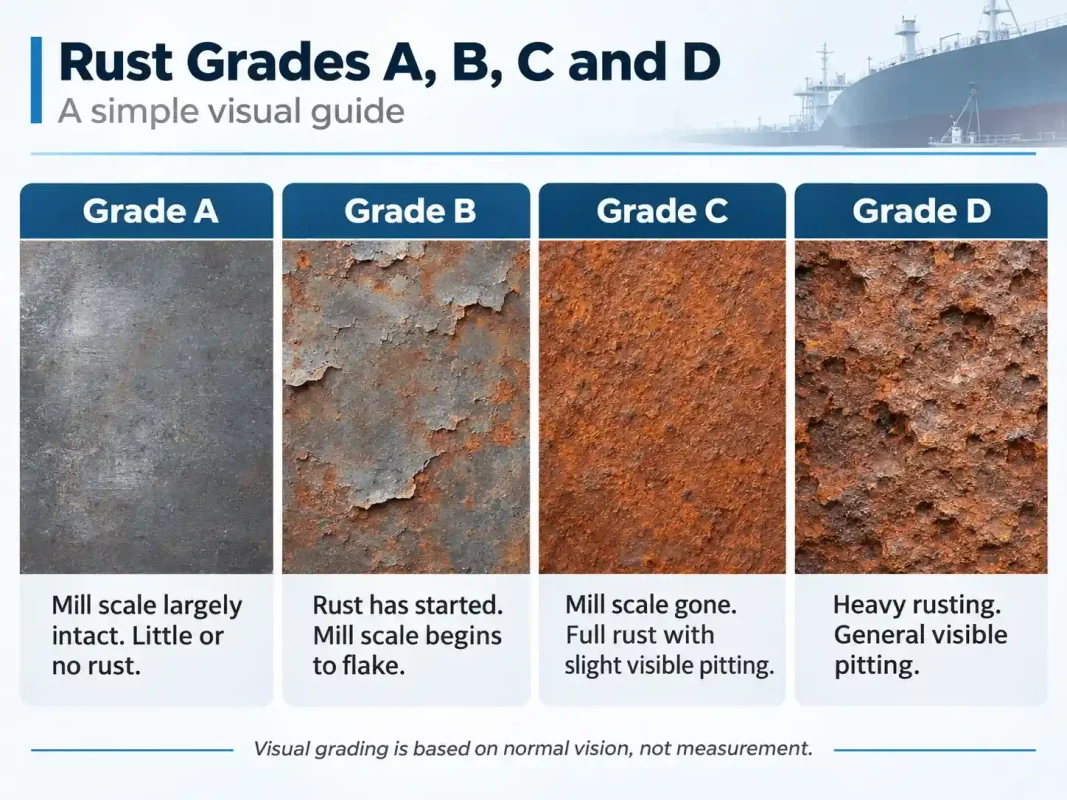
The move from B to C is the turning point. Once the scale has gone, the steel corrodes faster and the pits begin to hold salt and moisture. That is why pitted steel is harder to clean and why coating failures often start in the pits. Our article on what rusting is and how to prevent it explains the mechanism.
How to read a label like “C Sa 2.5”
On drawings and inspection reports you will often see a code like “B Sa 2.5” or “C St 3”. Each code has two parts, and each part comes from a different scale.
- The letter is the rust grade. It records the condition of the steel before any work: A, B, C or D.
- The letters and number are the preparation grade. They record how clean the steel is afterwards. “Sa” stands for blast cleaning. “St” stands for hand or power tool cleaning. The number shows how thorough the cleaning is.
So “C Sa 2.5” means steel that began as rust grade C and was blast cleaned to Sa 2.5. In ISO 8501-1 the grade is written Sa 2½, which is the same level. That level means very thorough blast cleaning, where the surface is left with only slight staining.
The label carries both parts because Sa 2.5 on grade A steel and Sa 2.5 on pitted grade D steel are not the same finish. The standard pairs the starting rust grade with the cleaning level in its reference photographs. Always compare cleaned steel against the photograph for the correct pair. Our guide to marine coating surface preparation covers the preparation grades in more detail.
How the starting grade changes blasting and paint use
The starting grade sets how hard the preparation job will be. It affects time, abrasive and paint, although each yard has different equipment and different numbers. Do not rely on a general rule. Measure your own output on a trial area.
- Blasting time. Steel in rust grades A and B cleans faster, because there is less rust to remove. Pitted steel in grades C and D takes longer to reach Sa 2.5, since the pits must be cleaned out.
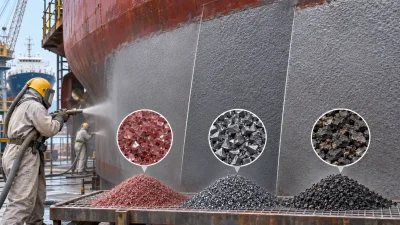
- Abrasive use. More rust and deeper pits usually mean more abrasive per square metre. Choose the abrasive for the job. See our guide to blasting abrasives for ships.
- Paint consumption. A pitted surface has more area and deeper valleys, so reaching the specified film thickness can take more paint. Ask the supplier to confirm quantities for rough steel.
- Method choice. Pits can hold soluble salt that dry blasting does not remove. For hulls, compare dry and wet methods in our article on hydroblasting vs abrasive blasting.
This is why procurement staff should ask for the expected rust grades at the quotation stage. A yard quoting for grade B steel and then meeting grade D will run over time and over material.
Why Gulf humidity and salt push steel from B to C or D
Steel in the Gulf does not stay in grade A for long. Humidity, salt in the air, daily temperature swings and dust all work against bare steel.
- Humid nights. Condensation forms on cool steel overnight and starts surface rust within days.
- Salt in the air. Chlorides land on exposed plate and speed corrosion. Test for them, as described in our Bresle test guide.
- Outdoor storage. Plate stacked in yards near the coast can slip from grade A to B, and then to C, in a short period.
After blasting, the clock starts again. Freshly cleaned steel will form flash rust quickly in humid air. Read our guide to flash rust on blasted steel to see how to grade and control it. Note that flash rust grades are a separate scale from the starting rust grades discussed here.
How to grade steel on site: a 7-step checklist
A good grading takes minutes if you follow the same steps each time. Use this checklist on site:
- Get the reference. Use the photographs from ISO 8501-1, in print or from your company copy.
- Clean the viewing area. Remove loose dirt, dust and debris. Use a wire brush on a small patch if needed.
- Dry the steel. Do not grade wet steel. Water darkens the surface and hides detail.
- Check for oil and grease. Degrease first, because oil masks the true condition.
- Use good light. Grade in daylight or strong, even lighting, and view the steel from a normal distance.
- Compare and decide. Match the steel to A, B, C or D. If it sits between two, record the worse grade.
- Record the result. Write the grade, area, date, weather and the name of the inspector, and take a photograph.
Add the result to your inspection file. Our marine coating inspection checklist shows where the grading step sits in the wider job plan.
Common mistakes when using rust grades
Most disputes about rust grades come from a small group of avoidable errors:
- Confusing rust grade with preparation grade. The rust grade is the starting condition. The preparation grade is the finish. They are not interchangeable.
- Grading wet or oily steel. The surface looks different from its real condition.
- Grading one spot only. Steel can change across a plate. Check several areas and report the typical grade.
- Using old records. The grade at purchase is not the grade at blasting.
- Forgetting salts. The visual grade does not show soluble salt. A clean-looking surface can still carry contamination, so test for it separately.
Rust grades are a tool for communication. Used well, they let the owner, the yard and the paint supplier talk about the steel in the same terms.
Frequently asked questions
What are rust grades A, B, C and D?
Rust grades A, B, C and D are the four visual categories in ISO 8501-1 for steel that has not been cleaned yet. They describe how much mill scale is left and how much rust and pitting is present, from A (mostly intact mill scale) to D (rusted, with general pitting).
What does “C Sa 2.5” mean?
The letter is the starting rust grade, and the code after it is the cleaning level reached. “C Sa 2.5” means steel that began as rust grade C and was blast cleaned to Sa 2.5, very thorough blast cleaning. The label records both the condition before and the finish after preparation.
Is rust grade the same as preparation grade?
No. The rust grade describes the steel before any work, so it is a starting point. The preparation grade, such as Sa 2.5 or St 3, describes how clean the steel is after cleaning. Mixing the two up is the most common error when reading a specification or inspection report.
Which rust grade is worst?
Rust grade D is the most severe in ISO 8501-1: the mill scale has rusted away and general pitting is visible. It takes the most effort to clean and often needs more paint to fill the rough surface. Grade A is the best starting condition, with mill scale still largely intact.
Can you grade steel that is wet or oily?
Not reliably. Moisture darkens steel and oil hides rust and scale, so the surface can look better or worse than it is. Dry the steel and remove oil, grease and loose dirt first, then compare it with the standard in good light. Record the date and the weather.
Does the rust grade change the paint system?
The starting grade mainly changes the preparation work and the paint quantity, not the system type. The system comes from the exposure and the paint maker’s data sheet. Pitted steel can need more paint to reach the specified film thickness, so confirm the quantity with the supplier.
Get paint matched to your steel condition
Planning a blasting and coating job and need paint matched to your steel condition? Request a quote for TransOcean marine paints and tell us the area, the expected rust grade and the exposure. Our team will send the data sheets so you can confirm the system and the quantity.