

A wet steel deck, hot sun and salt crust are a bad mix for anyone carrying a load. Non-skid deck paint for ships is the coating that turns a slick plate into a surface crews can trust.
This guide is for shipyard buyers, superintendents and ship-repair planners in the UAE and Oman. It compares the main anti-slip deck coating options, explains how to choose one, and covers surface preparation, application, inspection and common mistakes.
What is non-skid deck paint for ships?
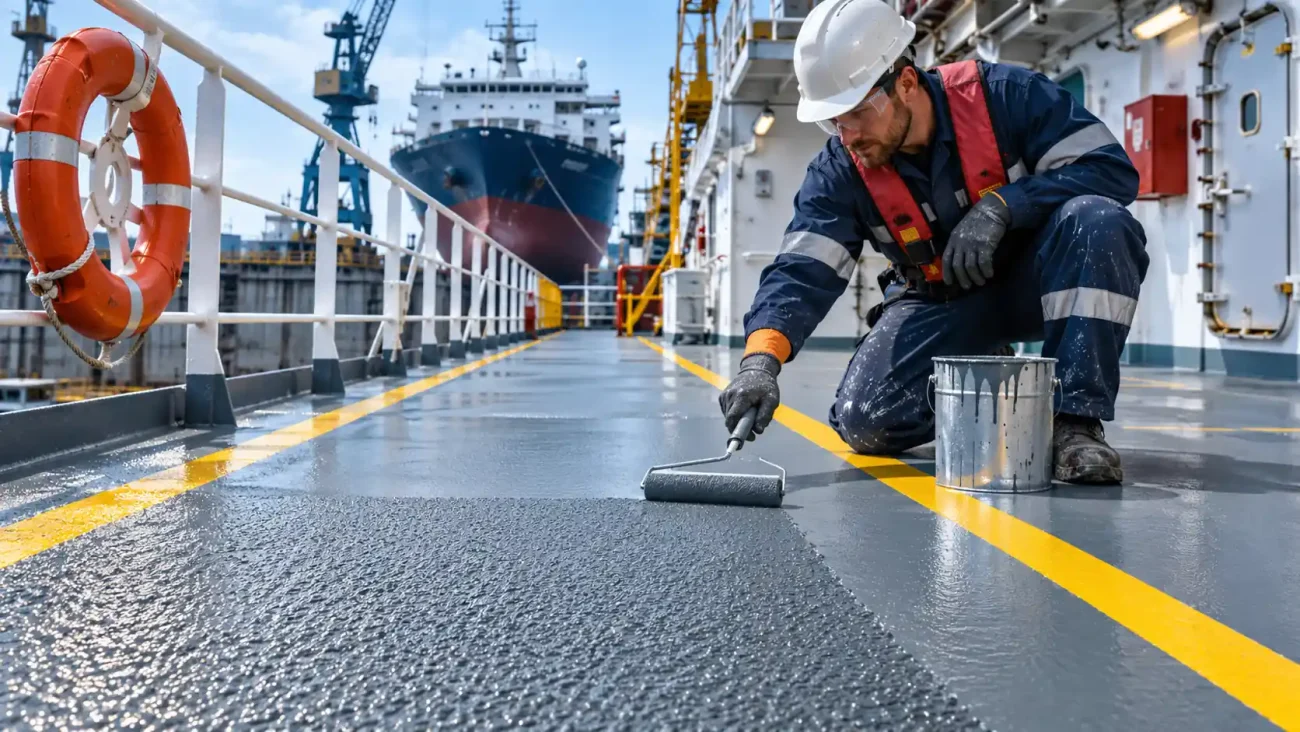
Non-skid deck paint for ships is a deck coating with a built-in rough texture. The texture comes from hard aggregate, such as grit, that sits in or on the paint film. It gives grip on walkways, working decks, ladders and landing areas.
It does two jobs at once. It protects the steel from corrosion like any other marine deck coating, and it improves ship deck safety by reducing the chance of a slip. Small-boat retail products often cover only light foot traffic. Commercial vessels need more: heavy boots, wheeled equipment, wash-downs, oil and spray.
For the wider picture of paint systems on deck and hull, see our guide to container ship coatings.
Where ships need anti-slip deck coating
Not every deck needs the same grip. Plan texture by area and by use:
- Walkways and access routes. Medium texture. Crew walk here every watch, often in wet boots.
- Working decks and hatch surrounds. A tougher texture that survives cargo gear, lashing work and wheels.
- Ladders, stairs and landings. Fine to medium texture. It must grip without wearing through gloves or shoes.
3 main types of anti-slip deck coating compared
Most anti-slip deck coating systems fall into three groups. Each one trades off grip, speed of work and cleaning.
Aggregate-in-paint
The grit is mixed into the paint, or supplied already blended. You roll or spray it in the same way as a normal coat. It is quick and gives an even finish.
- Good for: large areas, walkways, repair work with short windows.
- Watch out for: grit settling in the pot. Stir often and keep the mix even.
Broadcast grit
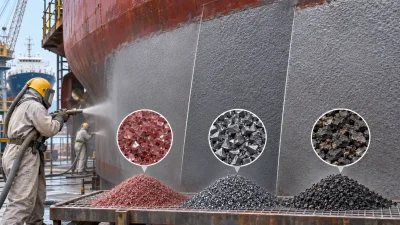
You apply a wet coat, then scatter non-skid aggregate onto it until the surface is covered. After curing, you sweep off the loose grit and seal with a top coat.
- Good for: high-risk decks that need a coarse, aggressive grip.
- Watch out for: uneven coverage, and for a heavy texture that is harder to clean.
Textured or rubberised systems
These are thicker, textured coatings, often with a softer, more flexible feel. They suit areas where comfort, noise or impact matters.
- Good for: places where crew stand for long periods, and decks with movement.
- Watch out for: compatibility with the primer, and the repair method once damaged.
Epoxy, polyurethane or acrylic: choosing the base
The base resin decides adhesion, toughness and weathering. Our guide to marine epoxy vs polyurethane coatings covers the chemistry in detail. For non-skid deck paint for ships, the short version is:
- Epoxy. Strong adhesion, good abrasion and chemical resistance. A common choice for the build coats. It can chalk and fade in strong sun if left as the top coat.
- Polyurethane. Holds colour and gloss better under UV. A common finish over epoxy on exposed decks.
- Acrylic. Easy to apply and touch up, quick to dry. Often used where ease of maintenance is more important than the toughest wear performance.
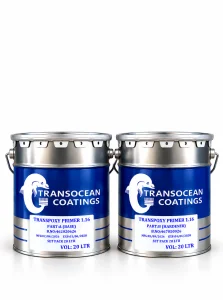
In practice, many yards combine them: an epoxy primer and build coat for protection, then a polyurethane non-skid finish for UV stability. TransOcean products such as the Transpoxy Primer A&B (TO 1.16) and Transurethane Finish HB (3.44) follow this epoxy-then-polyurethane logic. Check each product page and data sheet for the exact system and limits.
How to choose non-skid deck paint for ships
Use this quick comparison when you shortlist options for a deck repaint. It is a guide, not a replacement for the paint maker’s data sheets.
- Speed of application: aggregate-in-paint is fastest. Broadcast takes more steps. Textured systems vary.
- Grip level: broadcast is usually coarsest. Aggregate-in-paint is moderate and even.
- Cleaning: finer textures wash down more easily. Coarse grit holds dirt and oil.
- Repair: mixed systems are easy to patch. Broadcast patches need care to match the texture.
- UV exposure: choose a UV-stable topcoat on open decks, especially in the Gulf.
We do not quote durability numbers here. They depend on traffic, maintenance and the exact system, so ask the supplier for written advice for your vessel.
Surface preparation for non-skid deck paint for ships
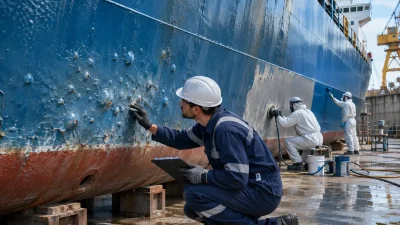
Even the best non-skid deck paint for ships fails on a poorly prepared plate. Most early failures start under the film, not in it.
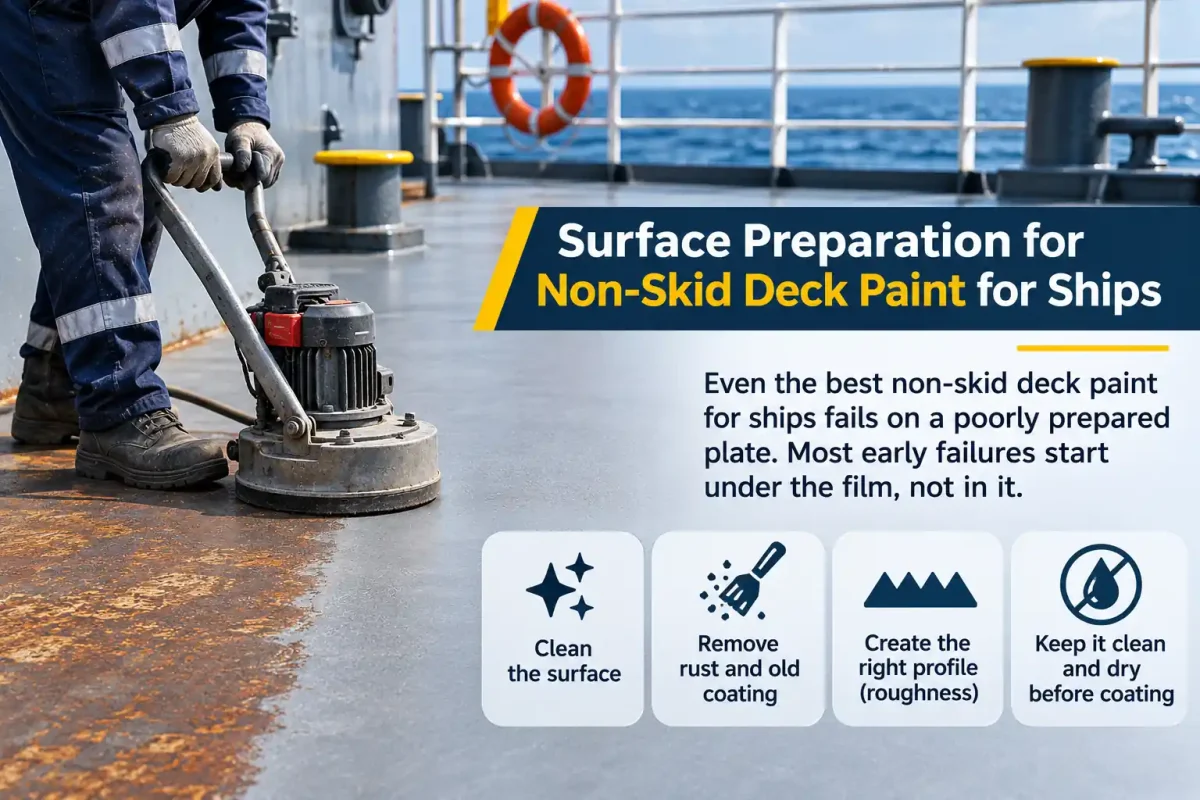
- Remove old non-skid and loose paint. Needle guns, grinders and blasting all work. Take the old texture back to a sound surface.
- Clean the steel. Remove oil, grease, salt and dust. Wash with fresh water where salts are present.
- Prepare to the specified grade. Use the grade on the data sheet. Read more in our guide to marine coating surface preparation.
- Prime quickly. Coat before flash rust forms. In humid Gulf nights, watch the dew point.
Note the area and the condition of the old coating. It will decide whether you can overcoat or must strip the deck.
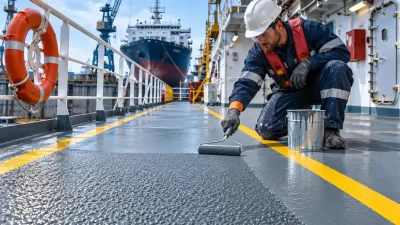
How to apply non-slip marine paint: a 6-step method
Good application turns a sound specification into a long-lasting deck. Follow these steps for aggregate-in-paint and broadcast systems:
- Check the weather and the steel. Measure steel temperature, air temperature, humidity and dew point. Do not coat damp or very hot steel.
- Apply the primer and build coats. Hold to the film thickness on the data sheet. Our guide to marine coating DFT shows how to measure and inspect it.
- Mix the non-skid coat well. Keep the aggregate evenly spread. Stir during the job.
- Apply in small, manageable sections. Roll or spray evenly. For broadcast systems, scatter grit while the film is still wet.
- Seal where needed. After curing, remove loose grit and apply the top coat the system calls for.
- Respect cure times. Keep foot traffic and gear off until the paint maker says the deck can take load.
Heat and UV: non-skid deck paint for ships in Gulf waters
Shipyards and dry docks in Dubai and Duqm face heat, strong sun, dust and humid nights. These conditions change how you plan a non-skid job:
- Hot steel. Deck plates in direct sun get far hotter than the air. Check the plate, not only the air reading.
- Shorter pot life. Heat speeds up curing. Mix in smaller batches and keep paint in the shade.
- UV exposure. Unshaded decks need a UV-stable finish to hold colour and surface.
- Salt and dust. Wash decks and test for contamination before coating, especially after a night of spray or dew.
For background on deck design and terms, see the overview of a ship deck.
Wear and re-coat inspection for marine deck coating
A non-skid surface wears slowly, so check it on a schedule. Walk the main routes and look for the following:
- Smooth, polished areas where the grit has worn away.
- Chips, cracks and lifted film near edges, hatches and fittings.
- Rust bleed or stains showing the film is broken.
- Oil and grease build-up that hides the texture and cuts grip.
- Blistering or peeling, which can point to contamination under the paint.
Spot-repair small defects early. Re-coat the whole zone when wear is widespread. Keep an inspection log with photos and dates so that the next refit starts with facts, not guesses.
6 common mistakes with non-skid deck paint for ships
Most failures come from a short list of avoidable errors:
- Skipping surface prep. Paint over rust, salt or oil will not hold.
- Using the wrong system. A product made for light foot traffic will not suit a working deck.
- Mixing grit badly. Uneven grit leaves smooth patches.
- Ignoring film thickness. Too thin means early wear. Too thick risks trapped solvent.
- Coating in the wrong weather. Hot or damp steel causes defects.
- Opening the deck too soon. Early traffic damages a film that has not cured.
Frequently asked questions
What is non-skid deck paint for ships?
Non-skid deck paint for ships is a coating with a rough, gritty surface that gives shoes and equipment grip on steel decks. It uses aggregate mixed into the paint or scattered over wet paint. It protects the steel like a normal deck coating and also cuts the risk of slips in wet conditions.
Which base is best for a ship deck: epoxy, polyurethane or acrylic?
There is no single winner. Epoxy gives a tough, well-bonded base, polyurethane keeps its colour and gloss better in strong sun, and acrylic is easier to apply and maintain. Many decks use an epoxy build with a polyurethane finish. Choose by deck use, exposure and the paint maker’s system advice.
What is the difference between aggregate-in-paint and broadcast grit?
With aggregate-in-paint, the grit is pre-mixed into the coating and rolled or sprayed on. With broadcast grit, you scatter aggregate onto a wet coat and seal it with a top coat. Broadcast systems usually give a coarser grip. Mixed systems are faster and give a more even texture.
How often should a non-skid deck coating be re-coated?
There is no fixed interval. It depends on foot traffic, cargo handling, wash-downs, heat and UV. Inspect the deck regularly and re-coat when the texture is worn smooth, the film is damaged or rust shows through. Record the findings at each inspection so you can plan the next dry-dock.
Can I apply anti-slip coating over old paint?
Sometimes. Sound, well-adhered paint can be cleaned, roughened and overcoated if the new system is compatible with it. Loose, rusted or contaminated areas must be removed back to clean steel first. Always check compatibility with the paint supplier and do a small adhesion test before you start.
Does heat in the Gulf affect non-skid coatings?
Yes. High steel temperatures shorten pot life, speed up curing and can trap solvent in thick coats. Strong UV can fade and chalk some finishes. Check steel temperature and dew point before applying, use the application window on the data sheet, and pick a UV-stable topcoat where the deck is in full sun.
Get a deck coating plan for your vessel
Planning a deck repaint for a vessel in the UAE or Oman? Request a quote for Transurethane Finish HB (3.44) and tell us the deck area, the existing coating and the traffic it carries. Our team will send the data sheets and help match a system to your deck.