

A coating can look perfect on the day and still fail months later. Often the cause is a thin film of moisture on the steel. In hot, humid yards in the UAE and Oman, this film forms more easily than most crews expect.
This guide explains dew point in painting for ship superintendents, painting foremen and yard planners. You will learn the dew point meaning, the steel temperature above dew point rule, how to measure it, and what to do when the numbers fail. For wider weather planning, see our guide on painting in hot and humid weather in the UAE.
What is dew point in painting?
Dew point is the temperature at which the water vapour in the air starts to condense into liquid. Air at 32°C with 75% relative humidity has a dew point of about 27°C. Any surface colder than 27°C in that air will collect water.
That is why dew point in painting matters more than air temperature. The air may feel warm and dry enough, while a tank wall or hull plate is cold enough to sweat. Steel is a good conductor and holds the night chill for hours.
Dew point in painting is a measured limit, not a feeling. Humidity alone says little. A high reading with a hot surface can be safe, and a moderate reading with a cold surface can be a problem.
The 3°C rule: steel temperature above dew point
The 3°C rule is simple: for dew point in painting, steel temperature must be at least 3°C above the dew point. The rule is used in ISO 8502-4 guidance on the risk of condensation before painting, in ASTM D3276 practice for painting inspectors, and in the IMO performance standard for protective coatings in ballast tanks. Always check the product data sheet, which can be stricter.
The rule applies at three stages:
- Surface preparation. Blasted steel is very active and rusts fast on a damp surface.
- Application. Each coat needs a dry, warm surface.
- Cure. The film must not be wetted while it hardens.
The margin covers meter error and quick local cooling in shade, wind and thick plate.
When you plan the job, read the limits in the data sheet first. Our guide to the marine coating technical data sheet shows where to find them quickly.
Why condensation on steel before coating causes failures
Condensation on steel before coating is often invisible. The surface may only look slightly dull. Even so, a film of water changes the result in several ways:
- Poor adhesion. Paint bonds to the water, not the steel.
- Flash rust. Clean blasted steel starts to rust within minutes on a wet surface.
- Blisters. Trapped moisture and salts draw water through the film later.
- Amine blush. Some epoxy curing agents react with moisture and leave a greasy film.
For the full list of causes, see marine coating failures: 7 causes.
How to measure air, humidity and steel temperature
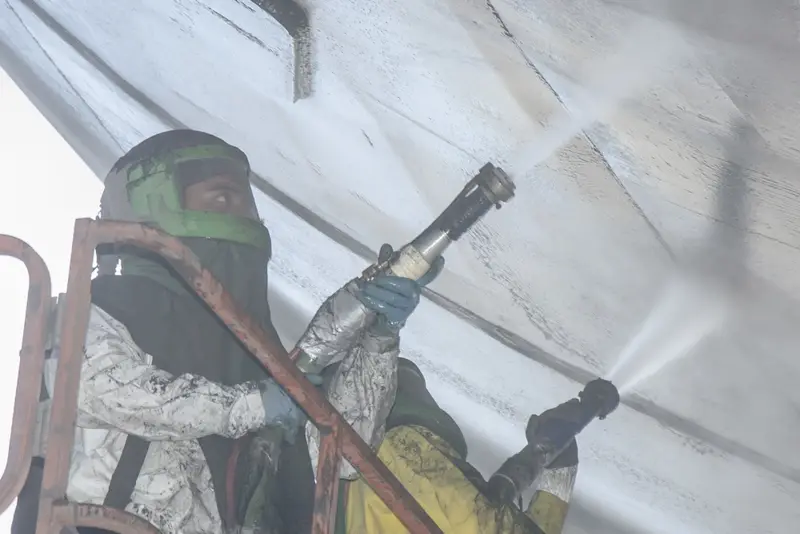
A good routine needs three readings and one calculation. Take them at the work location, not in the site office.
Instruments and readings
- Air temperature and relative humidity. Use a digital thermo-hygrometer or a sling psychrometer. Many digital meters show the dew point directly.
- Steel surface temperature. Use a magnetic contact probe or a surface thermometer. An infrared gun is useful for scanning but must be checked against a contact reading.
- Dew point. Read it from the meter, a dew point chart or a calculator. Then add 3°C for steel temperature above dew point.
Where and when to measure
Measure in the coldest and most exposed places, not the easiest one. Take readings:
- on the shaded side of the hull and on the tank bottom;
- on thick plates, frames and welds, which stay cold longer;
- inside closed tanks and voids, where humidity builds up;
- at the start of work, then every few hours, and again before each coat.
Use the lowest steel reading in the dew point in painting calculation. The inspector should log the values, as described in the marine coating inspection checklist.
Worked example: dew point calculation step by step
This dew point in painting example shows a typical morning on a ship in a UAE yard. The crew wants to start blasting a hull side at 06:30.
- 06:30 readings. Air 32°C, relative humidity 75%, steel 29°C on the shaded side.
- Dew point. From a chart or the Magnus formula, the dew point is about 27.0°C.
- Required steel temperature. 27.0°C + 3°C = 30.0°C minimum.
- Check. Steel is 29°C, so the margin is only about 2.0°C. The condition fails.
- Decision. Do not blast or paint. Wait and re-measure.
- 09:30 readings. Air 33°C, humidity 68%, steel 33°C. The dew point is about 26.3°C, the required steel is 29.3°C, and the margin is about 6.7°C. Work may start.
The air was warm and the humidity was below 85%, yet the steel was too cold. Without the steel reading, the crew would have painted over a wet surface.
The 85% relative humidity limit for painting
The second common limit in dew point in painting work is relative humidity. Many specifications and data sheets set a maximum of 85% RH during work, together with the steel temperature above dew point rule.
The two limits work together. Humidity can pass while the steel fails, as in the example. Humidity can also fail while the steel is warm, for example in a poorly ventilated tank. Both must pass.
Treat 85% as a common figure, not a universal one, and follow the data sheet.
Night and morning condensation on tanks and hulls
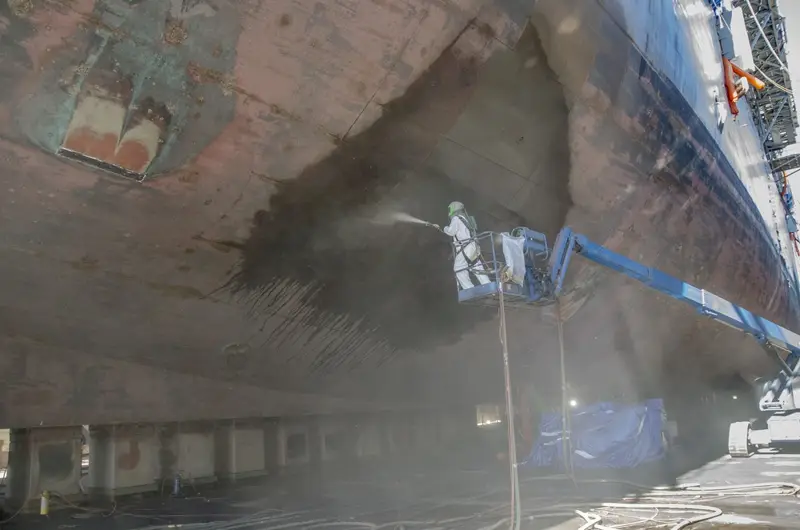
Condensation risk is highest at night and early morning, so dew point in painting checks matter most then. Steel cools by radiation to the clear sky, while the humid Gulf air stays warm. By dawn, the steel may be several degrees under the air temperature.
The risk is not the same everywhere on the ship:
- Hull sides. They cool fast, particularly on the shaded side.
- Tank tops and decks. They lose heat to the open sky at night.
- Cargo and ballast tanks. The steel touches cool sea water or cargo, so it stays cold.
- Closed tanks. Moisture from people and blasting raises humidity.
Plan critical coats for the warmer part of the day, and finish the last coat early enough for the film to cure before the evening drop. The film should not be wetted by dew while it is soft.
For surface preparation planning, the guide on marine coating surface preparation covers the standards and profiles.
What to do when the conditions fail
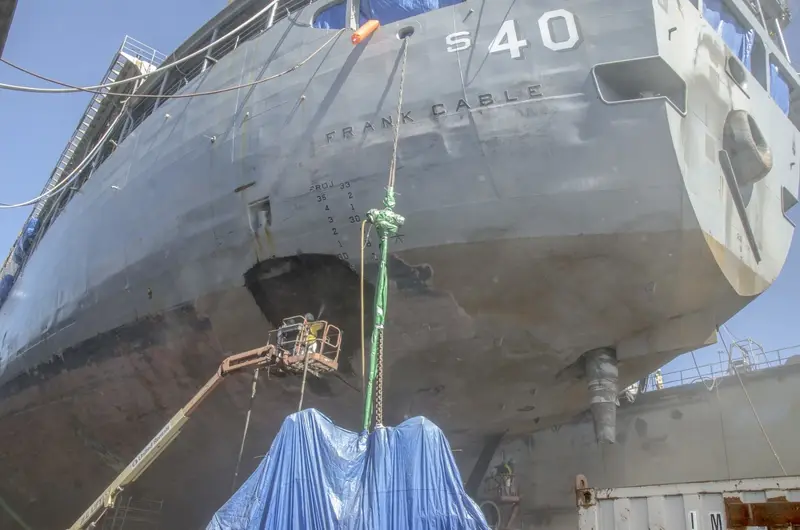
When dew point in painting checks fail and the steel is not at least 3°C above the dew point, stop. Do not apply paint on the hope that the surface will dry. You have three practical options:
- Wait. Often the sun raises the steel temperature within hours. Re-measure before restarting.
- Dehumidify. In tanks and holds, a dehumidifier lowers the dew point and keeps blasted steel dry. This is the standard method for closed spaces.
- Heat. Warm the steel so it sits above the dew point plus 3°C. Use indirect heating that does not add moisture to the air, and never a heater that burns fuel inside a closed tank without proper ventilation.
If condensation already formed on blasted steel, check the surface again. Flash rust or contamination may mean re-blasting before the primer. Check with the paint maker and the inspector.
Keep a dew point record and plan around it
Records for dew point in painting protect the owner, the yard and the paint supplier. The weather log should show the date, time, location, air temperature, relative humidity, steel temperature, dew point, the margin and the decision. Add the instrument serial number and the inspector name.
For more background on the physics, see the Wikipedia article on dew point.
Good dew point in painting control is cheap compared with a repair after delivery. Choosing a suitable product also matters, so request a quote on the Transocean paint range and compare the data sheet limits before you plan the weather window.
Frequently asked questions
What is dew point in painting?
Dew point in painting is the temperature at which moisture in the air condenses into liquid water. If a steel surface is at or below that temperature, a film of water forms on it, often invisible. Paint applied over that film loses adhesion, so the dew point decides whether coating work may start.
What is the 3°C rule in marine painting?
The 3°C rule says the steel surface temperature must stay at least 3°C above the dew point during surface preparation, application and cure. The margin covers meter error and fast local cooling. Many product data sheets and the IMO PSPC for ballast tanks use this limit, but the data sheet of your paint always has priority.
What relative humidity is too high for painting steel?
The common limit is 85% relative humidity, measured near the surface, together with the steel temperature above dew point rule. Some products allow less or more, and some epoxies tolerate a damp surface only if the data sheet says so. Read the limits for your exact product before the work starts.
Where should I measure steel temperature?
Measure on the bare or coated steel itself with a contact surface thermometer or a magnetic probe, not the air. Take readings at several points, including the coldest spots such as the shaded side, the tank bottom, the hull below the waterline and thick plates, and use the lowest reading in the dew point calculation.
Can I paint if the steel is 2°C above the dew point?
No. A margin of 2°C is below the 3°C rule, so condensation can form with a small drop in surface temperature or a small rise in humidity. Stop, protect the surface and wait, or raise the steel temperature or lower the humidity with dehumidification or heating, then measure again.
How do I stop condensation on steel before coating?
Raise the surface temperature or lower the air moisture. Typical options are waiting for the afternoon sun, heating the steel, and dehumidifying closed spaces such as tanks. Ventilation also helps if the outside air is drier. Re-measure after every change and record the readings before work continues.
Get the right marine coating for your climate window
Planning a coating job and want the right product for your climate window? Request a quote for Transocean marine paints and send us the vessel type, area, application conditions and dry-dock dates. Our team will help match the product, the quantity and the data sheet limits for dew point, humidity and temperature.