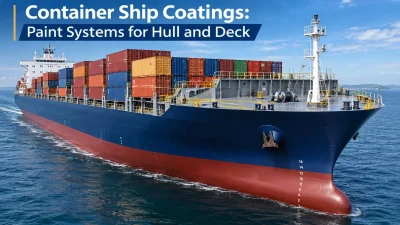


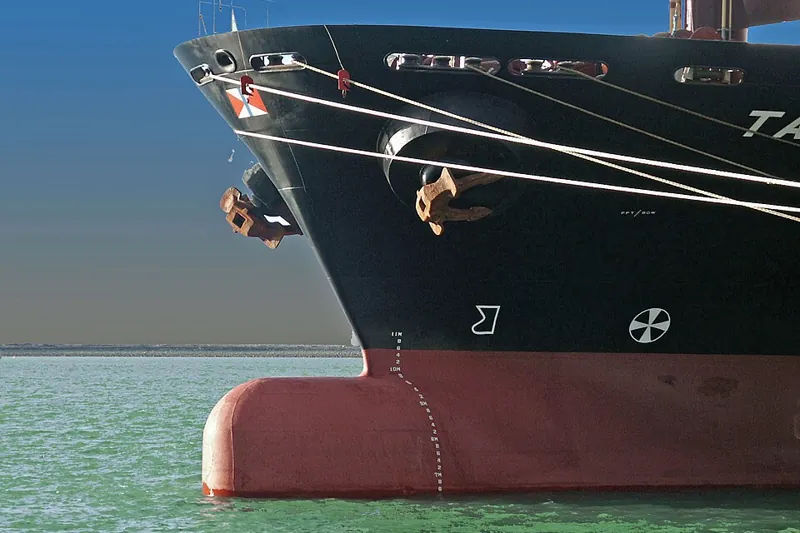
Look at the side of any ship in port and you will see a band of paint right at the waterline. It takes the worst of the water, the sun, the fenders and the harbour. That band is where boot top paint earns its keep.
This guide is for ship managers, superintendents, yard teams and buyers in Dubai, the UAE and Oman. It explains the boot top zone, why it needs its own coating, which system types suit it, the usual mistakes, and a practical checklist for dry-dock work.
What is boot top paint and where is the boot top zone?
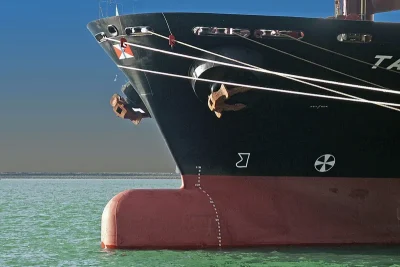
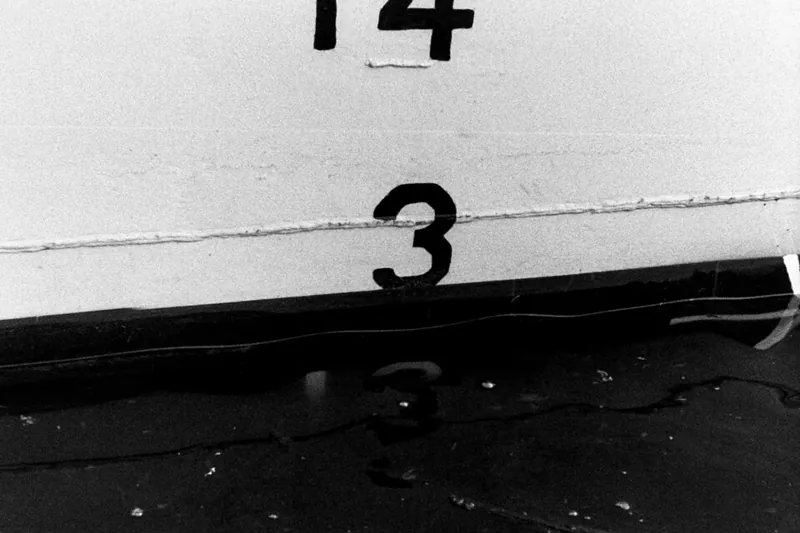
The boot top is the strip of hull between the light waterline and the loaded waterline. Seafarers also call it the boot stripe or boot topping. When the ship is loaded, the strip is under water. When the ship is light, it is in the air.
So the strip goes through wet-dry cycling again and again. Waves, tides, cargo operations and ballast changes all move the waterline up and down the band.
Boot top paint is the coating system chosen for that exact job. It is not the same as the antifouling below it, and not the same as the topside finish above it. The load line and light line are set by the ship design and by class and flag rules, as explained in this overview of the load line.
Why the waterline zone needs its own coating
A hull has three coating zones. The underwater hull, the boot top and the topside each face different stress. Treating them as one zone is a common reason for early failure.
The boot top zone suffers from several attacks at once:
- Wet-dry cycling. Water gets into small defects, then the film dries and the steel corrodes along the tide line.
- Abrasion. Fenders, tugs, mooring lines, ice or debris scrape the band during berthing.
- Marine growth. Fouling starts when the band is submerged for long periods, so some systems need to resist it.
- Oil and harbour grime. Oil films and dirt gather at the surface and mark or soften weak paint.
- UV and heat. Gulf sun is strong. A dark band can get very hot, which stresses the film and fades the colour.
- Tide-line corrosion. The alternating wet and dry steel is the classic place for rust to start.
Because of this, the zone needs a hard, tough film with good barrier protection and colour retention. That is the purpose of a dedicated boot top paint system.
Boot top paint vs antifouling vs topside finish
Three coatings meet on the hull side. Knowing the differences helps you write a clean specification.
- Underwater antifouling. Made to stay wet and to control marine growth. See our guide to antifouling paint types for self-polishing and hard matrix options.
- Boot top paint. Made for alternate wetting and drying, abrasion and weathering. Fouling control is limited and depends on the system.
- Topside finish. Made for weather, gloss and colour. It is usually a polyurethane. Read more in marine topcoats and finishes.
Boot top paint system types: epoxy, tie coat and finish
The system on the boot top normally follows the same logic as the rest of the hull. Each layer has a job:
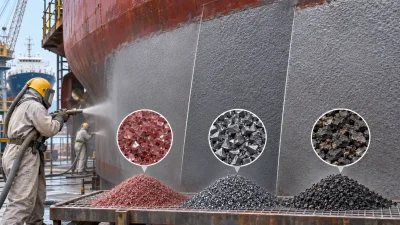
- Surface preparation. Blast or tool-clean to the specified grade and remove salts, oil and dust.
- Anticorrosive primer. A marine epoxy gives the barrier and the adhesion.
- Build coats. More epoxy coats reach the total dry film thickness in the specification.
- Tie coat or sealer. A tie coat links the epoxy to the next coat when the recoat window is missed or the chemistry differs.
- Boot top or polyurethane finish. The final film gives colour, gloss and wear resistance.
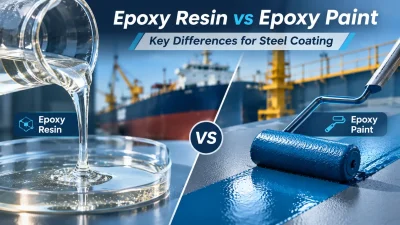
The choice between epoxy and polyurethane layers matters. Epoxy gives strong barrier protection but chalks in sunlight. Polyurethane keeps its colour and gloss. Our guide to marine epoxy vs polyurethane coatings explains how they work together.
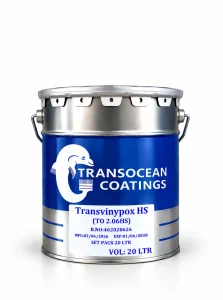
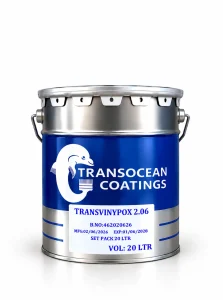
For the tie coat layer, the TransOcean range includes Transvinypox (TO 2.06), a tie coat and sealer that can be used above the waterline. Always confirm the exact build with the technical data sheet and the coating maker before you apply it.
What to put in a boot top paint specification
A good boot top paint job starts on paper. The specification should name the zone, the system and the limits. Our article on what a marine coating specification must include covers the full list. For the boot top, check these points:
- The exact extent of the zone, in metres above the keel or by draft marks.
- The system, number of coats and the stated dry film thickness range.
- The stripe coat on edges, welds, scuppers and other difficult areas.
- The overlap rule where the boot top meets antifouling and topside.
- The recoat window and cure time for each coat.
- The inspection and hold points.
Use the paint maker data, not guesswork, for values. Our guide on how to read a marine coating technical data sheet shows where to find them quickly. Do not copy figures from another product.
Common boot top paint mistakes to avoid
Most boot top failures trace back to a few repeated errors:
- Overlap with antifouling. Antifouling sprayed over the boot top, or the other way round, can cause poor adhesion, bleeding and a messy line. Agree a clear overlap and mask it.
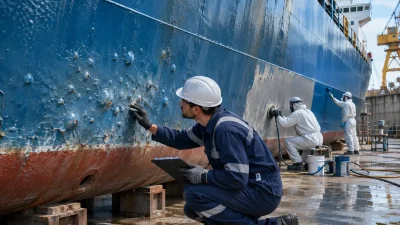
- Wrong recoat window. If a coat has cured past its window, the next coat may not bond. Use a tie coat or abrade as the data sheet says.
- Skipped stripe coat. Edges, welds and corners get thin film when sprayed. A brush stripe coat fixes that.
- Painting at the wrong draft. If the ship floats at a different draft on launch, the stripe is too high or too low. The next waterline shows bare, unprotected steel.
Boot top paint application: an 8-step dry-dock method
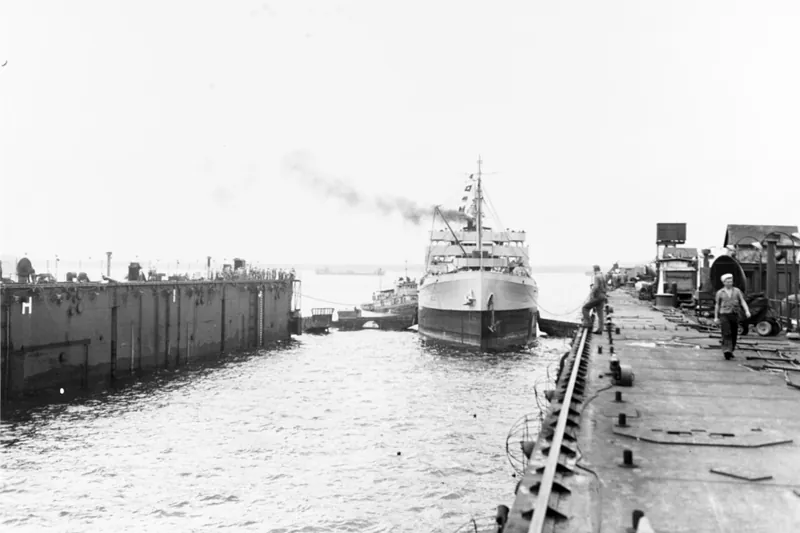
On a dry-dock job in the UAE or Oman, the boot top is usually done in the same window as the hull. A clear order of work helps:
- Mark the zone. Confirm the draft marks and mark the upper and lower lines.
- Prepare the surface. Remove old paint, rust, salts and oil to the specified grade.
- Check the climate. Read the steel temperature, humidity and dew point before each coat.
- Apply the primer. Follow the stated thinner, pot life and thickness.
- Stripe coat. Brush the edges, welds and other tricky areas.
- Apply the build coats and tie coat. Respect the recoat window each time.
- Apply the final coat. Use the boot top or finish specified, with clean masking lines.
- Cure before launch. Allow the stated cure time before the hull is submerged or exposed to abrasion.
Our guide to antifouling paint application on ship hulls covers the wider dry-dock sequence, including how the boot top and antifouling meet.
Boot top paint inspection checklist
Use this short list to check the boot top zone before and after painting:
- Draft marks and zone lines agree with the drawings.
- Surface cleanliness and salt tests are inside the limit in the specification.
- Steel and air temperature, humidity and dew point are logged for each coat.
- Wet film and dry film thickness readings are recorded for every coat.
- Stripe coat is done on all edges, welds and openings.
- Recoat intervals were kept, or the tie coat step was followed.
- Overlap with antifouling and topside is clean and within the agreed width.
Boot top paint in UAE and Oman conditions
Dubai and Duqm give a hard working environment for boot top paint. Heat, strong sun and salty air are the main factors.
- Hot steel. Hull plates in the sun can run far above air temperature. Check steel temperature, not only air temperature.
- Humidity and condensation. Night humidity leaves moisture and salt on the steel. Re-check before each coat.
- Strong UV. Pick a final coat with good colour and gloss retention.
- Short dock periods. Schedules are tight, so plan realistic recoat and cure intervals.
Frequently asked questions
What is boot top paint?
Boot top paint is the coating system applied to the band of hull between the light and loaded waterlines. This band is wetted and dried repeatedly as the ship changes draft and as waves and tides rise and fall. The paint must resist water, abrasion, sun, oil and harbour grime.
Is boot top paint the same as antifouling?
No. Antifouling is designed for the permanently immersed hull and releases a biocide to stop marine growth. The boot top zone is wet only part of the time, so it needs a hard, abrasion-resistant coating with good colour and gloss retention. Many specifications also keep the two coatings apart.
How wide is the boot top stripe?
There is no single width. It follows the distance between the light and loaded waterlines on that ship, plus any margin the owner and designer set. A tanker that trades heavily laden and in ballast will have a much deeper band than a vessel with a small draft change. Check the vessel drawings.
Can I use a normal topside finish on the boot top?
Usually not without checking. A topside finish sees only weather and the occasional splash. The boot top zone is repeatedly wet and dry, and knocked by fenders and tugs. Use a system the paint maker approves for this exposure, with an anticorrosive primer, any tie coat required and a suitable finish.
How often should the boot top be repainted?
It is normally repainted at each dry-docking, and often touched up between dockings after damage. The real interval depends on the trade, the system, the film thickness and the condition found at inspection. Let the survey decide, not the calendar, and record the findings for the next docking.
What are the most common boot top coating mistakes?
The most common mistakes are painting at the wrong draft so the stripe lands too high or low, missing the recoat window, skipping the stripe coat on edges and welds, and overlapping antifouling over a wet or dirty boot top. Each one is avoided by a clear specification and a hold point.
Get a boot top paint plan for your hull
Planning boot top paint for a hull in the UAE or Oman?
Tell us the vessel, the zone and the condition of the steel. For the tie coat layer above the waterline, see Transvinypox (TO 2.06) and request a quote on the product page. Our team will send the data sheets so you can match the system to your hull.
You can also contact us with your dry-dock dates, or browse the full TransOcean paint range.