

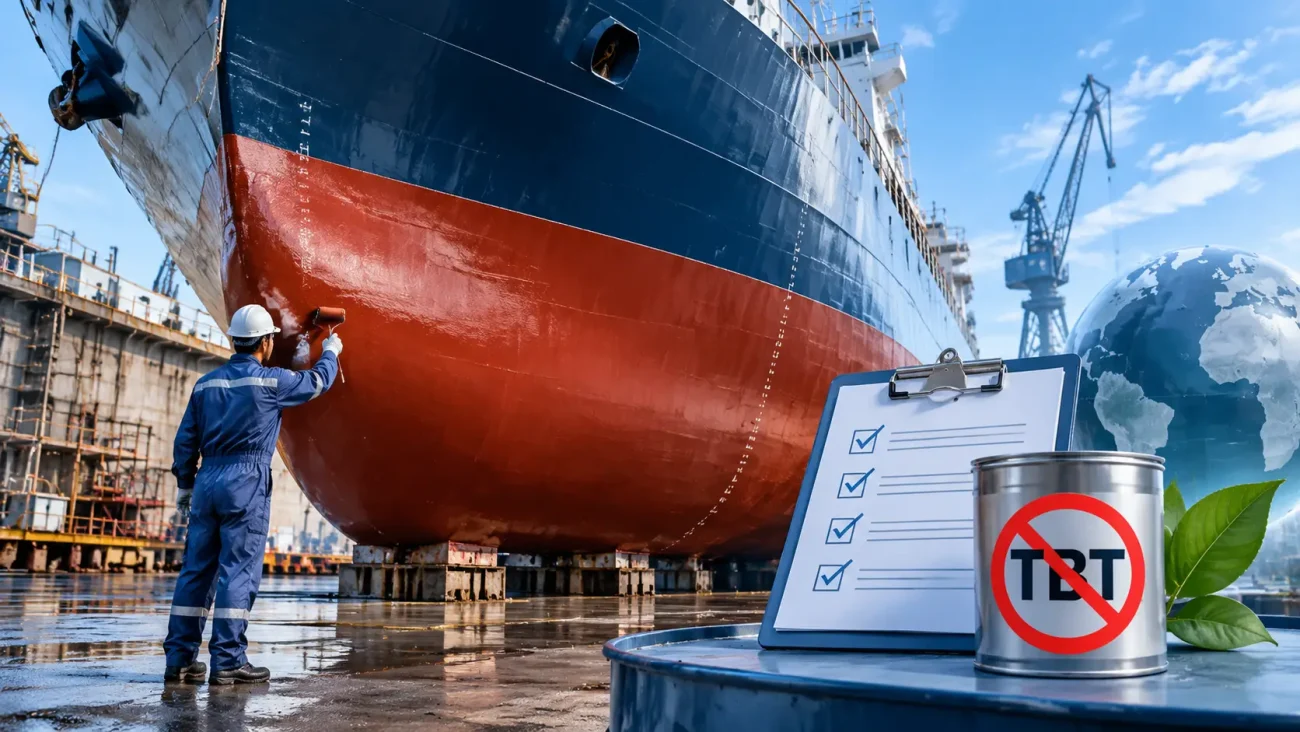
Hull paint is a legal choice as well as a technical one. The IMO AFS convention antifouling rules ban harmful biocides on ships, and they decide which papers a vessel must carry.
This guide explains the IMO AFS convention antifouling rules in plain words. It covers the TBT ban, the antifouling certificate and what it all means when you pick a paint. It is written for technical managers, superintendents and ship repair buyers in the UAE and Oman.
What the IMO AFS convention antifouling rules are
The IMO AFS convention antifouling framework is a treaty of the International Maritime Organization (IMO). Its full name is the International Convention on the Control of Harmful Anti-fouling Systems on Ships. Its goal is simple: stop toxic paint chemicals from reaching the sea.
The convention was adopted in 2001. It entered into force on 17 September 2008. It applies to ships that fly the flag of a party state and to ships that enter their ports. You can read the official summary on the IMO anti-fouling page and the background in this overview of the convention.
The rules sit in a short text and an annex. The annex lists the substances that are controlled. The text sets up surveys and certificates. Together they are the core of the IMO AFS convention antifouling regime, which every owner should know.

The TBT ban: what it covers
TBT means tributyltin. It belongs to a group called organotin compounds. For decades it was a very effective biocide in hull paint. It was also found to harm marine life far from the ship. You can read more about tributyltin and its effects.
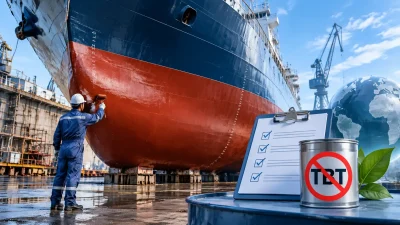
The TBT ban antifouling rule in the convention says two things:
- Ships must not apply or reapply organotin compounds that act as biocides in antifouling systems.
- Ships must not carry such compounds on their hulls or external parts, unless a coating forms a barrier that stops them leaching out.
That second point matters for older hulls. If an old organotin coat is still on the steel, it must be sealed. The IMO AFS convention antifouling rules therefore affect repaints as well as new paint.
Key dates in the TBT ban antifouling phase-out
The phase-out was done in steps. The dates below show how the TBT ban antifouling timeline worked.
- 1 January 2003: the IMO target date to stop applying organotin antifoulings.
- 1 January 2008: the target date by which hulls must be free of organotin paint or have a sealing barrier coat.
- 17 September 2008: the convention enters into force, making the ban binding for party states.
- 1 January 2023: the amendment that adds cybutryne to the controlled list applies.
Rules are applied by each flag state and port state, so IMO AFS convention antifouling duties differ in detail. Always check how your administration or class society applies the dates.
Antifouling certificate and declaration
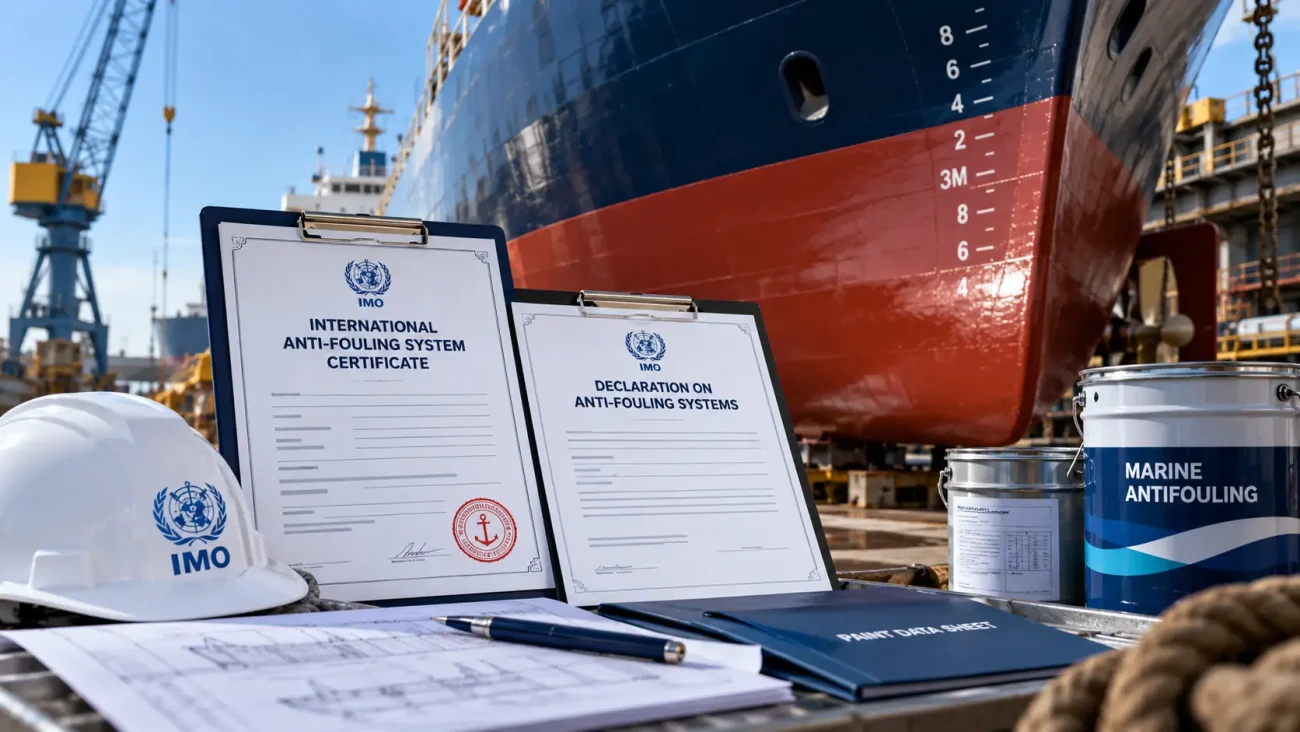
Compliance must be shown on paper. The IMO AFS convention antifouling certificate system uses two documents, depending on the size of the ship.
International Anti-fouling System Certificate
- Needed by ships of 400 gross tonnage and above on international voyages.
- Issued after a survey, and again when the antifouling system is changed or replaced.
- Some vessel types, such as fixed and floating platforms, are treated differently.
Declaration on Anti-fouling Systems
- Used by ships of 24 metres or more but under 400 gross tonnage on international voyages.
- Signed by the owner or an authorised agent.
- Backed by documents such as a paint receipt or a yard invoice.
A surveyor will expect proof of what was applied. Keep the product data sheet, the invoice and the batch records together. Our guide to the marine coating specification shows how to write these records into the docking plan.
Cybutryne: the newer controlled biocide
Cybutryne, also known as Irgarol, is a booster biocide used in some antifouling paints. The IMO AFS convention antifouling list now includes it. The IMO added it to the list of controlled substances. The amendment applies from 1 January 2023.
In short, ships must not apply cybutryne in a new antifouling system. A hull that already has it must be stripped or sealed at a later renewal of the system. Your class society can confirm the exact time limit for your ship.
When you buy paint, ask for written proof that it contains neither organotin nor cybutryne.
Copper antifouling regulation
The convention does not ban copper. The IMO AFS convention antifouling annex names organotin and cybutryne only. Many biocidal antifouling paints still use copper compounds as the main active ingredient. This is why a copper antifouling regulation question is usually about local rules, not about the AFS annex.
Biocides are managed through national and regional laws. These can set approval rules for active substances and products. Some areas also limit paint leaching in busy marinas. Check the rules in each region where your vessel works.
Foul release coatings are a non-biocidal route. They are described in our guide to antifouling paint types.
How the rules affect your antifouling paint choice
The IMO AFS convention antifouling rules do not choose the paint for you. They set the limits. Inside those limits you still match the paint to the ship. Follow this short path:
- Confirm compliance. Get the data sheet and a statement that the product meets the IMO AFS convention antifouling rules. It should state that the product has no organotin and no cybutryne.
- Check the old coat. Know what is on the hull. An unknown old coat needs testing before overcoating.
- Match the type to the vessel. Speed, activity and docking interval decide the best type.
- Plan the sealer or tie coat if the system needs one.
- Record everything for the certificate and the next docking.
Our pages on anti-fouling marine coatings and what antifouling coatings are explain the products in more detail.
For Gulf operators, warm water means strong fouling pressure. That makes a compliant, well-chosen paint even more valuable. See our page on anti-fouling paint supply in the UAE for local sourcing.
Dry-dock checklist for IMO AFS compliance
Use this list before every docking so that the IMO AFS convention antifouling documents are ready:
- Locate the current International Anti-fouling System Certificate or declaration.
- Record the product name, batch number and film thickness of the old system.
- Ask the yard to confirm that the new product meets the IMO AFS convention antifouling limits and is free of controlled biocides.
- Agree the surface preparation and any sealer coat in writing.
- Keep the invoice and data sheet for the surveyor.
- Update the ship’s records after the work.
If the antifouling system changes, ask your class society whether an additional survey is needed.
Do you plan the work in Oman? See our page on ship repair coatings in Duqm for dry-dock planning.
Frequently asked questions
What is the IMO AFS Convention?
The IMO AFS Convention is the International Convention on the Control of Harmful Anti-fouling Systems on Ships. It entered into force on 17 September 2008. It bans organotin biocides such as TBT in ship antifouling paints and sets up a system of surveys and certificates.
When was TBT banned in antifouling paint?
The IMO set 1 January 2003 as the date to stop applying organotin antifoulings and 1 January 2008 as the date by which hulls must be free of them or sealed. The AFS Convention made this binding when it entered into force in 2008. Check your flag state for exact application.
Which ships need an International Anti-fouling System Certificate?
Ships of 400 gross tonnage and above that make international voyages need the certificate, with some exceptions such as fixed and floating platforms. Smaller ships of 24 metres or more usually carry a declaration instead. Ask your flag administration or class society to confirm what applies to your vessel.
Does the IMO AFS Convention ban copper antifouling?
No. The convention does not ban copper-based antifouling paint. It controls organotin compounds and cybutryne. Copper biocides are still widely used, but they are managed by national and regional biocide rules. Always check the rules in the places where your vessel trades.
What is cybutryne and is it banned?
Cybutryne, also called Irgarol, is a booster biocide that was added to the AFS Convention list of controlled substances. The amendment applies from 1 January 2023. Ships must not apply it, and must remove it or seal it over at a later renewal of the antifouling system.
How do I know my antifouling paint is compliant?
Ask the paint maker for a compliance statement and read the product data sheet. The paint must not contain organotin compounds or cybutryne. Keep the data sheet, the invoice and the batch records with the ship’s documents. Your class society can confirm what proof it needs.
Can I overcoat an old TBT antifouling?
A hull that still carries organotin paint must have a sealer coat that stops the biocide from leaching out. The sealer system and the new antifouling must be compatible. This work needs a clear specification and the approval of the flag state or class society, so plan it before docking.
Need help with antifouling compliance?
Need a compliant antifouling for your next docking? Contact our team with the vessel type, trading pattern and docking date. We will help you choose a system and prepare a quote. You can also download product data sheets for TransOcean marine paints.