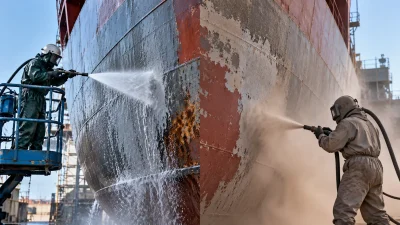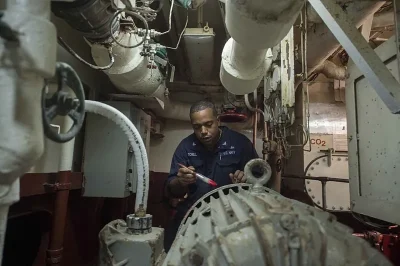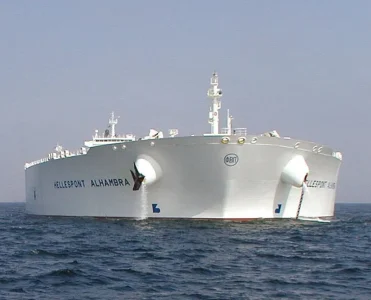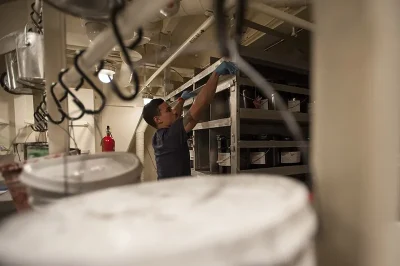


Most paint failures start before the first coat goes on. A little salt on the steel, a damp surface or a badly mixed can is enough to shorten the life of a good system. A simple marine coating inspection checklist stops these problems early.
This guide gives yards, contractors and owners a practical marine coating inspection checklist with 10 hold points. It follows the job from the first document review to the final record, and it points to the limits you must take from your own specification and product data sheet.
Why you need a marine coating inspection checklist
A marine coating inspection checklist turns good intentions into proof. Each item is a hold point: the work stops until someone checks the result and signs it off. Nobody paints over a surface that has not been accepted.
The checklist below is a general guide. It does not replace the project specification or the product data sheet. Acceptance values such as cleanliness grade, profile, salt level and film thickness always come from those two documents. Our article on the marine coating specification explains what a good specification contains.
Think of the marine coating inspection checklist in four stages:
- Planning: documents and the existing coating.
- Surface: cleanliness, profile and salts.
- Conditions and materials: weather, paint and mixing.
- Application and acceptance: film thickness, recoat time, holiday test and records.

The 10-point marine coating inspection checklist
Use these ten checks of the marine coating inspection checklist in order. Where the standard is named, check the current edition and confirm that your specification calls for it. ASTM F941 is a useful reference for the inspection of marine surface preparation and coating application.
1. Review the specification and TDS
The first line of any marine coating inspection checklist is paperwork. Before any work starts, read the project specification and the technical data sheet (TDS) of every product. Note the required surface grade, profile, climate limits, mixing ratio, pot life, film thickness and overcoating interval.
Write these values on one page and give it to the inspector and the foreman. Then the whole team works to the same numbers. If the specification and the TDS disagree, ask the paint maker in writing before you start. Our guide to the marine coating technical data sheet shows where to find each value.
2. Survey the existing coating and steel
Look at what is already on the steel. Record rust, blisters, cracks, peeling, old repairs and damaged edges, zone by zone. Take photographs and mark them on a plan.
This survey decides how much surface work is needed. It also tells you if the old coating is compatible with the new system. If the old paint is unknown, ask the paint maker before you overcoat it. Put the findings at the top of your marine coating inspection checklist, because they save time later.
3. Check surface cleanliness
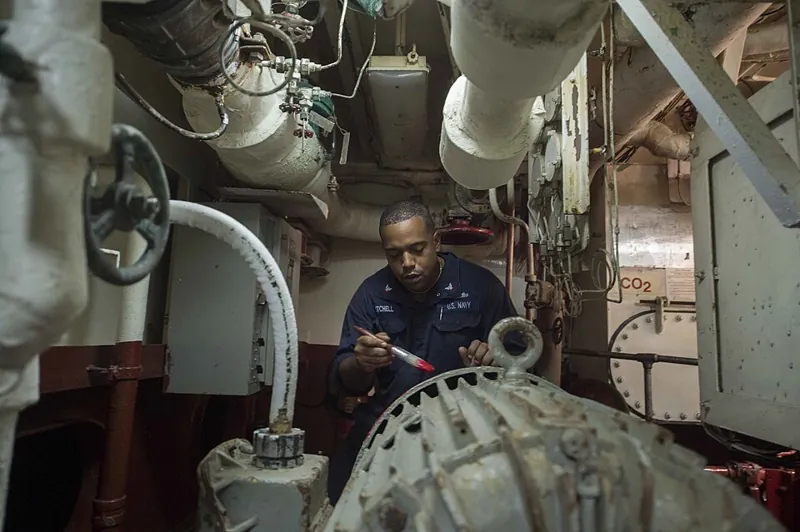
After blasting or tool cleaning, the marine coating inspection checklist asks for a check of the surface against the grade in the specification. ISO 8501-1 is the usual visual reference for rust grades and preparation grades. The inspector compares the steel with the standard photographs or pictures.
Also look for oil, grease, weld spatter and sharp edges. These defects are easy to miss and cause early failure. Remove dust left by blasting too. Our article on surface preparation in coating projects explains why cleanliness matters so much.
4. Measure the surface profile
Blasting also creates a profile, and your marine coating inspection checklist must record it. the small peaks and valleys that the primer grips. Too smooth and the coating may not bond well. Too rough and the peaks may stick out of a thin film.
Check the profile with replica tape or a profile gauge, and compare the result with the range on the TDS. ISO 8503 describes the common methods. Measure in several places, not just one, and record each reading.
5. Test soluble salts and dust
Soluble salts, especially chlorides, are a big risk on marine steel, so they have a place on every marine coating inspection checklist. They stay in the pits even after blasting. Later, osmosis can draw moisture through the coating and form blisters.
Extract salts from a measured area and test the conductivity of the liquid. Many teams use a Bresle patch, and ISO 8502-6 and ISO 8502-9 describe the method and the conductivity measurement. Compare the result with the limit in the specification. If salts are too high, wash the steel with clean fresh water and test again.
6. Compare steel temperature with the dew point
Paint over damp steel and the coating may trap moisture or cure badly. Measure air temperature, steel temperature and relative humidity just before painting, and again during the job. Add the readings to the marine coating inspection checklist. Then work out the dew point.
Steel must stay above the dew point by the margin in the specification. Many documents use 3 °C, but you must confirm the figure. In the Gulf, high humidity and warm nights make dew point checks vital. See our guide to painting in hot and humid weather for practical tips.
7. Check paint batch and shelf life
Check the label of every can. Confirm the product name, colour, batch number and expiry date. Make sure the cans are sealed and have been stored as the TDS requires, away from heat and direct sun.
Write the batch numbers in the daily report and on the marine coating inspection checklist, so that you can trace any problem later. Do not use paint that is past its shelf life unless the paint maker approves it in writing. Our article on marine paint shelf life explains how storage affects the paint.
8. Watch mixing and induction time
Two-pack paints need the right ratio, thorough mixing and, for some products, an induction period before use. Watch the mixing in person. Check that the base and hardener come from matching kits, and that the whole kit is mixed together.
Note the time of mixing and respect the pot life. Add thinner only when the TDS allows it, and only in the stated amount. Keep a record of each batch that is mixed, including the temperature, and add it to the marine coating inspection checklist.
9. Control WFT, DFT and recoat intervals
Control film thickness during the job and check it after curing. Wet film thickness (WFT) readings tell the applicator at once if the film is too thin or too heavy. Dry film thickness (DFT) readings prove the result once the paint has cured.
Log both WFT and DFT on the marine coating inspection checklist. Take DFT readings across the surface in the number set by the specification. Our guide to marine coating DFT explains the method in detail.
Watch the recoat interval too. Each coat has a minimum and a maximum time before the next coat. If the surface is overcoated too early, solvent can be trapped. If it waits too long, the next coat may not bond. Keep the surface clean between coats.
10. Run the final inspection, holiday test and records
Before the coating is accepted, inspect the whole surface. Look for runs, sags, pinholes, missed areas and damaged edges. On tanks and immersed steel, a holiday test finds tiny pinholes that the eye cannot see. Read our guide to holiday testing coatings for the methods and voltages.
Sign off the last line of the marine coating inspection checklist only when the surface is accepted. Mark and repair any defects, and then test the repairs again. Finally, complete the records: signed hold points, readings, batch numbers, weather logs, photographs and repair reports. These files protect the owner, the yard and the contractor if a dispute arises.

How to use the checklist on site
A marine coating inspection checklist only works if people use it. These habits make it effective:
- Agree the hold points early. Decide who inspects, who signs and when the work stops.
- Calibrate your gauges. A wrong reading is worse than no reading.
- Inspect at the right time. Check the surface just before painting, not hours earlier.
- Record as you go. Notes written later are rarely complete.
- Stop when a check fails. Correct the problem first, then test again.
Our team can help you align the checklist with the data sheets of the TransOcean paint range that you plan to use.
Frequently asked questions
What is a marine coating inspection checklist?
It is a list of hold points that an inspector checks before, during and after painting. It covers the specification, surface cleanliness, profile, salts, weather, paint condition, mixing, film thickness and final testing, and it records each result against the project limits.
Who should carry out coating inspection on a ship or offshore job?
The paint contractor keeps its own quality records, and the owner or yard often adds an independent inspector. Ask for trained, certified staff, such as NACE or FROSIO inspectors, and agree who signs each hold point before the work starts.
What is the minimum gap between steel temperature and dew point?
Many specifications and data sheets ask for the steel to be at least 3 °C above the dew point during application and curing. This is a common rule, not a universal one. Always use the figure in your project specification and the product data sheet.
How do you test soluble salts on blasted steel?
The usual method is to extract salts from a known area, for example with a Bresle patch, then measure the conductivity of the liquid. The reading is converted to a surface salt level. The accepted limit comes from the specification and the paint maker.
What should be recorded in a coating inspection report?
Record dates, locations, weather, steel temperature, surface grade, profile, salt readings, batch numbers, mixing details, wet and dry film thickness, holiday test results, repairs and the signatures of everyone who approved each hold point.
Is wet film thickness enough to prove the coating is correct?
No. Wet film readings help control the work while the paint is still liquid. The coating is accepted on dry film thickness once it has cured, and then checked for holidays. Use wet film to prevent problems, and dry film to prove the result.
Need help with your coating project?
Planning a coating job in the UAE or Oman? Use this marine coating inspection checklist as the base for your quality plan, and add the limits from your own specification. Contact our team to confirm the right TransOcean system, data sheets and application limits for your project.