

Every dry dock forces the same question: patch the damaged areas or repaint the whole hull? The wrong answer is expensive. That is why ship hull spot repair vs full recoat deserves a proper plan. Too little work means early failure. Too much work means extra days in dock and extra paint.
This guide gives owners and superintendents a simple frame for ship hull spot repair vs full recoat. It covers the survey, five decision checks, layer compatibility and cost, so you can plan hull paint maintenance with confidence.
Ship hull spot repair vs full recoat: what is the difference?
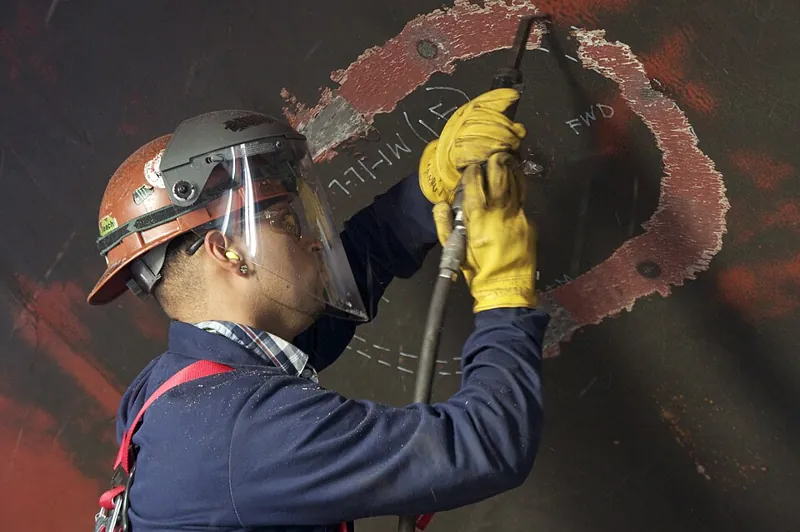
Spot repair means treating only the damaged areas. The crew removes loose coating and rust, cleans the steel and rebuilds the paint system in small patches. The sound coating around the patch stays in place.
A full recoat treats a whole zone or the whole hull. The old paint is either removed or prepared for overcoating, and a new system is applied from edge to edge. The boot-top, flat bottom and topsides are often planned as separate zones.
Both options have a place in hull paint maintenance and in dry dock coating repair. The ship hull spot repair vs full recoat choice is a technical one. The right choice depends on the real condition of the coating, not on habit or on last year’s dock plan. Our guide to the marine coating system explains the layers that you are either repairing or replacing.
Start with a coating condition survey
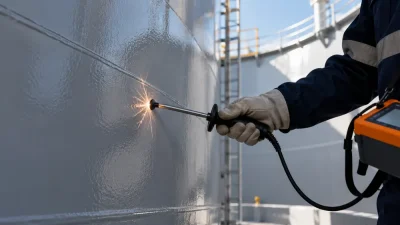
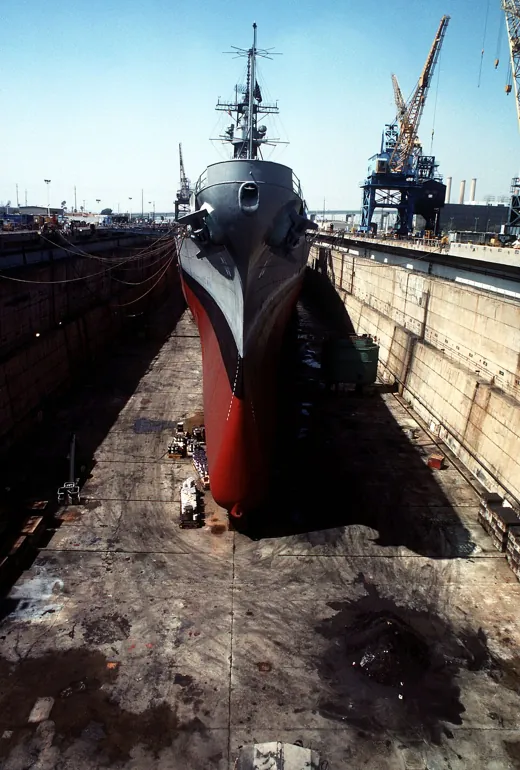
You cannot decide on ship hull spot repair vs full recoat from a guess. A coating condition survey turns the hull into data. It is best done early, before the dry dock is booked, and again once the hull is out of the water.
A good survey for hull paint maintenance usually includes:
- A visual record of rust, blisters, cracks, peeling and mechanical damage.
- The area affected, noted zone by zone and mapped on the hull plan.
- Dry film thickness readings on sample areas.
- Adhesion checks where the coating looks doubtful.
- Photographs that the team can compare with later dockings.
Rust and blister grading is often done against a recognised scale, such as ISO 4628. Ask the inspector which method they use, so the results stay comparable from one docking to the next. Our article on marine coating failures helps you read what the damage means.
5 checks for ship hull spot repair vs full recoat
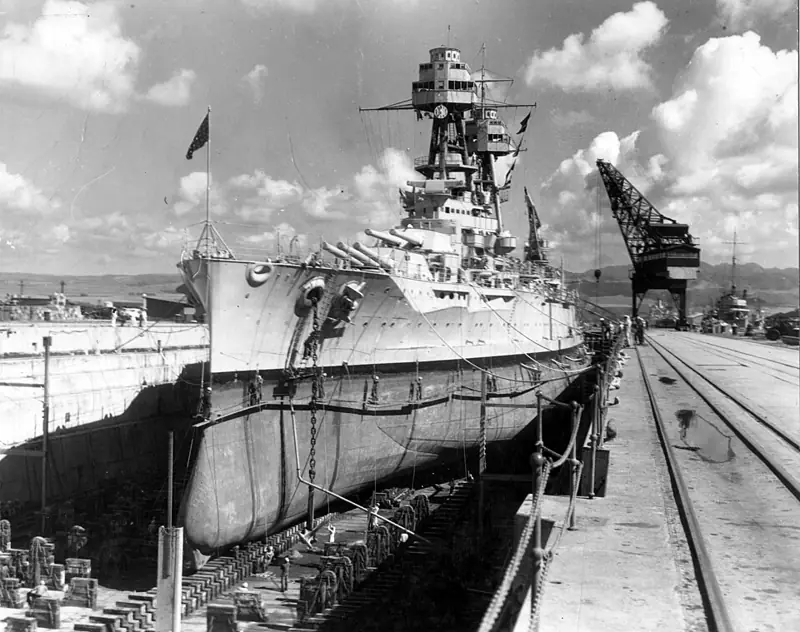
Use these five checks as a decision frame for ship hull spot repair vs full recoat. No single check decides the answer. Together they point in one direction.
1. How much of the coating has failed?
This is the first and most important check for ship hull spot repair vs full recoat. How much of the hull coating has actually failed, and how is the damage spread?
- Small, scattered damage from berthing, fenders or cargo gear points to spot repair.
- Large connected areas of rust, blisters or peeling point to a full recoat of that zone.
- Many small defects everywhere are a warning. The coating may be ageing across the whole zone.
There is no universal percentage that applies to every ship. Agree a threshold with your inspector and the paint maker, and write it into the repair specification.
2. Is the surrounding coating still sound?
Ship hull spot repair only works if the paint around the patch is sound. If the old coating is thin, brittle or poorly bonded, it will fail again at the edge of every repair. Check the dry film thickness against the specification and test adhesion on sample areas.
A hull with good thickness and strong adhesion is a strong candidate for spot repair. A hull with thin film and weak bonding is not. Our guide to dry film thickness on marine coatings explains how to measure and read the results.
3. Are the old and new layers compatible?
The new paint must be compatible with the old paint. This matters most for antifouling and topside finishes. A new layer over an unknown or incompatible coating can lift, wrinkle or crack.
- Identify the existing system, layer by layer.
- Ask the paint maker which products can go over it.
- Check whether a sealer or tie coat is needed.
- Confirm the overcoating interval in the data sheet.
If nobody can confirm what is on the hull, a full recoat from a known base may be the safer route in the ship hull spot repair vs full recoat debate.
4. What do cost and dock time look like?
Dry dock time is usually the largest cost item. Spot repair can shorten the stay because less steel is treated. But repair work is slow per square metre, because the crew moves from patch to patch and masks the edges.
In ship hull spot repair vs full recoat, a full recoat of a zone can be faster per square metre, since the crew works in long, even passes. It needs more paint, more access equipment and a longer drying window. Check the weather as well, as humid or windy days can cut the available hours.
Estimating quantity early helps. Our marine paint consumption guide shows how to calculate volumes and wastage for either option.
5. How long must the repair last?
Think beyond this dock when you weigh ship hull spot repair vs full recoat. If the ship will be sold, chartered long term or retired soon, a repair that only needs to last a short time may be enough. If the ship will stay in service for years, a durable full system may cost less over time.
Ask three questions. When is the next planned docking? How much would a coating failure cost in fuel, corrosion or delay? And will the same patches fail again before the next docking?
How to make a spot repair last
Many spot repairs fail because of poor detail, not because the idea was wrong. Good hull paint maintenance is mostly about the detail. These steps help each patch last as long as the coating around it.
- Remove all loose paint and rust until you reach sound, firmly bonded coating.
- Clean the steel to the standard in the repair specification.
- Feather the edge of the old coating so the new layers blend in.
- Rebuild the full system on bare steel, with every coat at the specified thickness.
- Apply a stripe coat to edges and welds where it is required.
- Overlap onto the old coating as the paint maker advises.
- Keep the steel dry and above the dew point during application.
Record each repaired patch with a photo and a position on the hull plan. The next survey will then show how the repairs are performing. Planning of this kind is part of dock work at yards such as Duqm, and our guide to ship repair coatings in Duqm covers it in more detail.
Cost and time over the docking cycle
Compare ship hull spot repair vs full recoat over the whole docking cycle, not only this dry dock. Spot repair has a lower upfront cost. But if patches keep returning, the repeated labour, access and dock time can pass the cost of one full recoat.
A simple comparison table in your planning file should list, for each option:
- Paint quantity and cost.
- Surface preparation method and labour.
- Extra dock days.
- Expected life of the repaired or new coating.
- Risk of repeat work before the next docking.
For background on how dry docks work, see this overview of the dry dock. Reliable figures will always come from your own survey and quotations.
Quick decision guide
Use this short summary when you plan ship hull spot repair vs full recoat for your own vessel.
- Choose spot repair when damage is small and local, the old coating is sound and well bonded, and the layers are compatible.
- Choose a full recoat when breakdown is widespread, adhesion or thickness is poor, or the old system is unknown.
- Choose a mixed plan when some zones are healthy and others are failing. Treat each zone on its own merits.
Whichever side of ship hull spot repair vs full recoat you land on, write the scope down, agree it with the paint maker and keep full records. Good records make the next decision much easier.
Frequently asked questions
How do I choose between ship hull spot repair vs full recoat?
Start with a coating condition survey. If the damage is small, scattered and the rest of the coating is sound and well bonded, spot repair is usually enough. If breakdown is widespread, the film is thin or adhesion is poor, plan a full recoat of that zone.
What does a coating condition survey include?
A trained inspector records rust, blisters, cracks, peeling and mechanical damage, zone by zone. Dry film thickness and adhesion are checked on sample areas. The results are mapped and photographed, so the owner can compare repair options before the ship enters dry dock.
Can new paint be applied over the old hull coating?
Often yes, but only if the new paint is compatible with the old one and the surface is clean, dry and sound. Incompatible layers can lift or crack. Check the existing system, then confirm the repair scheme, overcoating interval and any tie coat with the paint maker.
Is hull spot repair cheaper than a full recoat?
Spot repair normally uses less paint and fewer dock days, so the upfront cost is lower. But if the same areas fail again at every docking, repeated repairs can add up. Compare the cost over the whole docking cycle, not only this dry dock.
How long does a spot-repaired hull area last?
It depends on surface preparation, paint system, film thickness and the service of the ship. A well prepared repair that follows the data sheet can perform like the surrounding coating. A rushed repair on rusty or damp steel often fails first.
Who should decide between spot repair and full recoat?
The owner makes the final decision, supported by the superintendent, an independent coating inspector and the paint maker. Each brings a different view: ship condition, hull survey data, product limits. A written scope agreed before docking avoids costly changes during the work.
Need help planning hull maintenance?
Planning hull paint maintenance for your next docking in the UAE or Oman? Not sure whether ship hull spot repair vs full recoat suits your vessel? Contact our team to discuss a repair or recoat scheme with TransOcean marine paints. You can also download product data sheets to check overcoating intervals and compatibility.