

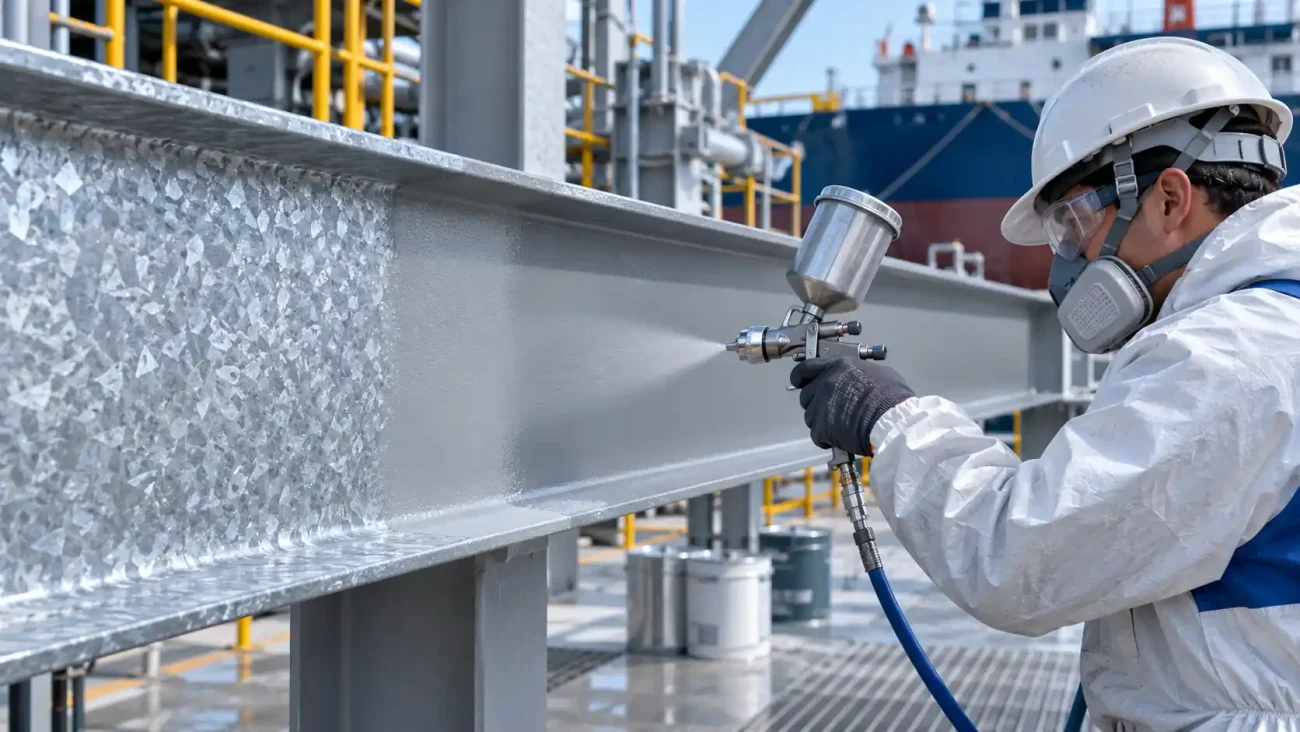
The railing looks fine for a year. Then the paint starts to lift in sheets and the bare zinc shows through. Painting galvanized steel fails this way more often than people expect, and the cause is rarely the paint itself.
This guide is for maintenance engineers, contractors and buyers in the UAE and Oman who coat galvanized rails, stairs, coastal structures, deck fittings and poles. It shows how to go about painting galvanized steel in a hot, humid, salty climate: how to prepare the surface, which primer to pick, and how to build the topcoat.
Why painting galvanized steel is harder than painting black steel
Galvanized steel is steel with a layer of zinc. The zinc protects the steel underneath, as the galvanization overview explains. That layer is also the reason paint struggles to stick.
- The surface is smooth. Fresh zinc is shiny and flat, so the primer has little to grip.
- Zinc is reactive. Some paints, such as alkyds and oil-based types, can react with it and lose adhesion over time.
- Treatments and oils. Galvanizers often apply a film to slow white rust in storage. This film can block paint.
- White rust. Damp zinc forms a white, powdery corrosion product. Paint applied over it will not hold.
The fix is a system, not a single coat. Surface preparation, a compatible primer and a suitable topcoat each have a job. Skip one and the others cannot make up for it.
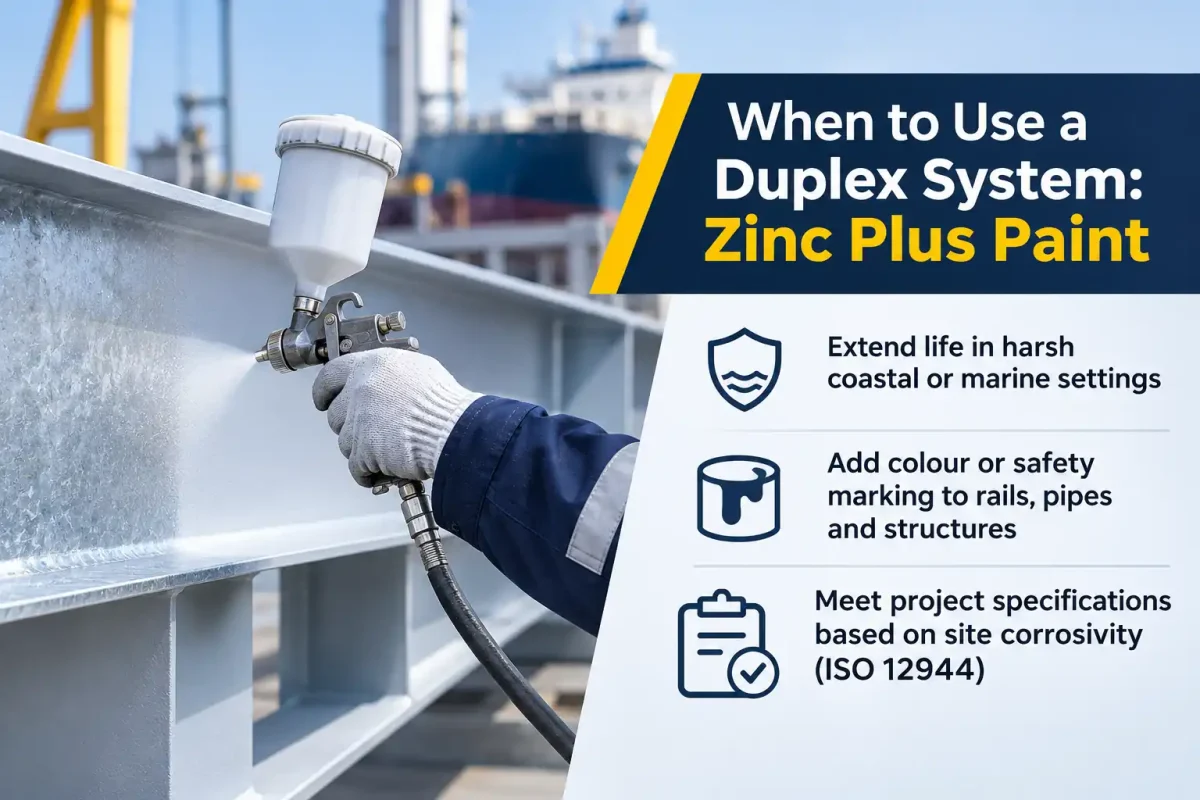
When to use a duplex system: zinc plus paint
Galvanizing alone protects steel well in many places, but painting galvanized steel adds a second shield. In the Gulf, salt and heat wear the zinc down faster than in a mild inland climate. Adding paint on top gives a duplex system: zinc plus a coating. The paint shields the zinc, and the zinc protects the steel if the paint is damaged.
You may choose painting galvanized steel for several reasons:
- To extend life in a harsh coastal or marine setting.
- To give colour or safety marking to rails, pipes and structures.
- To match a project specification for the corrosivity of the site. Our ISO 12944 corrosivity categories guide explains how sites are classed.
Painting galvanized steel step by step: the 7-step plan
Here is the whole job of painting galvanized steel in short form. The sections below explain each step.
- Inspect the zinc and note any rust, white rust or damage.
- Degrease to remove oil, grease and treatments.
- Wash with clean water to remove dirt and salt, then let the steel dry.
- Roughen the surface with controlled sweep blasting or an approved method.
- Prime with a compatible two-component epoxy primer.
- Build the system with a midcoat if the specification calls for one.
- Finish with a polyurethane topcoat and respect the recoat times.
Every paint maker has its own rules. The data sheet of your product always wins over a general guide. Our note on the marine coating technical data sheet shows what to look for.
Step 1 to 4: surface preparation before painting galvanized steel
Most failures start here. Painting galvanized steel over a poor surface is the leading cause of peeling. Do the work in this order.
Inspect the zinc
Look at the whole surface. New zinc is bright and even. Weathered zinc is dull grey. White powder means white rust. Orange or brown spots mean the zinc is gone and the steel is rusting.
Degrease and wash
Remove oil, grease, wax and dirt with a suitable cleaner, then rinse with clean water. In coastal areas of the UAE and Oman, salt settles on steel and is invisible. Wash well and test for soluble salts if the specification asks for it. See our Bresle test guide.
Remove white rust and loose material
Brush off white rust and any loose zinc. Do not paint over it. If bare steel is showing, clean it to the level the paint maker requires before priming. Our guide to flash rust explains why cleaned steel should be primed soon.
Create a profile
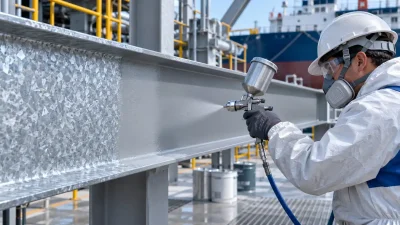
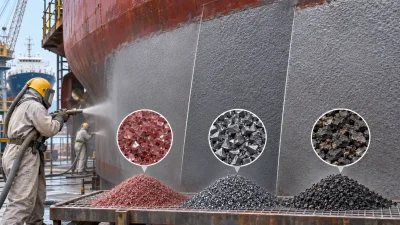
The surface must be rough enough for the primer to hold. Light sweep blasting is a common method. It gives the zinc a fine texture without cutting through it. Some data sheets also allow abrasive pads or other methods. Avoid heavy blasting, which can remove the zinc you want to keep. Confirm the method with the manufacturer.
After roughening, remove the dust and dry the steel. Prime the same day if you can, because the clean surface picks up dirt and moisture fast.
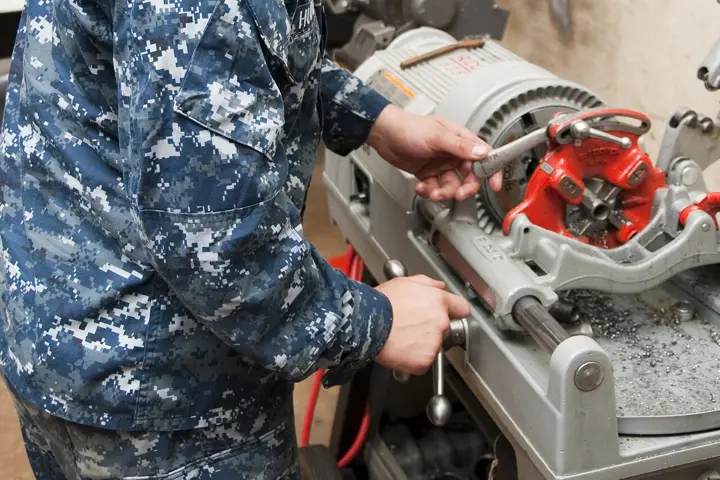
Cut edges, threads and drilled holes expose bare steel. These are weak points, so they need extra attention during surface preparation and priming.
Step 5: choose an epoxy primer for painting galvanized steel
The primer is the link between zinc and paint. Choose it with care.
- Epoxy primer (two-component). Widely used on prepared galvanized steel in industrial and marine work. It bonds well and forms a tough barrier. Our guide to epoxy resin vs epoxy paint explains the difference between the two.
- Alkyd or oil-based primer. Not suitable for galvanized steel in most cases. Zinc can react with them and the film can lose adhesion.
- Red oxide primer. Made for bare steel. Read our comparison of red oxide primer vs epoxy primer before you use it on zinc.
- Zinc-rich primer. Normally used on bare steel or to repair damaged galvanizing. See zinc rich primer for how it works.
When painting galvanized steel, the epoxy primer only works if it is mixed and applied as the maker says. The two components must be mixed in the stated ratio and used within the pot life. The maker will also state a minimum and maximum time before the next coat.
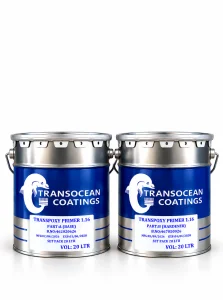
One note on Transpoxy Primer (TO 1.16). It is a two-component polyamide cured epoxy primer for steel structures in marine and industrial settings. Its page does not state that it is approved for galvanized steel, so ask for written confirmation from the maker before you use it on zinc.
Step 6 and 7: midcoat, polyurethane topcoat and recoat times
The primer protects. The finish gives colour, gloss and weather resistance. For painting galvanized steel outdoors in the Gulf, an epoxy primer is often followed by a polyurethane topcoat, because epoxy alone chalks in strong sun. Read marine epoxy vs polyurethane for the reason.
A typical build looks like this:
- Primer: epoxy, for adhesion and barrier protection.
- Midcoat (optional): epoxy, to add thickness in aggressive sites.
- Topcoat: polyurethane, for UV and colour stability.
Our guides on the marine coating system and marine topcoats and finishes show how the layers work together.
Respect the time between coats
Each coat has a minimum time before recoating and a maximum time. Recoat too early and solvent is trapped. Recoat too late and the surface may need roughening for the next coat to bond. These times change with temperature, so read the data sheet for your product and site conditions.
Painting galvanized steel in Gulf heat, humidity and salt
Applying paint in the UAE and Oman brings its own risks. Plan the job around them.
- Hot steel. Metal in direct sun can get much hotter than the air. Paint on hot steel dries too fast, and can blister or lose adhesion. Work in shade or at cooler hours.
- Humidity and dew. Moisture on zinc leads to white rust. Do not paint damp steel. Check the dew point as we explain in our guides.
- Salt. Wash coastal steel and re-check before each coat.
Common mistakes when painting galvanized steel
These mistakes cause most of the repaint jobs we hear about:
- Painting over a smooth, untreated surface. Without a profile, the paint peels.
- Using an alkyd primer on zinc. It looks fine at first and fails later.
- Leaving oil or salt behind. Contamination under paint is a hidden defect.
- Painting over white rust. The paint sits on a powder, not on metal.
- Ignoring recoat times. This is a common reason for poor bonding between coats.
- Skipping edges and welds. Corrosion often starts at corners and welds, so brush-coat them first (a stripe coat).
Done well, painting galvanized steel adds years of service to a structure. Done badly, it gives you a repaint within one season.
Frequently asked questions
Can you paint straight over new galvanized steel?
Not safely. Painting galvanized steel straight from the galvanizer fails often, because new zinc has a smooth, shiny surface, often with oil or a passivation film from the galvanizer. Paint sticks poorly to it. Clean it, roughen it by a method the paint maker approves, then apply a compatible primer.
What primer should I use on galvanized steel?
Use a primer that the paint maker states is suitable for zinc surfaces. A two-component epoxy primer is the usual choice for industrial and marine work. Do not use alkyd or oil-based primers. Zinc reacts with them and the film can lose adhesion. Always confirm the compatibility with the manufacturer’s data sheet.
Why is paint peeling off galvanized steel?
Peeling usually means poor adhesion to the zinc. The common causes are oil or dirt left on the surface, no surface roughening, white rust under the paint, or a primer that is not made for zinc. Remove the loose paint, clean the surface again, prepare it properly and recoat with a compatible system.
Do I need to sand or blast galvanized steel before painting?
In most cases yes. The smooth zinc surface gives the primer little to grip. Light sweep blasting or another controlled method creates a fine texture without removing the zinc. Heavy blasting can strip the coating. Follow the surface preparation advice in the paint maker’s data sheet.
Can I use zinc-rich primer on galvanized steel?
Zinc-rich primer is usually chosen for bare steel, not for steel that already has a zinc layer. It is mainly used to repair damaged galvanizing or bare areas. For painting over sound galvanizing, a compatible epoxy primer is the normal route. Ask the manufacturer to confirm the choice for your system.
How long should galvanized steel wait before painting?
There is no single answer. Some guidance asks for the zinc to weather for a period, while other systems allow painting soon after correct preparation. The safest route is to prepare the surface as the paint maker specifies and not rely on weathering alone. Confirm the rule in the data sheet before you start.
Get an epoxy primer quote for your galvanized steel project
Need a two-component epoxy primer for steel work? Review Transpoxy Primer A&B (TO 1.16) and request a quote on the product page. Tell us the substrate, the site and the exposure so we can confirm compatibility with the manufacturer’s data sheet. You can also contact our team with your questions.