

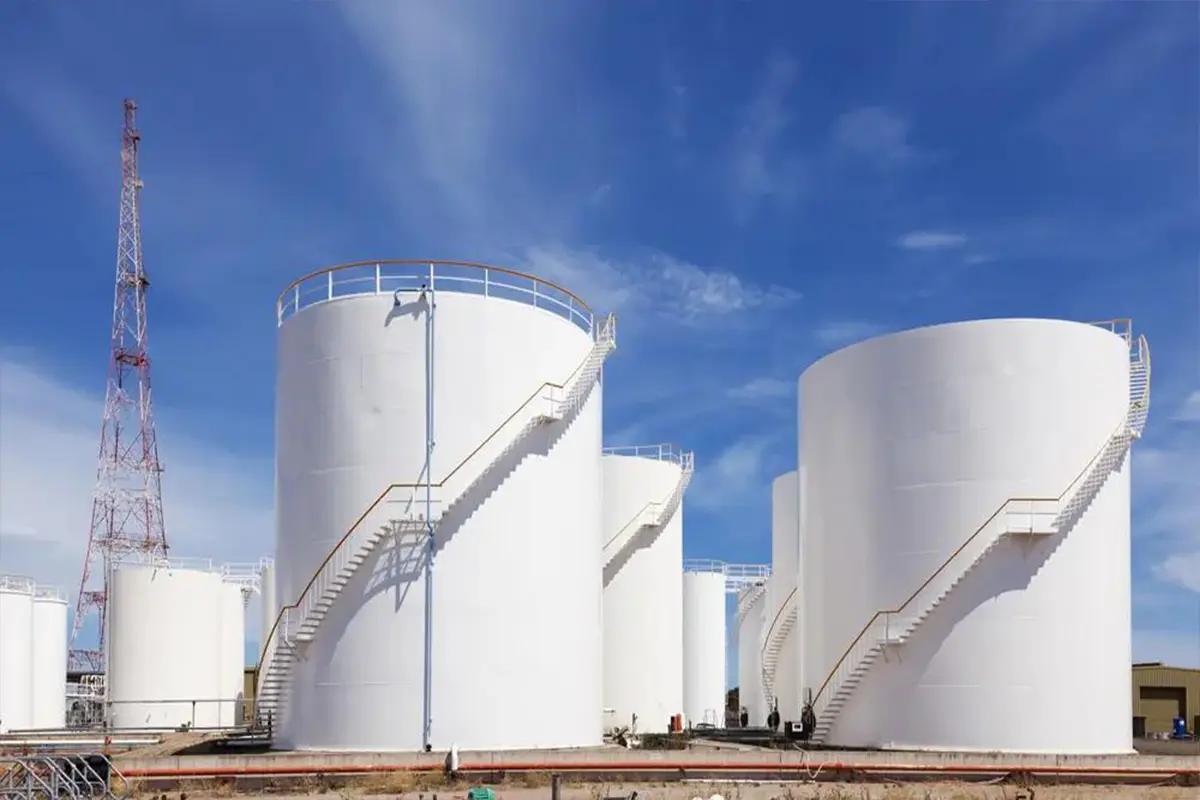
The right types of tank paints depend less on the tank itself than on what is inside it and where it stands. A seawater ballast tank, a drinking water tank and a fuel tank all need different protection.
This guide explains the main types of tank paints, then matches them to ballast, fresh water, fuel and cargo service. A selection table at the end helps you shortlist a tank lining system before you speak to a supplier.
Quick answer: the main types of tank paints are epoxy (the standard lining for ballast, water and fuel tanks), novolac epoxy (aggressive chemicals), polyurethane (UV-stable outdoor topcoat), zinc-rich primer (steel protection under the topcoat), alkyd (light-duty tanks) and fireproof paint (high-risk tank areas). Pick the paint by what the tank holds, then check the product data sheet.
Why tank coatings are different
Painting a tank is not just for appearance. Paint is a barrier that keeps moisture, chemicals and sunlight away from the steel. Done well, it extends the life of the tank and reduces maintenance cost.
The main reasons to coat a tank are:
- Preventing rust and corrosion, which you can read about in our guide to what rusting is and how to prevent it
- Extending the service life of the tank
- Protecting the stored product from contamination
- Reducing heat absorption in outdoor tanks
- Increasing industrial safety
Two exposures matter most when comparing the types of tank paints. The inside of a tank is often under immersion, so the lining must resist the liquid for years. The outside faces weather, UV light and salt air. The types of tank paints used for each side are usually different. Constant immersion can lead to osmotic blistering of marine paint films.

Types of tank paints by chemistry
These are the most common types of tank paints. Each one is a tool for a certain job, not a general solution.
1. Epoxy paint for tanks
Epoxy is one of the most widely used tank coatings. It has excellent resistance to moisture, chemicals and mechanical stress, and it sticks well to blasted steel. It is the standard choice for the inside of tanks.
Advantages:
- Excellent corrosion resistance
- Strong adhesion to metal surfaces
- Suitable for water, oil and many chemical tanks
Applications: ballast tanks, water tanks, oil and gas tanks, industrial and chemical tanks. Epoxy chalks in sunlight, so outdoor surfaces need a topcoat. Our guide to marine epoxy coatings covers the chemistry in more depth.
2. Novolac epoxy and other chemical-resistant linings
Among the types of tank paints, where the stored liquid is more aggressive than seawater or fuel, tank makers often move to a novolac epoxy or another chemical-resistant lining. These linings cross-link more tightly and resist stronger chemicals and heat. Which lining a given product can hold is stated in its data sheet and cargo resistance list, so never guess.
Applications: chemical storage tanks and chemical cargo tanks.
3. Polyurethane paint for tanks
Polyurethane is used as a finishing coat. It is known for gloss, colour retention and UV resistance, which is why it sits on top of epoxy on outdoor tanks.
Advantages:
- High resistance to UV rays
- Glossy, easy-to-clean finish
- Long-lasting performance outdoors
Applications: outdoor tank shells and roofs, oil and petrochemical sites. See how the two resins compare in our epoxy vs polyurethane guide.
4. Zinc-rich paint for tanks
This paint contains a high level of zinc particles and gives cathodic protection to the steel. It is mainly a primer, and it is overcoated with epoxy and polyurethane. An inorganic zinc silicate is another option where a heat-resistant primer is needed. See how the zinc content in a zinc rich primer protects steel.
Advantages:
- Superior rust protection on steel
- Cathodic protection if the film is scratched
- Suitable for harsh and humid environments
Applications: tank exteriors, marine structures, oil and gas tanks. Our page on marine primers and anti-corrosive coatings explains zinc-rich primers.
5. Alkyd paint for tanks
Alkyd is one of the oldest industrial paints and is still used on many projects. It is not designed for immersion, so it belongs on the outside of small tanks in mild conditions. Plant and storage-tank owners can also buy industrial paint in the UAE through our store page.
Advantages:
- Affordable cost
- Easy application
- Moderate weather resistance
Applications: small industrial tanks, warehouses and temporary solutions.
6. Fireproof paint for tanks
In oil and gas sites, tank supports and some surfaces need fire resistance. Intumescent fireproof paints swell when heated and slow the rise in steel temperature.
Advantages:
- Increases resistance time against heat
- Improves workplace safety
- Gives more time for a fire response
Applications: petrochemical tank areas, gas industries and high-risk environments.
Paint type, tank and system at a glance
This table links each paint type to the tank it usually protects and the system it belongs to. It is a starting point, not a specification.
| Paint type | Tank | Typical system |
|---|---|---|
| Epoxy | Ballast, water, oil and gas, industrial tanks (inside) | Epoxy primer and epoxy build coats; add a polyurethane topcoat outdoors |
| Novolac epoxy | Chemical storage and chemical cargo tanks | Chemical-resistant lining system, checked against the cargo list |
| Polyurethane | Outdoor tank shells and roofs | Epoxy or zinc primer, then polyurethane finish for UV and colour retention |
| Zinc-rich | Tank exteriors, marine structures, oil and gas tanks | Zinc-rich primer, epoxy intermediate, polyurethane finish |
| Alkyd | Small industrial tanks, warehouses, temporary solutions | Alkyd primer and alkyd finish for mild, dry exposure |
| Fireproof | Petrochemical tank areas, gas industries | Fire-protective coating over a compatible primer |
Tank coatings by service: ballast, water, fuel and cargo
Choosing from the types of tank paints is easier once you name the service. Here is how the main groups differ.
Ballast tanks
Of all the types of tank paints, ballast tank coatings are the most regulated. Ballast tanks hold seawater, then dry out, then fill again. That wet and dry cycle is hard on steel. Coatings are normally epoxy systems with stripe coats and light-coloured final coats so inspectors can see rust.
The IMO performance standard for ballast tanks sets a target coating life of 15 years and a dry film thickness of 320 micrometres on a 90/10 basis. For the full detail on this service, read our guide to ballast tank coatings.
If the vessel falls under the performance standard, see our page on IMO PSPC for ballast tanks. On the product side, Transpoxy Masterbond BT (TO 4.68) is described by the manufacturer as a high solids epoxy for severe corrosive environments, including approved IMO-PSPC systems for crude oil and ballast tanks.
Fresh and potable water tanks
Among the types of tank paints, a fresh water tank lining has one extra job: it must not harm the water. Look for a lining that is approved for contact with drinking water under the rules in your country. Do not assume that an epoxy that works in a ballast tank is acceptable. After curing, the tank usually needs a full wash and flush before it returns to service, as the product data sheet states.

Fuel and oil storage tanks
Among the types of tank paints for fuel service, the floor and the lower shell of a fuel tank collect water and sludge, so they corrode first. Epoxy linings are common here. The outside of the tank sees sun and weather, so an epoxy primer with a polyurethane topcoat in a light colour is the usual choice. Check that the lining is rated for the specific fuel and its temperature.
Cargo tanks and cargo holds
On tankers, cargo tanks are coated for the cargoes they will carry. Many crude oil tankers also fall under the IMO coating standard for cargo oil tanks. Chemical tankers often need a lining with a published cargo resistance list, and the owner must keep to it.
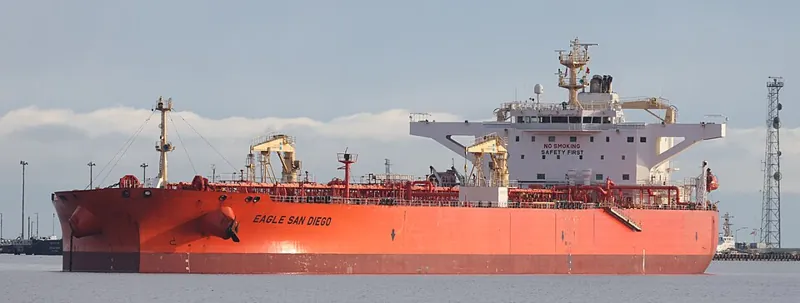
Dry cargo holds are a different case. The risk there is abrasion and impact from bulk cargo, not immersion, so they use abrasion-resistant systems. Our page on cargo hold coatings covers that service in detail.
Tank coating selection table
Use this table to shortlist the types of tank paints for each service. Confirm every choice against the product data sheet and the project specification.
| Tank service | Typical system | Key requirement | Read more |
|---|---|---|---|
| Seawater ballast tank | Epoxy primer and epoxy build coats, light-colour final coat | Seawater immersion, IMO ballast tank standard, stripe coats | Ballast tank coatings IMO PSPC ballast tanks |
| Fresh and potable water tank | Drinking-water-approved epoxy lining | Approval for contact with drinking water, full cure and flushing | See the water tank section above |
| Fuel and oil storage tank | Epoxy lining on the bottom and lower shell, epoxy and polyurethane outside | Water and sludge at the floor, fuel resistance, UV outside | See the fuel tank section above |
| Cargo tank (oil or chemical) | Epoxy, novolac epoxy or other cargo-rated lining | Cargo list approval from the paint maker, cleaning between cargoes | See the cargo tank section above |
| Dry cargo hold | Abrasion-resistant epoxy | Impact and abrasion from bulk cargo | Cargo hold coatings |
| Tank exterior, outdoors | Zinc-rich or epoxy primer, polyurethane topcoat | UV and weather resistance, heat reflection | Epoxy vs polyurethane |
The types of tank paints in this table are indicative only. For help reading a data sheet, see our guide to the marine coating technical data sheet. For writing the specification itself, see how to write a marine coating specification.
Tank colours
Colour is part of choosing among the types of tank paints, and it is chosen for heat, safety and identification. Light colours such as white or silver reflect more sunlight and keep the stored product cooler. Some owners and countries also use colour or label codes to show the content of a tank.
These codes are not the same everywhere. Follow the colour code of the site owner, the local regulation or the project specification rather than a general chart.
Steps of tank painting
1. Surface preparation
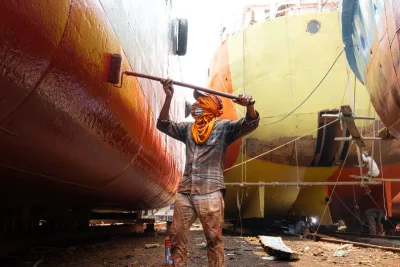
Clean the tank by abrasive blasting or, for small repairs, power-tool cleaning, to remove rust, old paint and contamination. Salt left on the steel causes blisters later, so the surface should also be tested for soluble salts. Our guide on the importance of surface preparation explains the standards.
2. Primer application
Every one of the types of tank paints works only on a sound base. A primer improves adhesion and protects the bare steel. Zinc-rich or epoxy primers are typical.
3. Stripe coat, intermediate and final coats
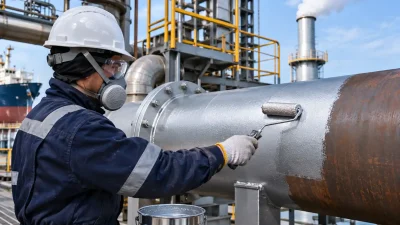
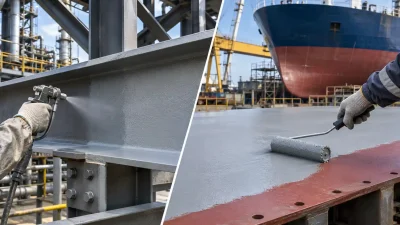
Brush a stripe coat on edges, welds and corners, then apply the epoxy build coats. Outdoor surfaces receive a polyurethane topcoat. Observe the overcoating window in the data sheet.
4. Quality control
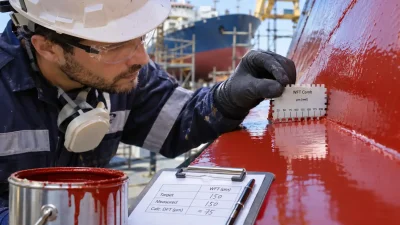
Check thickness, coverage and uniformity of the coating after each coat. Our guide to measuring marine coating DFT shows how, and marine coating failures shows what goes wrong when it is skipped.
Key factors in choosing tank paint
Whichever of the types of tank paints you consider, check these points first:
- The stored product and its temperature
- Environmental conditions (humidity, temperature, sunlight, salt)
- Whether the surface is immersed or only exposed to weather
- Approvals needed, such as drinking water or IMO rules
- Budget, maintenance cost and expected lifespan of the coating
For the background on the standard behind many outdoor choices, see this overview of corrosion.
TransOcean tank coatings and next steps
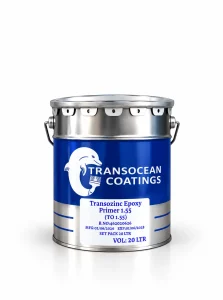
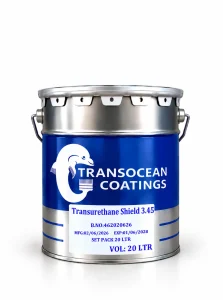
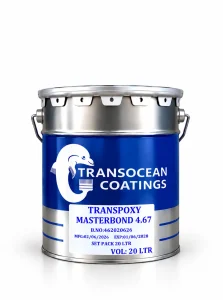
Bahari Tech supplies TransOcean marine and industrial coatings in the UAE and Oman. Epoxy primers and build coats, such as Transozinc Epoxy Primer 155 and Transpoxy Masterbond 467, and polyurethane finishes such as Transurethane Finish, can form parts of a system. Whether a product is suitable for immersion in a given liquid is stated on its data sheet.
You can browse the full TransOcean paint range and download data sheets from our documents and downloads page.
Request a quote for your tank coating system
Tell us the tank type, the stored product and the site. We will help you shortlist a system and prepare a quote.
Frequently asked questions
What are the main types of tank paints?
The main types of tank paints are epoxy, novolac epoxy, polyurethane, zinc-rich, alkyd and intumescent fireproof coatings. Epoxy and novolac epoxy are used inside tanks, polyurethane is the usual outdoor topcoat, and zinc-rich paint is a primer for steel.
Which paint is best for the inside of a tank?
It depends on what the tank holds. Epoxy linings suit seawater ballast, oil and many chemicals. Potable water needs a lining approved for drinking water in your country. Aggressive chemicals may need a novolac epoxy or another lining. Always check the product data sheet against the stored liquid.
Can I use the same paint for ballast and fresh water tanks?
Not safely. Ballast tank coatings are chosen for seawater immersion and IMO rules, while a fresh water tank lining must also be approved for contact with drinking water. A coating without that approval should never be used for potable water.
How thick should a tank lining be?
Film thickness comes from the product data sheet and the specification. The IMO ballast tank standard, for example, calls for 320 micrometres of dry film on a 90/10 basis. Thin spots cause most early lining failures, so measure every coat.
Why do tanks need stripe coats?
Edges, welds, bolts and corners pull paint away and end up thinner than flat steel. A stripe coat is a brush-applied extra layer on those areas before each full coat. It is one of the cheapest ways to stop early rust in tanks.
What colour should I paint a storage tank?
Colour rules vary by company, country and product. Outdoor tanks are often painted white or silver because light colours absorb less solar heat. Follow the owner’s colour code or local regulation instead of a general rule.
How long does a tank coating last?
Service life depends on surface preparation, film thickness, the stored product and temperature. A well-applied epoxy lining can last many years, and the IMO standard for ballast tanks targets a 15-year coating life. Poor preparation can shorten it to a few.
Conclusion
The types of tank paints you choose should follow the service of the tank: seawater ballast, fresh water, fuel or cargo. Epoxy and novolac linings protect the inside, zinc-rich primers and polyurethane topcoats protect the outside, and approvals decide what is allowed for drinking water and cargoes. Match the paint to the service, prepare the steel properly and measure the film thickness, and the tank will last far longer.