

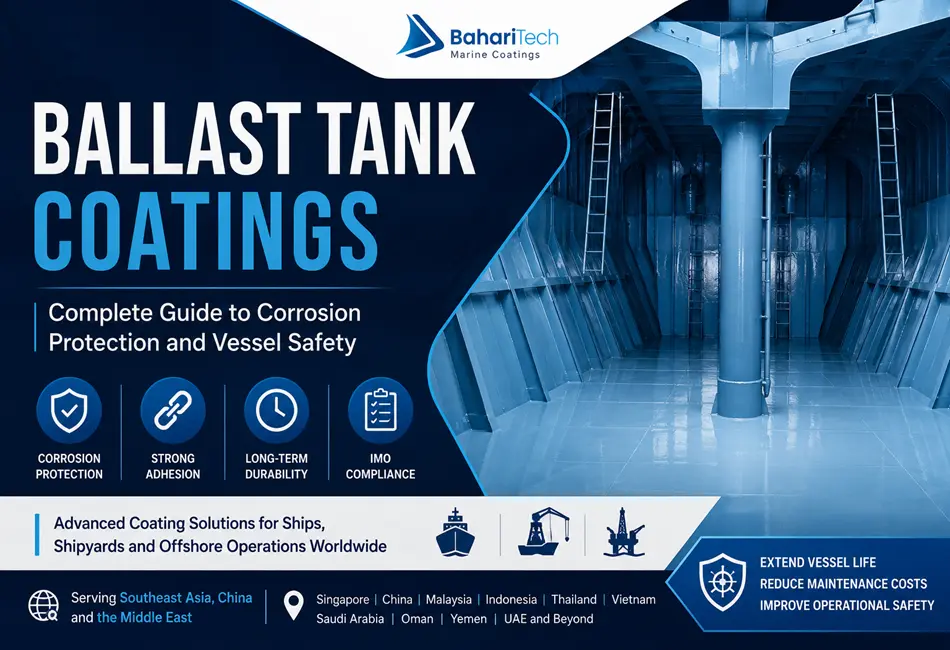
Ballast tank coating decides how long the steel inside a ballast tank survives seawater, condensation and constant wet and dry cycles. A weak coating system in these tanks leads to pitting, steel renewal and expensive time in dry dock.
This guide explains how ballast tank coating works on ships: what IMO PSPC asks for, how to prepare the steel, how many coats and how much film thickness to apply, which TransOcean paints suit the job, and the mistakes that cause early failure.
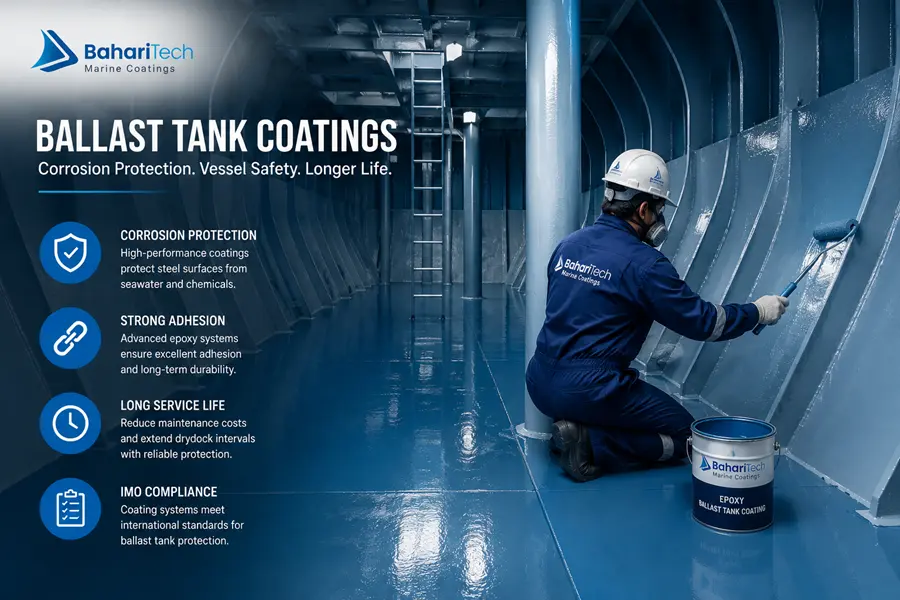
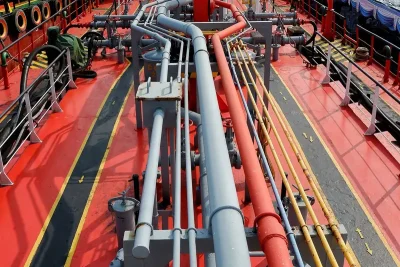
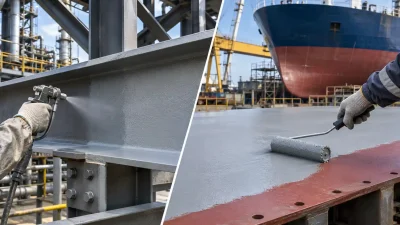
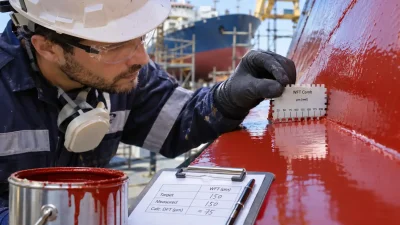
Applying ballast tank coating inside a ship tank
What Is Ballast Tank Coating?
Ballast tanks are compartments that hold seawater to keep a ship stable, balanced and at the right trim. They are filled and emptied as the cargo load and weather change. A ballast tank coating is the paint film that separates the steel from that seawater and from the humid air inside the tank.
Without a working film, the steel loses thickness over time. This is why ballast tank coating is a safety item as well as a maintenance item: it protects the structure of the hull from the inside.
Why Corrosion Is So Common in Ballast Tanks
Few areas on a ship are as hard on paint. Several factors work together:
- Continuous seawater exposure, followed by empty periods
- High humidity and condensation when the tank is empty
- Oxygen-rich air that feeds corrosion
- Salt contamination on the steel and in pits
- Temperature changes between the sea and the deck
- Hard-to-reach edges, welds and corners
These conditions can quickly damage unprotected steel, and they also attack coatings that were applied badly.
IMO PSPC Requirements for Ballast Tank Coating
The IMO Performance Standard for Protective Coatings (PSPC) sets the rules for ballast tank coating on new ships. It covers the coating system, steel preparation, application and inspection. The table below summarises the main points. For the full explanation, read our guide to IMO PSPC for ballast tanks, and check the original text on the IMO protective coatings page.
| Area | What PSPC asks for |
|---|---|
| Coating system | Epoxy-based system, type approved, tested by the paint maker |
| Film thickness | Nominal total dry film thickness of 320 microns, using the 90/10 rule |
| Coats | Two spray coats, plus two stripe coats on edges, welds and corners |
| Steel preparation | Blast cleaning to Sa 2.5 with a 30 to 75 micron profile |
| Cleanliness | Soluble salts limited to 50 mg/m2, and dust rated 1 or better |
| Edges | Rounded edges, with a minimum radius of 2 mm or an equal grinding standard |
The final authority is always the IMO text and the approved system documents from the paint maker. Use this table as a quick check, not as a replacement for the specification.
Surface Preparation for Ballast Tank Coating
Most ballast tank coating failures start before the paint can is opened. Even the best epoxy fails early on steel that is rusty, oily or covered with salt.
- Blast cleaning: abrasive blasting to Sa 2.5 gives the clean, rough surface that the paint needs to grip. See our guide to blasting abrasives for ships and the comparison of hydroblasting and abrasive blasting.
- Profile: a 30 to 75 micron profile under PSPC.
- Salt and dust: test for soluble salts and dust and wash or vacuum until the limits are met.
- Edges and welds: grind welds and round sharp edges so the film can stay thick there.
- Flash rust control: a tank that is blasted in the morning can show flash rust by the afternoon, so plan dehumidification and quick coating.
For a wider view of why preparation matters in every project, read the importance of surface preparation in coating projects.
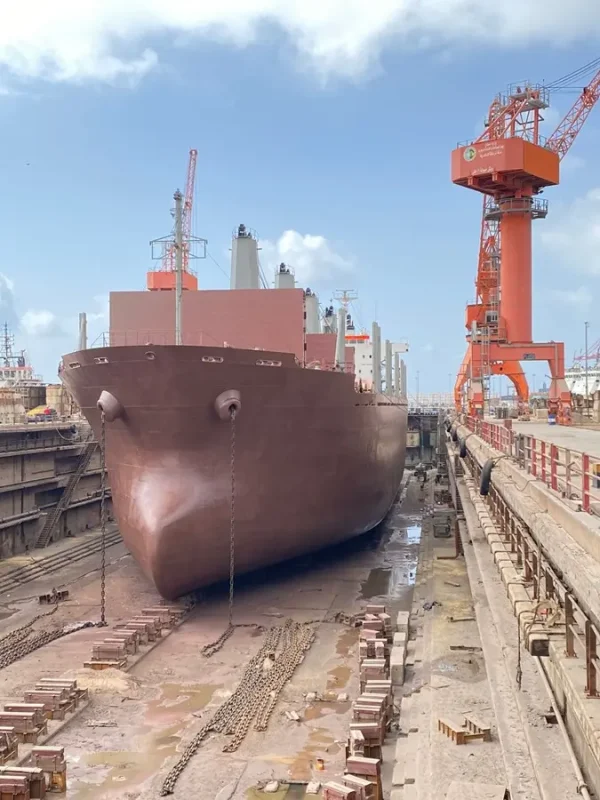
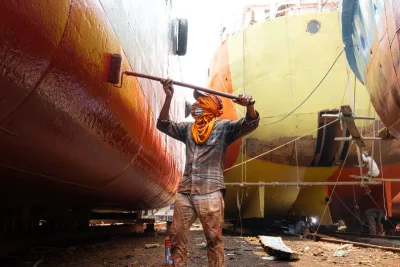
Vessel in dry dock, where most ballast tank coating work is planned
Two Coats, Stripe Coats and DFT
A typical PSPC ballast tank coating job has four paint steps. The first stripe coat goes on edges, welds and corners. The first full spray coat follows. A second stripe coat is applied, and then the second full spray coat finishes the system. Together the two spray coats reach a nominal dry film thickness of 320 microns.
Dry film thickness (DFT) is the number that proves the film is thick enough. Inspectors measure it at many points and check the 90/10 rule. Too little film shortens the life of the tank. Too much film can crack or trap solvent. Our guide to marine coating DFT explains how to measure and inspect film thickness, and the marine coating inspection checklist covers the rest of the records.
Watch the recoat window as well. If the first coat has cured too long before the second is applied, adhesion between the coats can suffer. The data sheet of the exact product gives the interval for the tank temperature.
Epoxy Ballast Tank Coating Systems
Epoxy is the standard choice for ballast tank coating because it resists seawater, bonds well to blasted steel and builds film in few coats. Three groups of products are common:
- Epoxy ballast tank coating: two-pack epoxy with strong adhesion and long service life in seawater.
- High-build epoxy systems: thicker films per coat for demanding service, which helps reach the target DFT in two coats.
- Approved PSPC systems: complete systems tested and approved for ballast tanks, which is what new ships require.
If you want to understand why epoxy is preferred over other resin families, read marine epoxy vs polyurethane and the full marine epoxy coatings guide.
Compatible TransOcean Paints for Ballast Tank Coating
Bahari Tech supplies the TransOcean range from Dubai. Two products on our site are listed for ballast tank work:
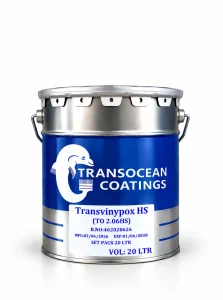
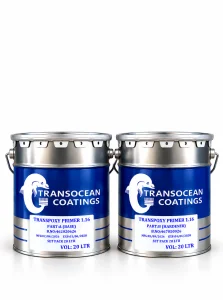
- Transpoxy Masterbond BT (TO 4.68) is a high solids epoxy primer and coating. Its product page lists use in approved IMO-PSPC systems for crude oil and ballast tanks.
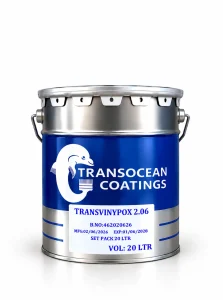
- Transvinypox (TO 2.06) is described on its product page as suitable for use according to IMO-PSPC requirements, with use in ballast tanks and fuel tanks.
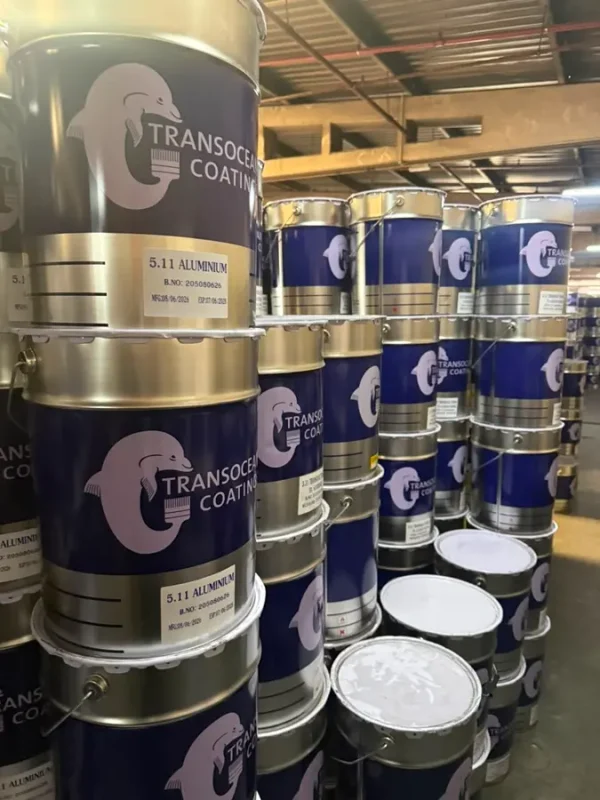
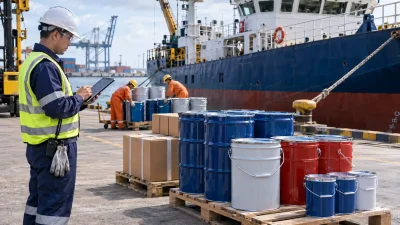
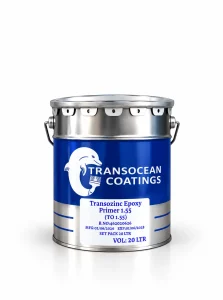
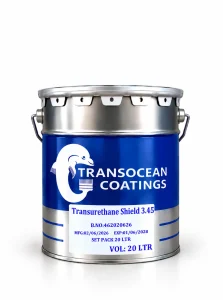
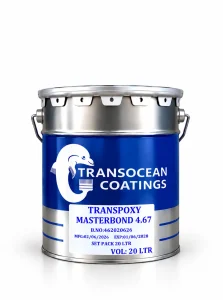
TransOcean marine coating cans supplied for ship tank projects
Before you order, confirm the approval status of the exact system with the paint maker, because approval applies to a complete system and not to a single can. If you send us the tank type, the steel preparation and the approval you need, we can help match the product and data sheet to the job. You can request a quote for Transpoxy Masterbond BT directly from the product page.
Common Ballast Tank Coating Mistakes
The same faults appear on many tanks. Most of them can be solved before the paint is opened:
- Weak surface preparation: steel not blasted to the specified grade, or a poor profile.
- Salt left on the steel: soluble salts hide in pits and cause blisters later.
- Missed stripe coats: edges and welds end up too thin and rust first.
- Flash rust: painting over steel that has already started to rust again.
- Wrong thickness: films that are too thin or too thick, found only after the job.
- Ignoring the recoat window: poor adhesion between coats.
- No records: missing thickness and inspection data when the surveyor asks for it.
Common Problems Found in Ballast Tanks
Even with a good coating, ballast tanks stay one of the hardest areas to maintain. Typical problems include general corrosion, pitting, coating breakdown, rust formation, mechanical damage, poor adhesion and water collecting in damaged areas. Finding these problems early through regular inspection keeps repair work small. Water-driven blisters are one of them; see osmotic blistering.
How Ballast Tank Coating Extends Vessel Life
When the steel stays protected from seawater and oxygen, corrosion rates drop sharply. This helps keep the structure of the tank sound and reduces steel renewal during dry dock periods. The benefits are a longer service life, lower steel renewal costs, better safety, lower maintenance spending and a stronger asset value. If you are planning a repair stay, see our guide to dry dock coatings and ship repair coatings in Duqm.
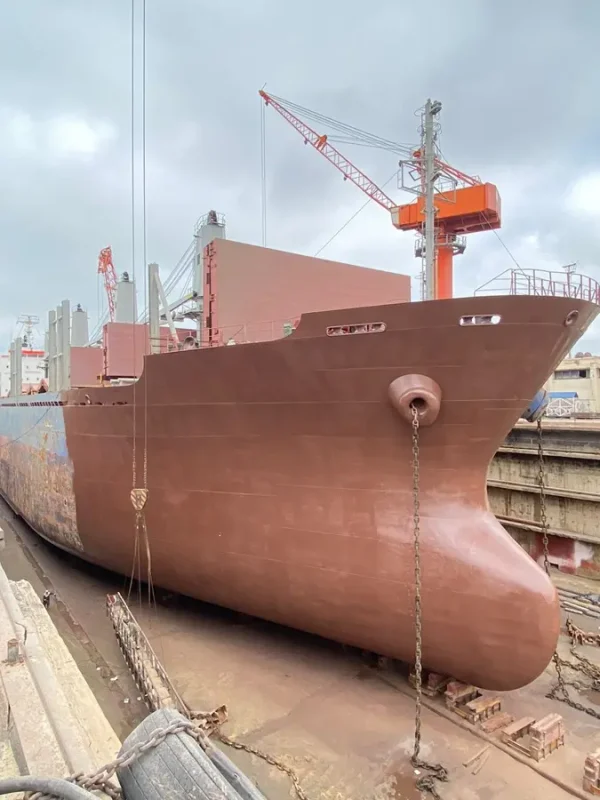
Hull in dry dock during coating maintenance
Ballast Tank Inspection and Maintenance
Routine inspection keeps small coating faults from becoming steel repairs. A good maintenance program includes visual inspections, coating condition assessments, corrosion monitoring, thickness measurements and quick repair of damaged areas. Inspection frequency follows the vessel maintenance schedule and the requirements of the classification society. Preventive maintenance costs far less than structural repair.
Comparing Ballast Tank Protection Methods
| Protection Method | Main Benefit | Application |
|---|---|---|
| Epoxy Coatings | Excellent corrosion resistance | Ballast tanks and marine structures |
| Zinc-Rich Primers | Cathodic protection | Steel protection systems |
| Cathodic Protection | Additional corrosion control | Marine and offshore assets |
| Regular Maintenance | Early damage detection | All vessel types |
Future Trends in Ballast Tank Coating Technology
The industry continues to work on low-VOC technologies, improved epoxy formulations, stronger corrosion resistance, monitoring systems and longer maintenance intervals. These developments aim to lower maintenance cost while keeping vessels compliant.
Ballast Tank Coating Supply from Bahari Tech
Bahari Tech works from its Dubai office in Business Bay and supplies marine coatings to ship owners, shipyards, offshore operators and contractors in the UAE, Oman and nearby maritime markets. We can help you choose the product, check quantities and send the data sheets for your tank project. Read more about how a marine coating system is built or the marine coating specification.
Conclusion
Good ballast tank coating comes down to a few controlled steps: correct steel preparation, a type-approved epoxy system, two spray coats with stripe coats, measured film thickness and full records. Getting these right protects the vessel, the crew and the maintenance budget.
Request a quote for Transpoxy Masterbond BT ballast tank coating
Send us the tank type, the steel preparation and the approval you need. Our team will help match the system and data sheet to your ballast tank coating project.
View Transpoxy Masterbond BT and request a quoteAsk on WhatsApp
Frequently Asked Questions
What is ballast tank coating?
Ballast tank coating is a protective paint system applied to the steel inside ballast tanks. It blocks seawater, oxygen and salts from reaching the steel. On most ships it is a two-coat epoxy system on blast-cleaned steel, with extra stripe coats on edges and welds.
What dry film thickness does IMO PSPC require for ballast tanks?
IMO PSPC calls for a nominal total dry film thickness of 320 microns, applied in two spray coats. Thickness follows the 90/10 rule: at least 90 percent of readings must reach the target, and none of the remaining readings may fall below 90 percent of it.
Why are stripe coats needed in ballast tanks?
Paint pulls away from sharp edges, welds and corners, leaving the film thin exactly where corrosion starts first. A stripe coat is a brushed or sprayed extra coat applied to these areas before each spray coat, so the edge carries enough film thickness to last as long as the flat plate.
What surface preparation is needed before ballast tank coating?
PSPC asks for blast cleaning to Sa 2.5 where required, with a surface profile of 30 to 75 microns. Water-soluble salts must stay at or below 50 mg/m2, dust must be rated 1 or better, and sharp edges must be rounded or ground before any paint goes on.
Which TransOcean paints are used for ballast tanks?
Our Transpoxy Masterbond BT (TO 4.68) product page lists use in approved IMO-PSPC systems for crude oil and ballast tanks. Transvinypox (TO 2.06) is also listed as suitable for ballast tanks. Always confirm the approval of the exact system with the paint maker before ordering.
What are the most common ballast tank coating mistakes?
The usual causes of early failure are weak surface preparation, salt left on the steel, missed stripe coats, flash rust before painting, and coats that are too thin or too thick. Skipping thickness checks also hides these faults until the first tank inspection finds corrosion.